The paint was called Seagull, which is an optimistic name for gray. I did the front of the house over four days in June, two coats, the ladder set in the peonies, a sunburn across the back of my neck where the collar rides up. Cars slow down on Miller Road the way they always have. Somebody I've never met leaned out a truck window and hollered that it looked sharp, and I waved back with the brush still in my hand like a fool.
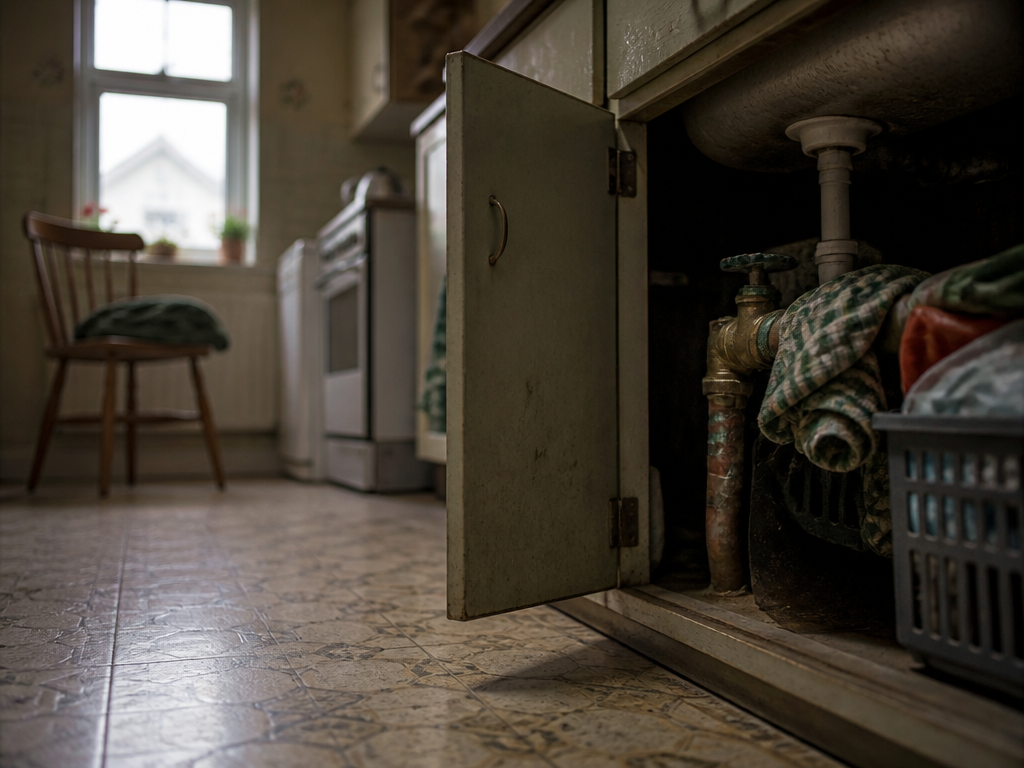
The north side hasn't been painted since 2015. I know the year because that's the spring the gutter came off it. There's moss on the clapboards up near the soffit, a wasp nest gone gray as newspaper under the eave, and in two places the wood has opened along the grain like something split with a thumbnail. Nobody looks at the north side. It faces eleven feet of the Dunlaps' arborvitae, and behind that a drainage easement, and behind that nothing at all.
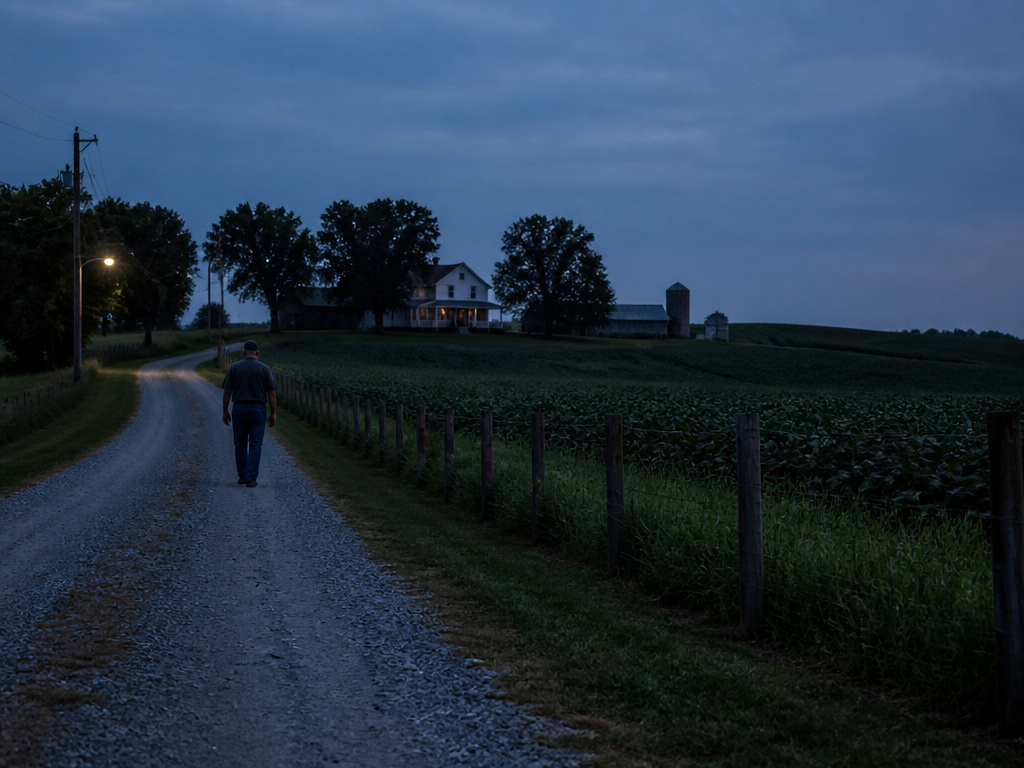
My father painted the front of our farmhouse the summer I turned nine. Cottage White, three gallons, and a scrap of plywood under the ladder feet because the ground by the porch was soft. He had a transistor radio propped on the rail with a Cardinals game coming through the static, and my mother brought lemonade out in a jelly jar with a cartoon rabbit worn almost off it. I sat on the step and watched him cut in around the window trim, tongue between his teeth, and I thought he was the most competent man alive. When he came down he wiped his hands on his thighs and looked up at what he'd done for a long moment. Then he said we'd get to the rest of it once the weather cooled off, no sense killing yourself in August.
He said some version of that for nine or ten years. He died in 1993 and the other three walls of that house were still bare cedar, gone silver as a barn. After the funeral I walked the property in my suit, out past the propane tank, and I put my hand flat against the west wall. It was warm and splintery and dry as a cracker. From the road, that house looked like it belonged to somebody who cared about it.
I spent thirty-one years at a regional claims office, and for maybe nineteen of them I sat down the hall from a man named Ivan Petrash. Everyone liked Ivan. He held doors. He knew which of us had a kid in the marching band and asked about the competitions by name. If you'd polled the third floor on who among us was a decent human being, he'd have taken it walking away, and I'd have voted for him too.
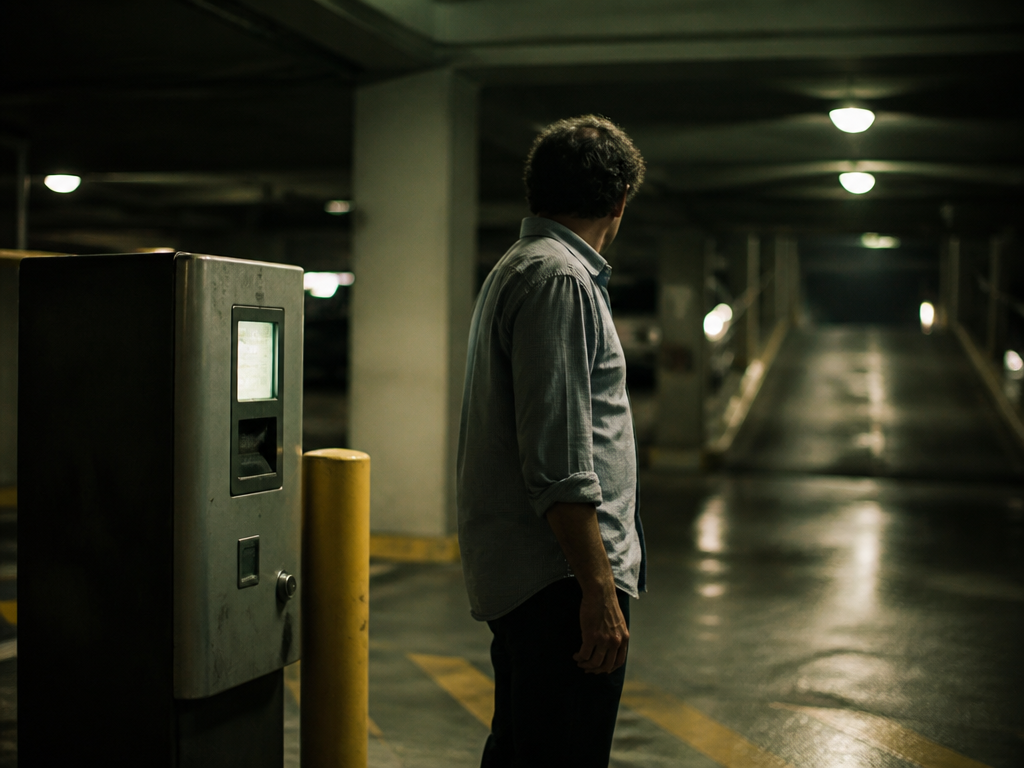
One evening in December I was standing in the stairwell doorway on level two of the parking garage, digging for my keys, out of the light. Carla from subrogation came around the corner with a banker's box on her hip and called out to hold the elevator. Ivan was in it. He looked at her — not through her, not distracted, he looked right at her for a full second — and then he watched the doors close. That slow shudder they do. Carla stood there and adjusted the box and didn't say anything at all, and I went down the stairs so she wouldn't know I'd seen.
The next morning he carried a different box for her across the lobby, the part with the glass and the coffee cart and forty people. Years later, at somebody's retirement lunch, I brought up the elevator half joking. He said that thing takes forever, you know how it is at five. Then he said she'd never once mentioned it to him. Then he asked if I was going to eat my roll. I've thought about that answer more than I've thought about most things people have said to me directly.
In February of the second year I lived here I was home with a fever on a Thursday, standing at the bathroom window at twenty to eight because I'd gotten up for aspirin. Dolores Buckner came down her drive in a housecoat and a pair of her late husband's boots and wheeled my trash bin back up mine. The bin's got a bad caster and it screams on concrete. She'd been doing it for two winters. When I finally thanked her out at the mailboxes she got so flustered she started telling me about a raccoon that had gotten into her attic vent, with dates, and she would not be moved off the subject of the raccoon.
I'd like to tell you I'm the Dolores kind. At my mother's viewing I was excellent. I remembered names I hadn't heard since high school, I steered the difficult cousin away from the difficult aunt, I said the thing about her handwriting that made the room laugh. I felt nothing for eleven days. Then I was in a hardware store buying a furnace filter and I came around the endcap into aisle six and there was the fan deck of paint chips, and my mother used to take those out of the display and keep them in her purse, four or five whites at a time, for a house she was never going to repaint. I stood there and cried over a strip of cardboard while a kid in an apron pretended to count sandpaper.
And two weeks ago I took my son Nate to the diner on Route 4 and left a twenty on a fourteen-dollar check without looking at it. The following Tuesday I ate at the same counter alone and left exact change and two singles, and I caught myself doing the arithmetic, and I knew exactly what the six dollars in between had been for.
So I want to be careful here, because it would be easy to say my father was a fraud and be done with it. He wasn't. He bought paint one gallon at a time out of a check that was already spoken for, and the front of a house is the part that other people have to live with — the mail carrier, the neighbors, my mother's church circle who came out every spring and parked along the fence. He was doing what he could pay for, in the order that seemed kindest. My mother never said a word about the other three sides either, and I don't think that was silence. I think that was agreement.
Also: one January morning before it was light, a stranger put a Buick into the ditch by our mailbox, and my father went out with a chain and got him free and came back in with his cuffs soaked through and drank his coffee and left for work. I know about it because I was up. He never told that story once, not at a table, not at a funeral, not to me. He had two sides going the whole time and I only ever painted one of them into the man I've been carrying around.
I got maybe a square foot scraped on the north wall this evening before the light went, a pale bright patch nobody but me will ever look at. Standing there with the wire brush I couldn't tell whether that was the whole point or just a better-looking version of the same trick. I've written all this down and I'm still not sure a word of it is true.