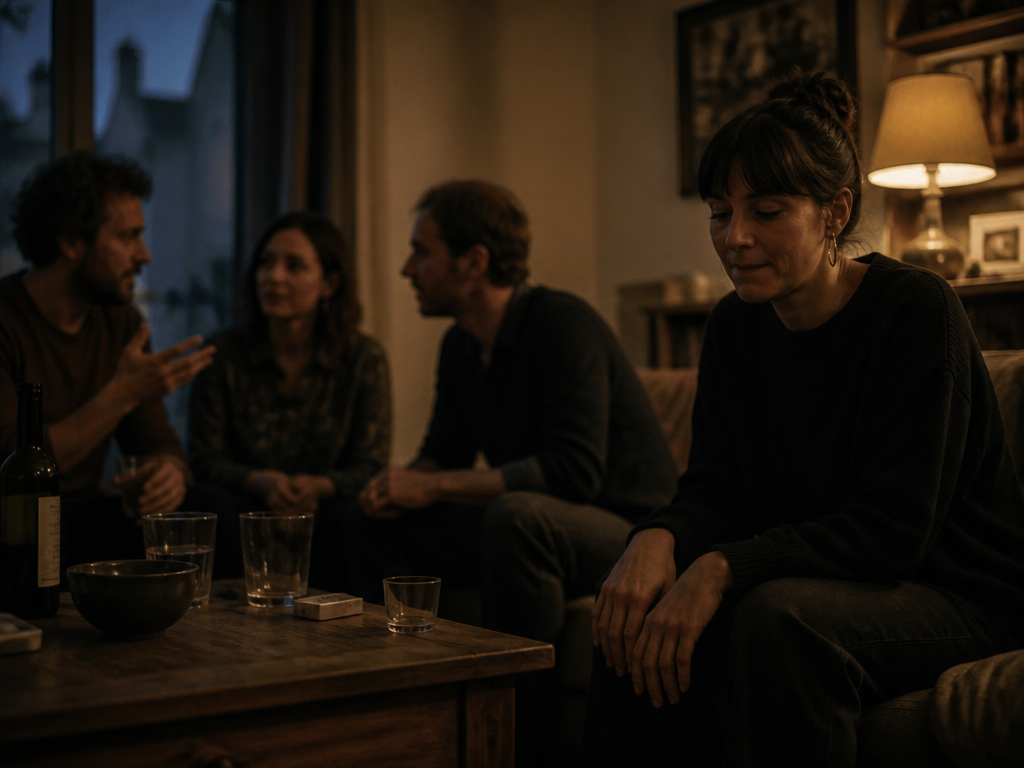
Ruth had been inside our mother's house for forty minutes before she cried. I had been inside for forty minutes before I found the stopcock.
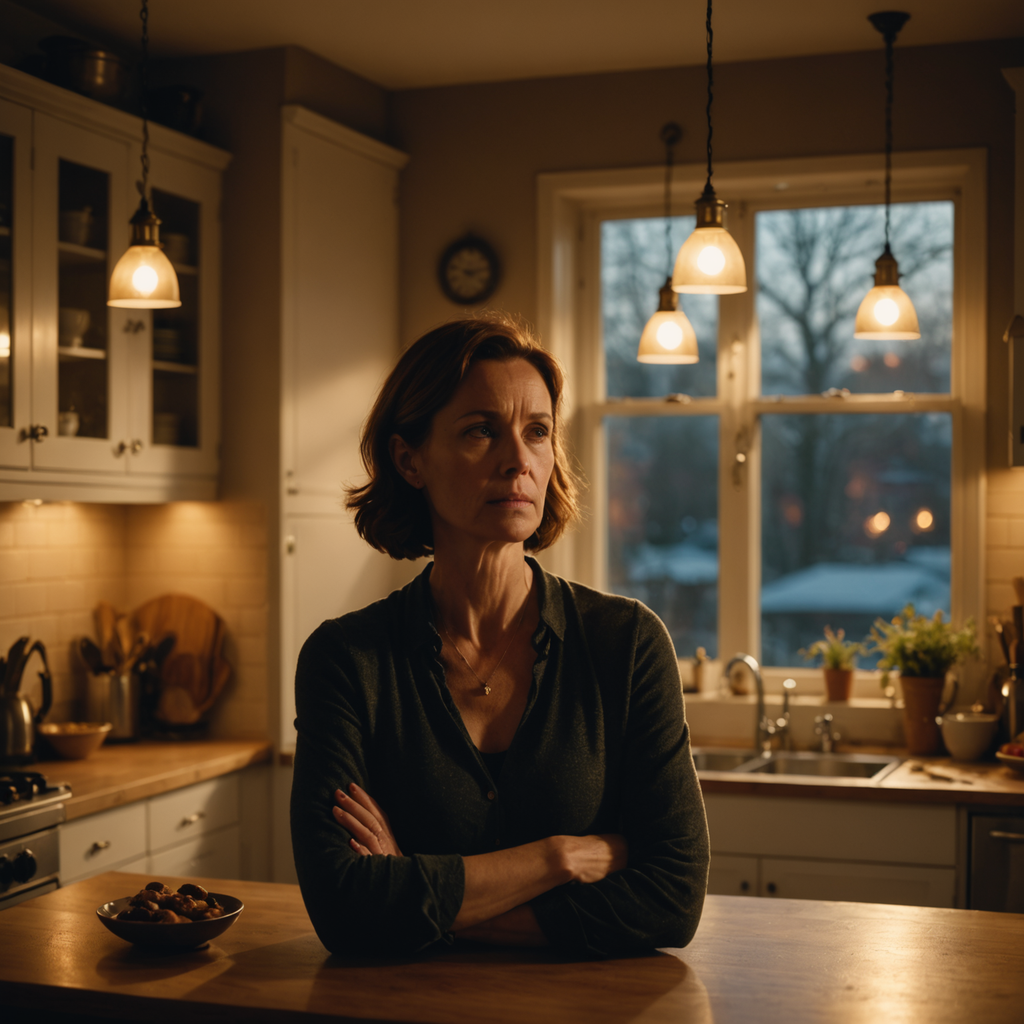
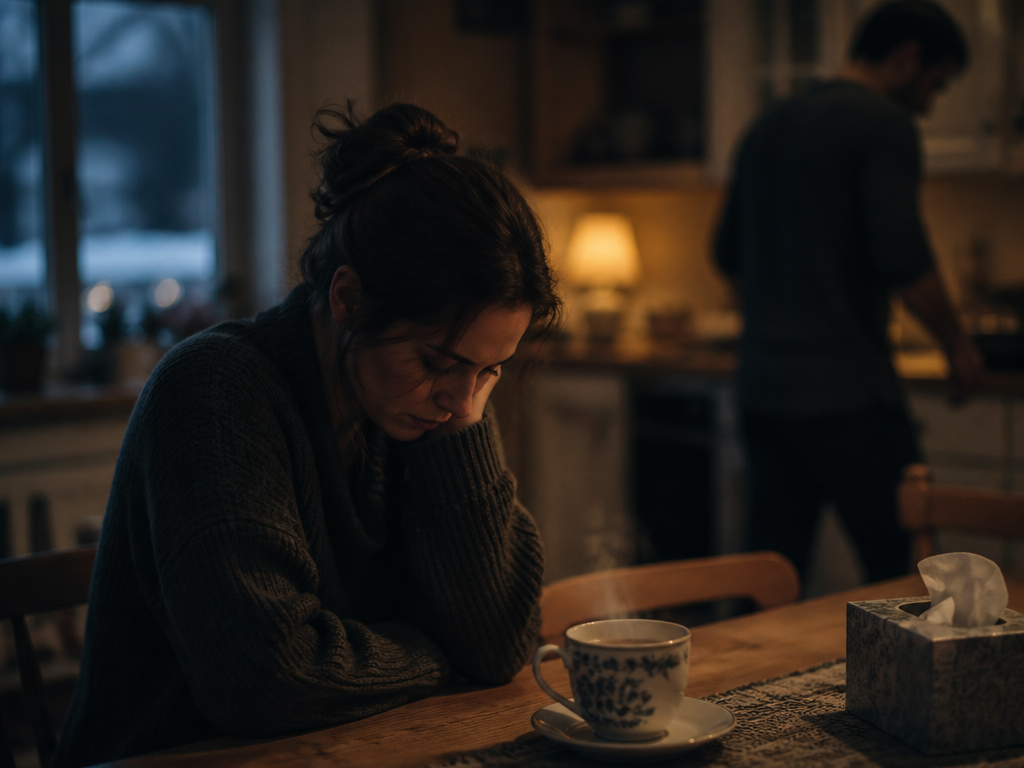
It was under the sink, behind a crate of folded carrier bags, seized half-open and furred green at the collar. I lay on the lino with my cheek against the chipboard and worked at it with a tea towel while my sister sat at the table with our mother's cardigan across her knees, making a sound I hadn't heard her make since she was fifteen. And I remember thinking, quite clearly, without a flicker of shame: good, someone's doing that, so I can get the water off.
That's the whole of me in one sentence. For most of my life I thought it was a virtue.
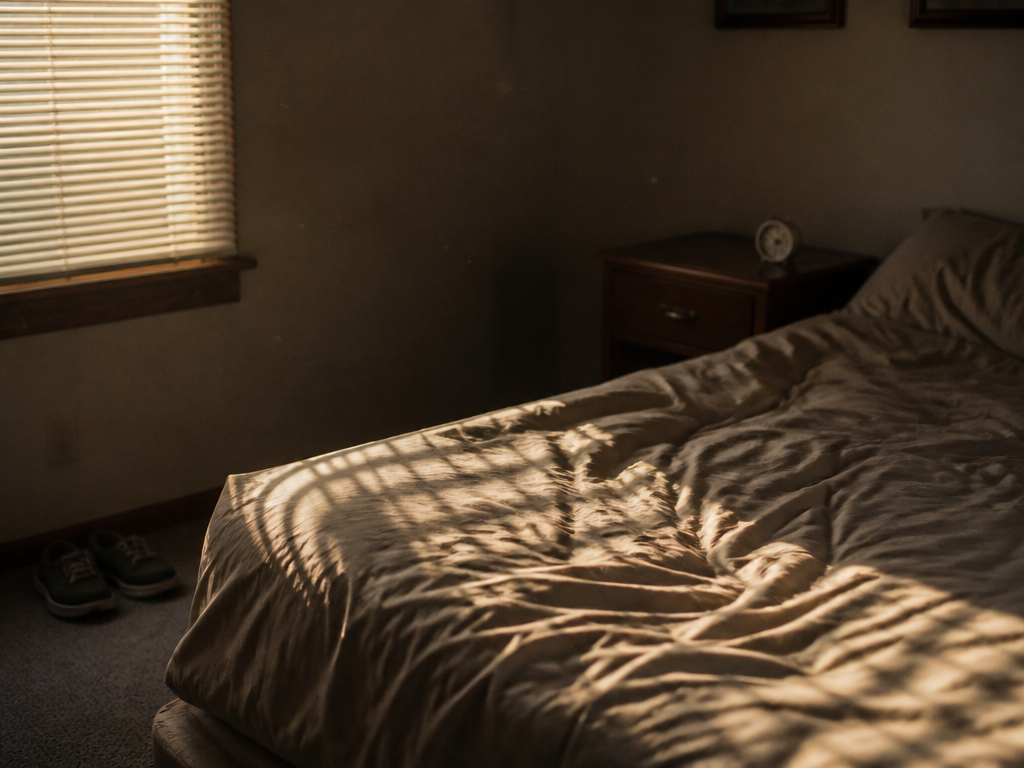
The first time anyone gave me a shape, I was nine. February, a Tuesday, the immersion heater in the airing cupboard split and came down through the ceiling of the back bedroom in a brown blister that burst while we watched it. My father was in Rotterdam. My mother stood in the doorway with a bath towel held out in front of her like she was going to catch something, and I went and got the boiler manual from the drawer where the fuses lived and read it out loud to her, standing on the landing in my pyjamas, sounding out words I didn't know. Pressure relief. Isolation valve. It took maybe twenty minutes and most of it was useless. But something in her went quiet while I read, and I heard the quiet, and I understood — the way a child understands, which is to say not in words — that I had done that.
Two days later she was at the front gate with Mrs Oyelaran and I was behind her on the step waiting to be walked to school, and she said, "He's not like the other one, you don't have to tell him twice, he just — " and then she laughed and didn't finish it, and Mrs Oyelaran said something about her own son and the conversation went elsewhere. I have thought about that unfinished sentence more than almost anything else anyone has ever said about me. I filled it in myself. He just gets on with it. He just sorts things out. It was the only description of me I ever had that came with approval attached, so I took it, and I built the rest of the house on top of it.
On the second morning at Mum's I hired a van and a skip and a man called Dessie who wanted paying in cash. Ruth wanted to go through the wardrobe. I wanted three piles and a clear route from the wardrobe to the front door. The smell when we opened it was mothballs and something floral underneath that neither of us said out loud, and the dry-cleaning film crackled every time you moved a hanger, and Ruth kept stopping to hold things up against herself.
"Can you not do that for an hour," she said. It wasn't a question and she didn't look at me when she said it.
I said the van was booked till four.
"I know the van's booked till four." She put the coat back on the rail. "That's not — " and then she made a small gesture with her hand, an impatient little roll of the wrist, and gave up on it.
I have been given up on mid-sentence by a lot of people. It took me until I was about fifty to notice that this was a pattern and not a coincidence.
There was an evening in my twenties I go back to more than I'd like. A woman named Deb was leaving the department and we had her send-off in a pub with a carpet you could feel through your shoes. I organised the card. I organised the envelope for the whip-round and chased the two people who'd said they'd forgotten. When the quiz machine ate somebody's pound I got the barman. When the taxis came I did the maths on the fares. I walked to the bus stop at eleven feeling absolutely marvellous, genuinely, warm through, the way you feel after a good night — and it was only somewhere around Ealing Broadway, looking at my own face in the black window, that it occurred to me that nobody had asked me a single question all evening. Not one. Not where I lived, not what I did at weekends, not whether I was seeing anyone.
And here's the part I'd rather leave out: I wasn't hurt. I was relieved. I had got through four hours of people without once having to produce an opinion or a preference or a fact about myself that might turn out to be the wrong one to have.
Cass and I were together eleven years. The end of it, or the beginning of the end, happened in a garden centre car park in 2004 with the boot open and two bags of compost in it. I'd already done the thing I did, which was to solve whatever it was — I honestly can't remember now what it was, something about her mother, something about Christmas — and she was standing by the passenger door not getting in.
"It's not that you don't do things," she said. "You do everything. It's — " She looked at the trolley bay. "You're like a really good service. Like a really, really good service, and I don't — "
She stopped. She got in the car. We drove home and put the compost in the shed and I was furious for about six weeks, in the useful way, the way where you empty the gutters and reseal the bath.
She wasn't right. She was near enough. What she was reaching for, I think, is that she had eleven years of evidence about what I would do and almost none about what I was like. She knew I'd drive through the night. She didn't know what I thought about anything that couldn't be acted on. Neither did I, particularly. That's the bit people don't tell you about being the capable one: it isn't that you're hiding a self behind the competence. It's that the competence got there first and the self never had to grow in, the way a tooth doesn't come through if there's something in the way.
On the third day at Mum's we found the tea chest with the photographs, and Ruth sat on the floor of the back bedroom under the patched ceiling and went through them slowly, and I stood in the doorway with the roll of bin bags in my hand because I couldn't work out how to be a person who sat down.
"She used to say she never worried about you," Ruth said. She didn't look up. "She said it like it was a compliment. And I always thought, well — " She turned a photograph over to read the back. "I got worried about. And you got — "
The pause went on long enough that I could have finished it for her. I've had fifty years of practice finishing that sentence. I didn't. I said I'd start on the shed.
Ruth rang me last April, about the diagnosis, and I know exactly what I said because I've replayed it since. There was a breath on the line where she was waiting for something, and what I gave her was: "Right. Okay. Let me look at trains."
She said that was good. She said thanks. I could hear her crying and I looked up the trains.
On the fourth day the house was empty and it was much smaller empty, the way they always are. Ruth took the last box out to the car and I did the walk-round, upstairs first, the way you're supposed to. Then I remembered the meter.
Ruth beeped the horn once, lightly, the way you do when you don't mean anything by it. I knelt down in the dark hall and opened the little cupboard and held my phone torch up to the dial. Four four nine oh two. Behind me the front door was still open and she was saying something I couldn't hear.