Let me give you the conclusion first, since I've spent most of my life handing people the finished version of things and letting them assume that's how it got made.
The competence is real. I want to be clear about that before anything else, because this isn't a story about a fraud. I can plan a funeral in an afternoon. I can tell eleven people they're losing their jobs and have each of them leave the conversation feeling personally attended to. Under pressure my voice drops and slows and my hands do exactly what I ask of them, every time. People have promoted me for this. One woman married me partly for it, I think, and then left for the same reason.
But it grew over something. It grew the way a bone knits back crooked and thick, and the thickness is what everyone comments on. Nobody says, look how that broke. They say, God, that's solid.
I'm going to go backward, because forward is how I usually tell it, and forward is where I lie.
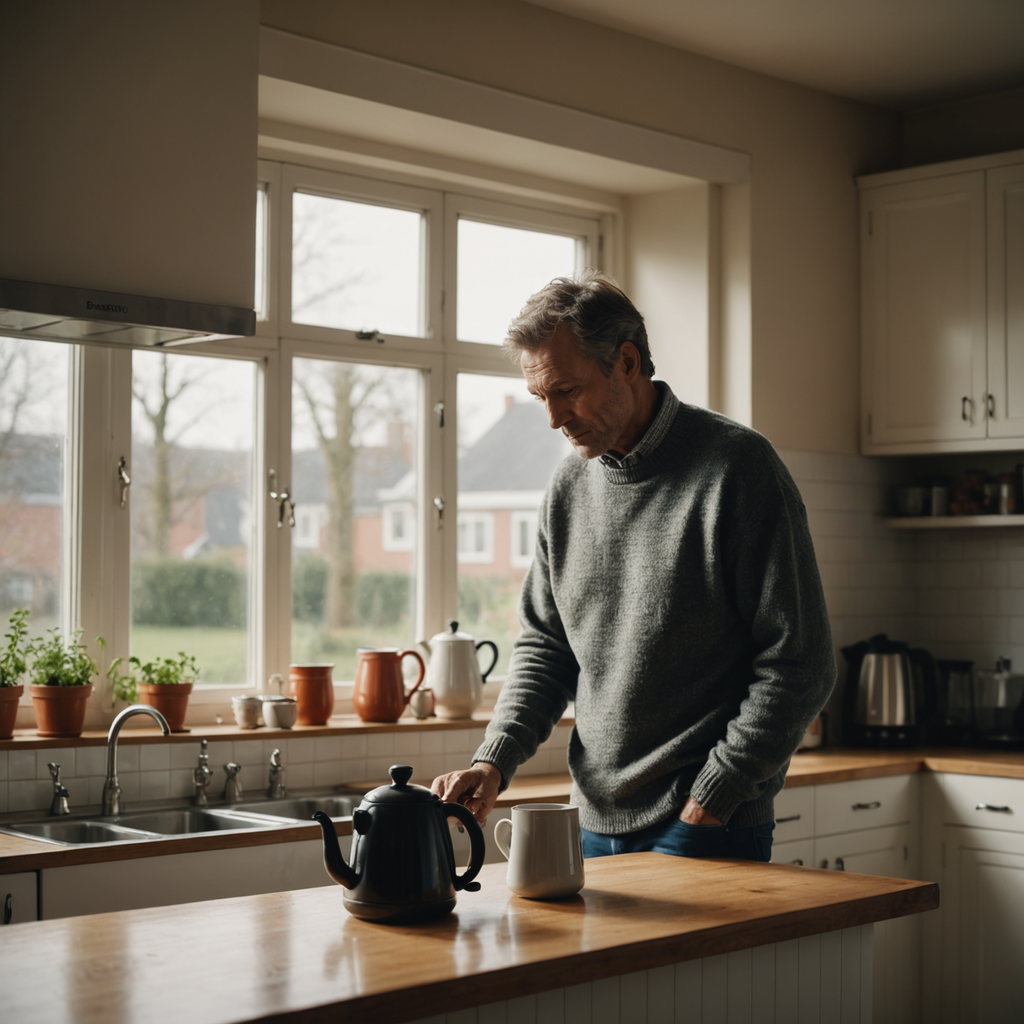
This past March I was at my mother's sink at eleven at night, washing a roasting pan that didn't belong to anyone I could name. Danny was behind me at the table with his coat still on. He'd driven six hours. He said, "You want me to take some of— I don't know. Is there stuff. Should I take stuff."
I told him the storage unit was paid through August and I'd email him the code.
He didn't ask again. That's the part I keep going back to. He asked once, badly, in the only language he had for it, and I answered a different question so smoothly that he believed it was the one he'd asked. Then he went up to bed and I finished the pan and dried it and put it in a cupboard where it sat for eleven more days until someone from the church came for it.
I remember standing there with my hands still wet, thinking: no one in my life has asked me how I am and meant it in about fifteen years. And then, almost in the same breath, the correction — that's not their fault. I've made it structurally impossible. I answer before the question is finished. I hand people the logistics the way you'd help someone into a coat.
Six weeks before that, the funeral home out in Wheaton. There was a laminated binder of urns with a price column running down the right-hand edge, and the man turning the pages had a scrap of tissue stuck to his jaw where he'd cut himself shaving. I remember thinking he must have had an early morning. I remember choosing the second-cheapest one, because the cheapest looks like a decision and the second-cheapest looks like taste.
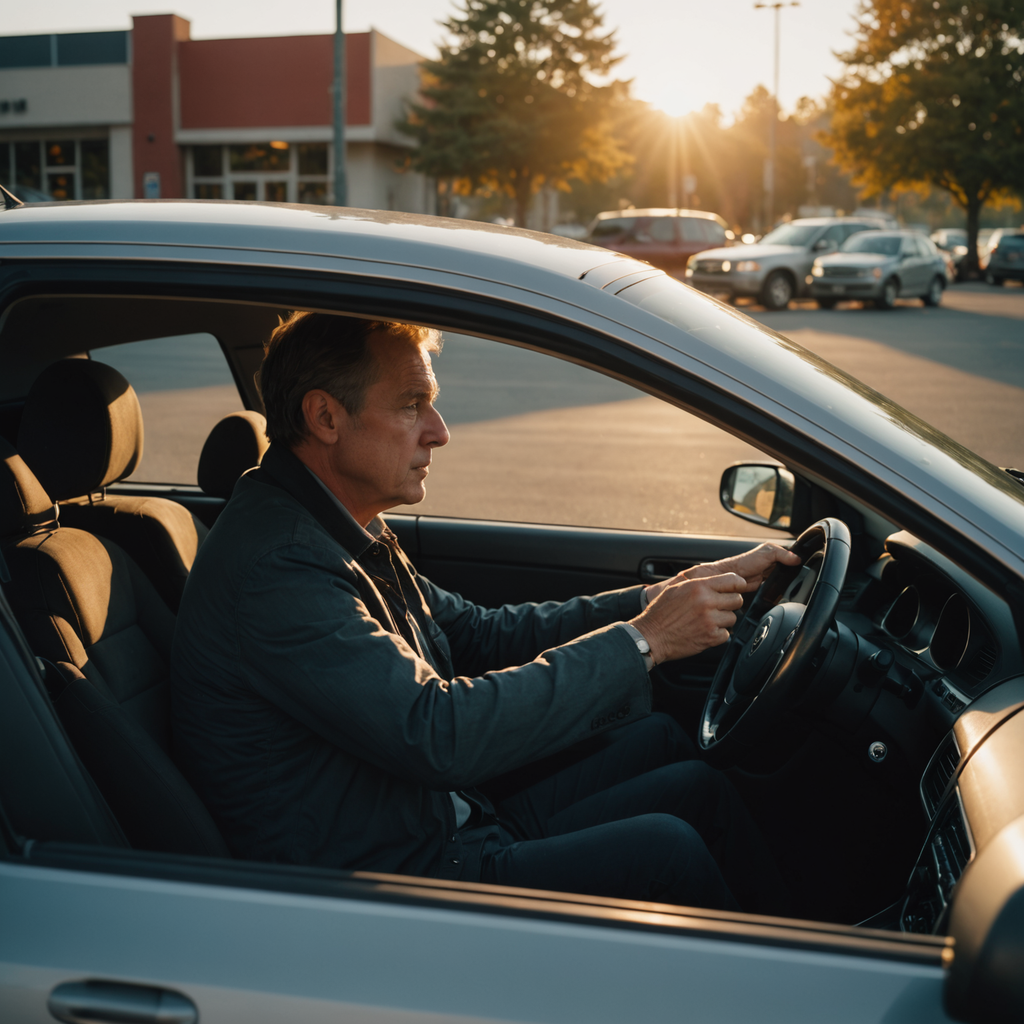
My aunt Rosalie stood behind me the whole time holding her purse against her stomach like a shield. Out in the parking lot she said, "You're so — God. I couldn't have done one minute of that. You're so composed."
Here's what I've never told anybody. I felt good. A small warm flare of it under the sternum, forty minutes after picking out the container for my mother's body. Somebody had noticed. Somebody had said the word out loud, and the word was composed, which is the only currency I've dealt in since I was fourteen, so the transaction cleared instantly, the way it always does.
Then I drove Rosalie home and asked about her hip.
Two years earlier, the reorganization. I was the one who told them, one at a time, in the glass conference room on four with the blinds that never fully shut. Eleven people over two days. I learned to keep the tissues on my side of the table instead of theirs, because reaching for the box yourself is the worse humiliation.
Then on the Thursday my own name was on the list, and I sat where they had sat, and I heard myself say, "I appreciate you doing this face to face." I meant it. That's the strange part. I wasn't performing. Somewhere along the way the performance and the feeling had fused and I could no longer find the seam.
Marchetti walked me to the elevator and said, "You made that so much easier than it should have been." Warmly. It was the highest thing he had.
I turned that sentence over for a year. Easier than it should have been. There's a difficulty that belongs to a moment, that the moment is owed, and I've been quietly lifting it out of people's hands my whole life and calling it kindness.
2003. Ruth in the bedroom doorway with an armload of hangers, the cheap plastic ones, clacking against each other.
She wasn't crying. She'd done that in the fall, and I had been very good about it. What she said, and she said it down at the hangers rather than at me: "I kept — okay. When I had that flu. In February. You made the soup and you did the pharmacy run and you slept out on the couch so I could—" and she stopped and started over. "I would have settled for driving you to the airport. That's it. That's the entire thing I wanted."
I was genuinely confused. I remember standing there thinking she was describing a preference, the way you'd say you'd rather go to the other restaurant.
It took me until my forties to hear it properly. She had spent nine years in a house with a man who would not let her be useful to him, and she experienced that as not being loved, because it was. Not because I didn't love her. Because I couldn't work out how to hand her anything with any weight in it. I had one gear and it was called handling it, and she had married someone who was excellent at her flu and could not be a person with a fever.
And before all of it, a Tuesday in October of 1987. I know it was a Tuesday because Danny had a word search due Wednesday and he was doing it at the kitchen table with his tongue out.
Our mother had been in her room since Sunday afternoon. The door was shut and the light under it was off, which frightened me more than crying would have. Our father was on the road until Friday, or he'd said Friday. I was fourteen. I made chicken and rice out of a can of soup, and the can opener was the kind that skipped a tooth if you didn't clamp the handles hard, and I can still feel the exact amount of force in my fingers, and smell the rice catching on the bottom of the pot because I'd had the burner up too high.
I left a plate outside her door. In the morning it was still there, the fork exactly where I'd laid it.
Around seven Mrs. Kessler came over with a foil-covered dish and stood on the step looking past me down the dark hallway a second longer than she needed to. She handed it across. She said, "Tell your mother the car's been in the same spot since Sunday. Move it up the block and then back, would you. People notice things like that."