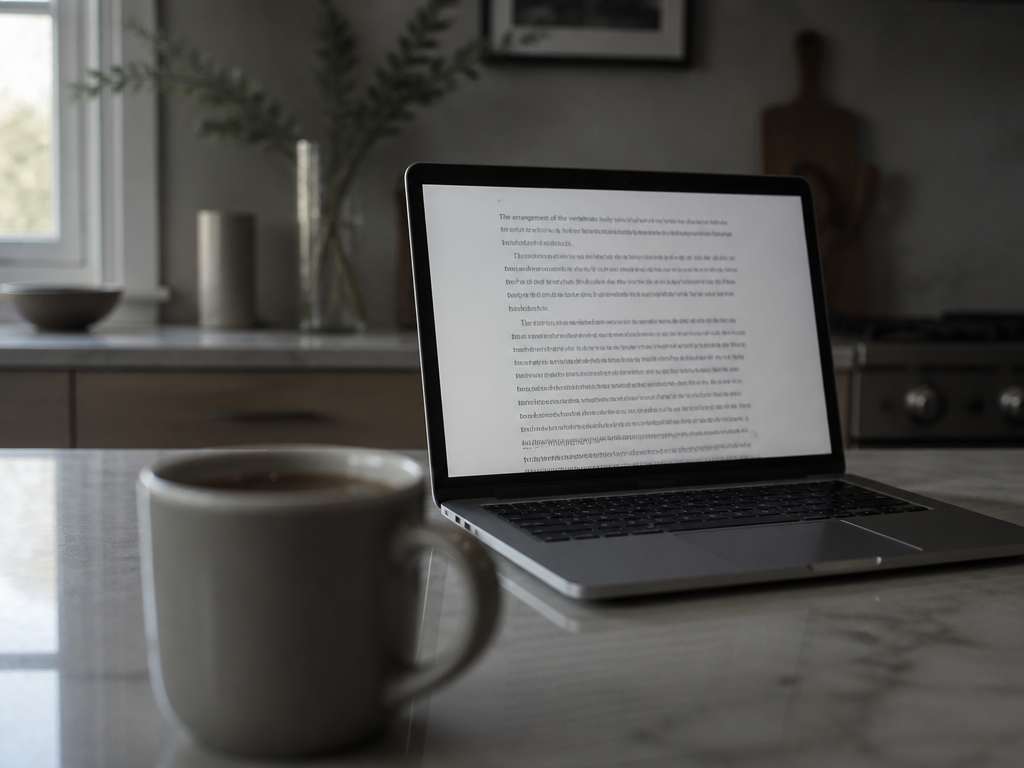
There's a cup on my counter that I have rinsed maybe four hundred times without ever putting it away.
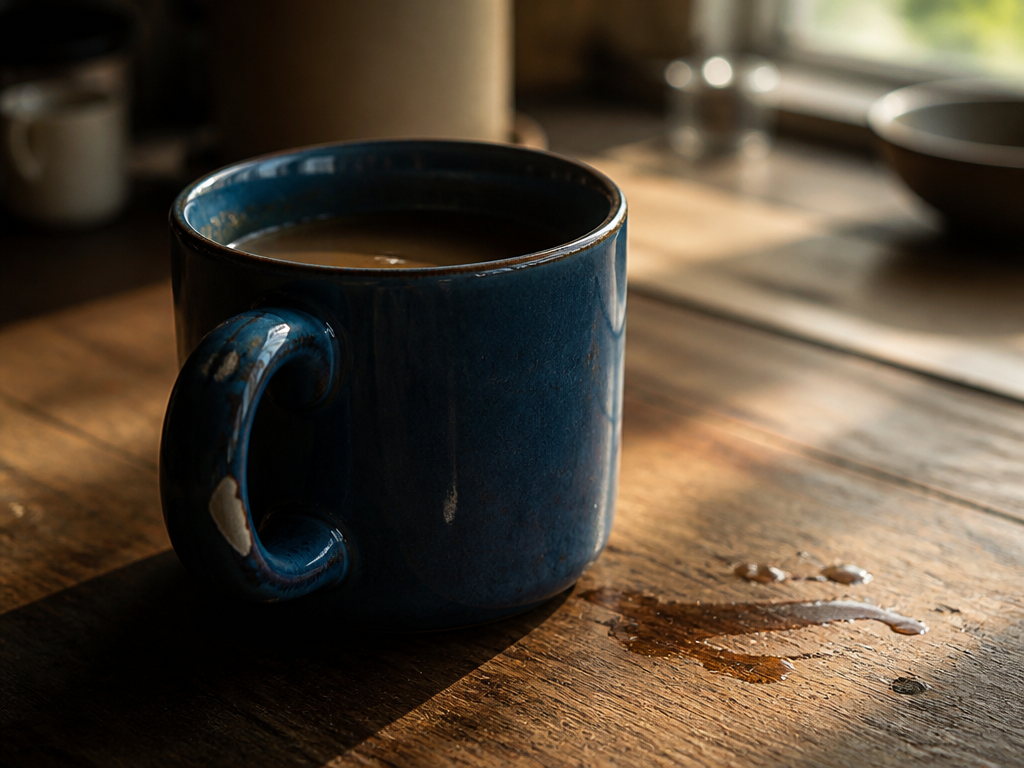
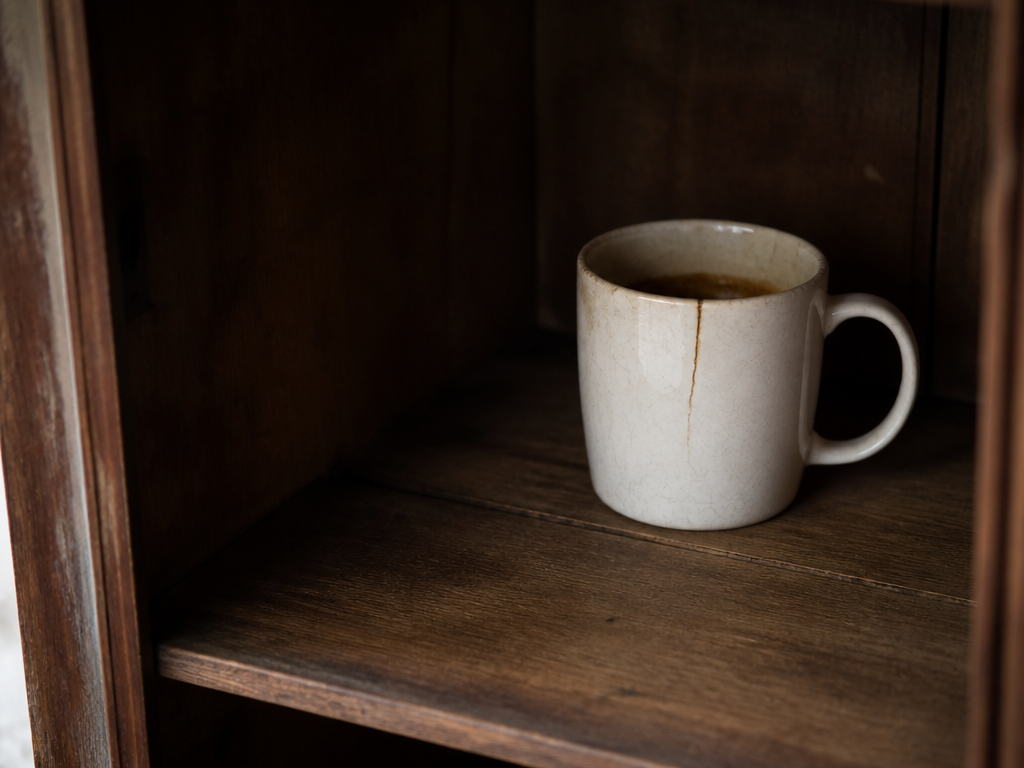
I mean this literally. It's a heavy stoneware mug, glazed the color of wet sand, chipped on the handle from the winter I dropped it into the sink while arguing with my sister about our father's mail. Every morning I drink from it, and every morning I rinse it, and then I set it upside down on the drying rack where it stays until I need it again. The cabinet is eighteen inches away. I have never once opened that cabinet for this cup.
I noticed this the week I turned fifty-four, standing there in a T-shirt with my hair still flattened on one side, watching water run off the rim. And what struck me wasn't the laziness of it. It was how familiar the gesture felt. Rinse, set down, walk away. Almost finish. Leave the last eighteen inches for later.
I started keeping a list after that. Not a self-improvement list — I've made those, in nice notebooks, and abandoned them by February. This was more like an inventory. Objects and places and things people said to me that turned out to be load-bearing. I want to lay them out here, because I've come to think that whatever changed in me over the last few years didn't change through insight. It changed through about nine very small, very specific things, and I couldn't have predicted a single one of them.
**The paint chip in my wallet.**
It's called Alabaster Veil, which is a ridiculous name for what is essentially the color of an eggshell that's given up. I picked it up at a hardware store in the spring of 2019 because I was going to repaint the hallway. I did not repaint the hallway. But the chip stayed in the billfold behind my library card for four years, and I would come across it while paying for gas and feel something I can only describe as a small, private shame — not about the hallway. About the fact that I'd chosen the least noticeable color available. There were eleven other cards on that display. There was a deep green called Juniper Bough. I remember holding it, and I remember putting it back, and I remember the specific thought I had, which was: *someone will ask why.*
That's it. That was the whole obstacle. Someone might ask why I painted a hallway green.
I eventually painted it green. But that took another three years and it isn't the point. The point is the chip in the wallet — the way I carried the evidence of a choice I didn't make, and touched it every few weeks, and felt nothing I could name.
**"You do the thing with your voice."**
A woman named Priya said this to me in an elevator in the Wells building, between the fourth and lobby floors, sometime in October. We'd just come out of a budget meeting where I'd presented a revised staffing plan I'd worked on for six weeks.
I said, "What thing?"
And she said, "The — you go up. At the end. Like it's a — " She made a small gesture with her hand, a little upward flick, and then looked embarrassed and said, "Sorry, that came out weird. It's not bad. It's just, you know. Everything's a question."
The doors opened. She said something about the parking garage and left.
I stood in that lobby for probably ninety seconds. Not devastated — that's too strong. But rearranged. I had said, *So I think the reallocation makes sense?* I had said *if that seems reasonable?* six or seven times. I had spent six weeks on those numbers and then handed them over with a question mark tied to the top like a bow, so that whoever received them could hand them back without hurting me.
Priya wasn't trying to teach me anything. She was making elevator conversation and she got flustered. That's what makes it stick, I think. If she'd said something eloquent about vocal patterns and self-worth I'd have filed it away as a compliment-shaped criticism and forgotten it by lunch. Instead she said *you go up* and did a thing with her hand, and I have thought about it nearly every week since.
**The third step.**
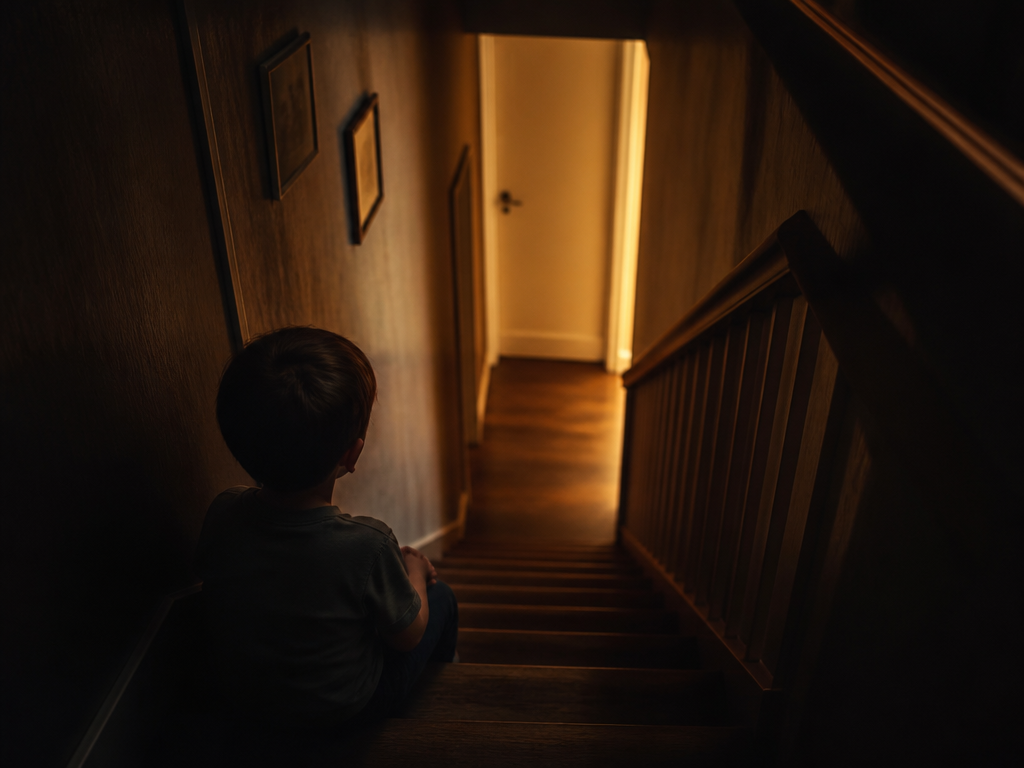
The stairwell at my old office had a step that was slightly taller than the others — the third one from the landing. Everybody caught their toe on it at least once. I caught mine roughly two hundred times over nine years, because I was always coming down those stairs looking at my phone, and every single time I would catch myself and glance up to see if anyone had noticed.
I don't have a wise reading of this. I just remember the sensation of it very clearly: the stumble, and then the immediate scan of the stairwell for a witness. Not *am I hurt.* Who saw.
When I changed jobs I found myself on a different set of stairs, all of them even, and I stumbled anyway out of habit, out of muscle memory for a step that no longer existed. That was the first time I laughed at myself in a way that felt kind.
**A voicemail from my mother, 41 seconds long, from a Tuesday in August.**

She called to tell me the peaches were bad this year. That's the content. Bad peaches, too much rain, she'd bought them at the roadside place by the reservoir and thrown half of them out.
But about thirty seconds in, she says, "Anyway — I don't know why I'm — you're busy." And then a pause you could park a car in. And then, "Okay well. Bye, honey."
I have never deleted it. I don't listen to it often. But there's something in that pause I recognized instantly and have never fully looked at directly, which is that my mother, at seventy-nine, apologized to her own daughter for taking up forty-one seconds about fruit. And that I do it too, and I learned it from somewhere, and the somewhere is on the recording.
I want to be careful here. I'm not making a case against her. She raised four children in a house with one bathroom and she is funnier than I will ever be. But I was standing in the driveway with grocery bags cutting into my fingers when I first heard that message, and I remember thinking, very clearly: *she thinks she's an interruption.*
**The shoes.**
Flat, taupe, extremely sensible, bought in 2016 for a version of my life that involved a lot of standing quietly at the edges of rooms full of people who mattered more than I did. I wore them to two funerals and a great many meetings. They were the most comfortable footwear I have ever owned and I gave them to the church donation bin in a fit of something I couldn't articulate, and then regretted it for a month, and then didn't.
What replaced them was not a dramatic shoe. Nobody has ever commented on them. But there's a sound they make on the tile at the entrance to my building — a distinct, deliberate little *knock* with each step — and for the first several weeks I was mortified by it. I would slow down near the front desk. And then one day in February, carrying two coffees, running late, I didn't slow down. That's all. I just crossed the lobby at the speed I was actually walking.
**The bench outside the dentist.**
Wooden, splintery, facing a parking lot and a Verizon store. I sat there for eleven minutes after a cleaning in March because I'd arrived twenty minutes early, as I always do, and the appointment ran short, and I had time I hadn't accounted for.
I didn't check my phone. I want to say that this was a spiritual experience. It wasn't. It was cold, and a man near the recycling bin was having a loud disagreement with somebody about a delivery window, and I mostly thought about whether I needed to stop for milk. But I noticed at minute eight or so that I wasn't performing waiting. You know the posture — the way you hold yourself when you're alone in public and want to seem like a person with somewhere to be. I wasn't doing it. I was just a woman on a bench with clean teeth, cold hands, no expression on my face at all.
I have gone back to that bench twice on purpose. It hasn't worked either time. It's a bench.
**The text I didn't send to my brother.**
It was four paragraphs. It explained, carefully and with dates, why what he said at Thanksgiving about my divorce was unfair, and it included the phrase "I'm not asking you to agree, only to understand," which is the kind of sentence you write at 1am when you're building a case rather than having a conversation.
I deleted it and sent instead: *That thing you said Thursday hurt. Can we talk?*
He called eleven minutes later. The conversation was bad and then less bad and then okay. At one point he said, "I didn't — that's not what I — " and stopped, and started over, and said, "I've been worried about you and it came out sideways." Which is possibly the most honest thing he has ever said to me, and it took him three tries to get out.
The four paragraphs would have gotten me nothing. The eleven words got me my brother back for a while.
**What I keep coming back to** is that none of this was a decision. I never sat down and resolved to speak in periods instead of question marks, or to stop scanning for witnesses. There was no moment of resolve. There was a paint chip in a wallet, a flustered woman in an elevator, forty-one seconds of my mother's voice, a pair of shoes that made noise. And somewhere in the accumulation of these very small pieces of evidence, the person doing the rinsing started doing something slightly different with her hands.
I don't fully trust the change. Some weeks I hear the question mark climbing back into my voice like a cat returning to a chair. Last Thursday I apologized to a barista for the existence of my order. And there's a real possibility that all of this is just what happens to a woman in her fifties who has fewer people left to impress, and that I'm dressing up ordinary attrition as growth.
But then there's the cup.
It's on the drying rack right now. Sand-colored, chip on the handle, still faintly warm.
I pick it up, turn toward the cabinet, and open the door.