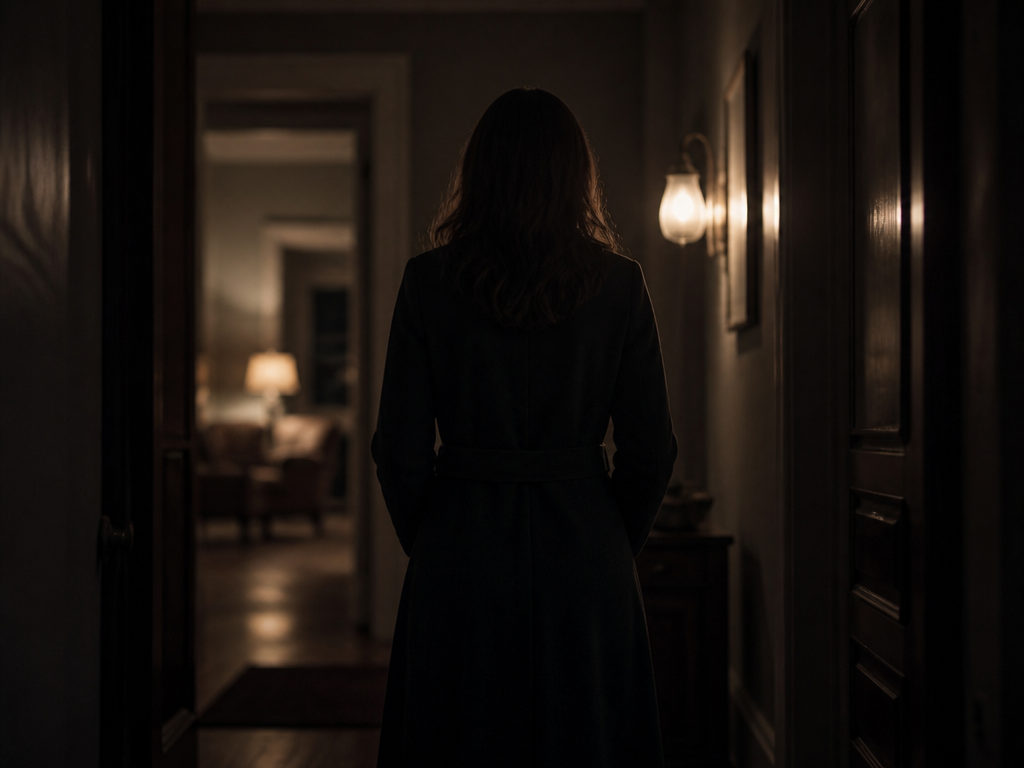
At a dinner last spring, someone asked me what I thought about a movie everyone had seen, and I felt the familiar thing happen — a sort of trapdoor opening under the question. I wanted to say I'd been thinking about the long shot near the end, the one held a few seconds past comfort, and how it reminded me of my father's silences. But the table was already moving on, laughing about the popcorn prices, and so I said, "Yeah, it was good," and reached for the bread. Nobody noticed. That's the part that stays with me. Nobody ever notices the door closing.
I've spent a long time believing this was a defect in me. Too slow to answer. Too heavy in a room that wanted to be light. For most of my life I assumed the problem was that I couldn't keep up, when what was actually happening was the opposite — I was somewhere down the hall while the conversation stayed in the kitchen. I don't say this to flatter myself. It has cost me more than it's given. But I've started collecting evidence, small physical things, the way you'd gather proof of a country you weren't sure you'd really visited.
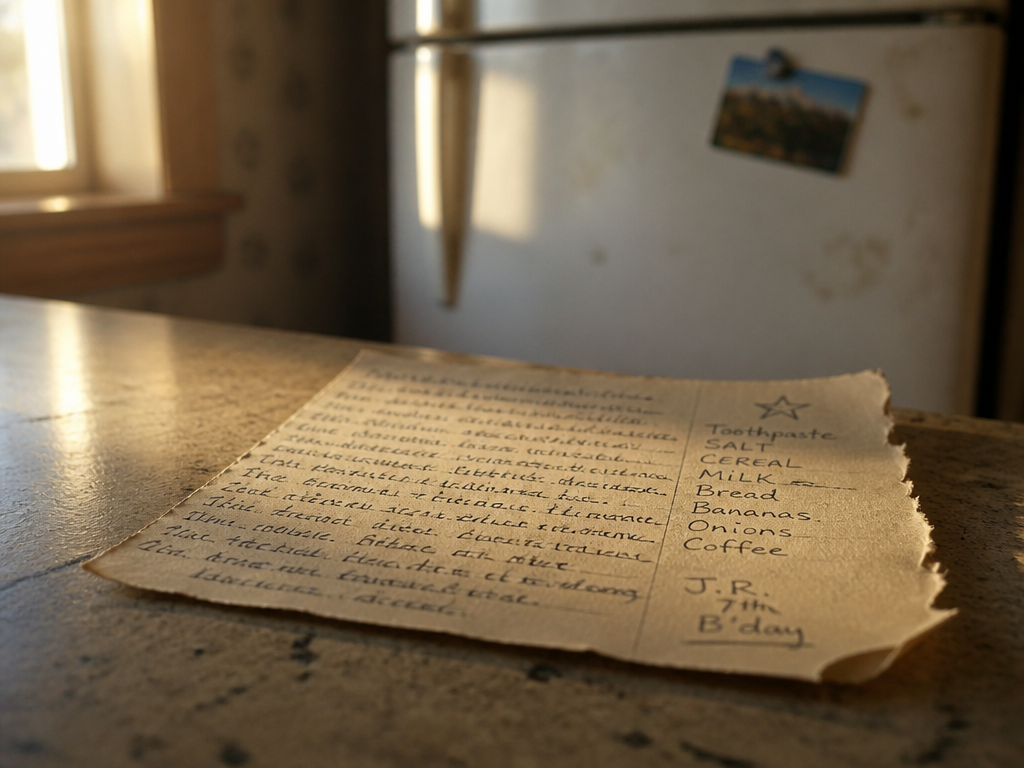
The first piece of evidence is a sticky note. My college roommate, Dana, left it on the fridge one morning after I'd lain awake the night before telling her, in a rush, everything I was afraid of about leaving school. The note said: "You think too much for one person. Go outside." She meant it kindly. She made me toast that morning. But I read those four words maybe forty times over the next week, the way you press on a bruise, and I understood them as a verdict. There was an amount of thinking a person was allotted, and I had taken more than my share. I threw the note away and then, embarrassingly, took it back out of the trash and kept it in a book for years.
The second is a sentence a coworker said to me in a beige conference room, in the flat tone of someone reporting the weather. "You overthink everything," she said, and what struck me wasn't the cruelty — there wasn't any — but how certain she was, how it landed as a simple fact about me, like my height. I had just spent the meeting trying to say that the project felt wrong in a way I couldn't yet name, and she was tired and wanted to go home, and both of those things were allowed to be true. But I drove home replaying it, and somewhere on the highway I realized I wasn't hurt that she'd said it. I was hurt that I half-believed her. That I'd been carrying her sentence around for fifteen years before she ever said it.
The third object is a paperback, a novel I won't name because it's the kind of book people roll their eyes at, with a cracked spine and a coffee ring on the cover. I've read it eleven times. Not because it's the best book I own but because the narrator notices things at the same speed I do, and reading her was the first time I felt the strange relief of recognition — like meeting someone at a party who also thinks the music is too loud. For most of my life the inside of my head felt like a place no one else had been. This book was proof that at least one other person had stood in a similar room and looked out a similar window and felt the same ache about how fast everyone else seemed to move through their own lives.

The fourth is a voicemail I never deleted. My friend Marcus, who I'd known for two years without ever quite being known by, called me after his divorce. He was three minutes into the message before he said the thing — that he'd realized, sitting alone in his half-emptied apartment, that I was the only person he could call who wouldn't try to fix it. "You just kind of... let a thing be as big as it is," he said, and then he laughed at himself for not making sense, and then he hung up. I played it back twice. What he was reaching for, I think, was that I don't rush people through their grief because I know how it feels to be rushed. The thing other people had named as a flaw — my slowness, my refusal to land on a tidy answer — was the exact thing he needed at two in the morning. It had a use. It had always had a use. I just hadn't been in the right room to find out.
The fifth thing isn't an object. It's a question my niece asked me when she was six, sitting on the kitchen floor while I made coffee. She looked up and said, "Do you ever feel sad even when nothing is wrong?" I crouched down to her level, and my knees cracked, and I told her yes, sometimes, and that it didn't mean anything was broken. She nodded like I'd confirmed something she'd suspected, and went back to her crackers. I stood up shaking a little. Because here was a small person who clearly processed the world the way I did, who would probably spend years being told she thought too much, and I wanted desperately to give her a different set of instructions than the ones I'd been handed. I wanted to tell her: it isn't that you feel too much. It's that the world keeps offering you a teaspoon and asking why you brought a bucket.
I know how this is supposed to go now. This is the part where I tell you it's a gift, where I reframe the whole aching business into something that makes me lucky, and we all close the tab feeling a little better. And some days I do believe that. The voicemail is real. My niece is real. There are people who have found me at exactly the depth I live at, and being found like that is the closest thing to coming home I know.
But I have to be honest about something, now that I'm at the end of this. I'm not sure any of it is true. I wrote a tidy story here — wounded child, misread adult, redemption in a paperback and a phone call — and stories like that are exactly the kind of thing a person like me constructs to feel less alone. Maybe I really do just overthink everything. Maybe Dana was right and I should have gone outside. I genuinely don't know which version is the truth, and the fact that I can't tell might be the most honest thing I've written all day.