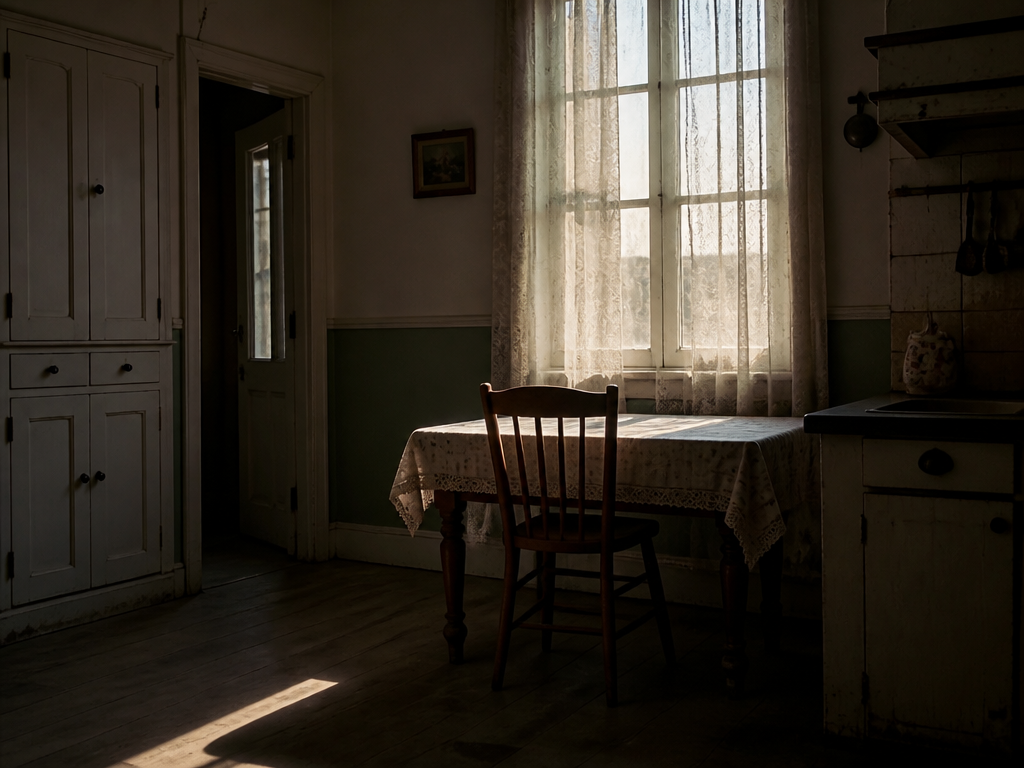
My friend Dana told me about her son the way you'd describe a closed door you keep walking past. He visits every few weeks, she said. He sits at her table, eats what she cooks, answers her questions, and then he's gone, and she realizes she knows nothing more about his life than she did the last time. "He's polite," she said, turning her wine glass by the stem. "That's the part that gets me. He's so polite. Like a houseguest I'm fond of."
She wanted me to tell her what was wrong with him. Whether it was a girlfriend, or money, or something he was angry about that he wouldn't say. I didn't have an answer that would comfort her, because I recognized her son too well. I have been him. I am still him, in the right house, on the wrong afternoon.
What Dana reads as withholding is closer to a calculation made so long ago it no longer feels like a choice. Her son walks into her kitchen and some part of him quietly takes inventory — how she's standing, what her voice is doing, whether the air has that particular tightness. And then he decides, without deciding, how much of himself the visit can hold. He brings that much. Not more. The politeness isn't distance. It's the size of the opening he believes is available.
I know this because of the teacups.
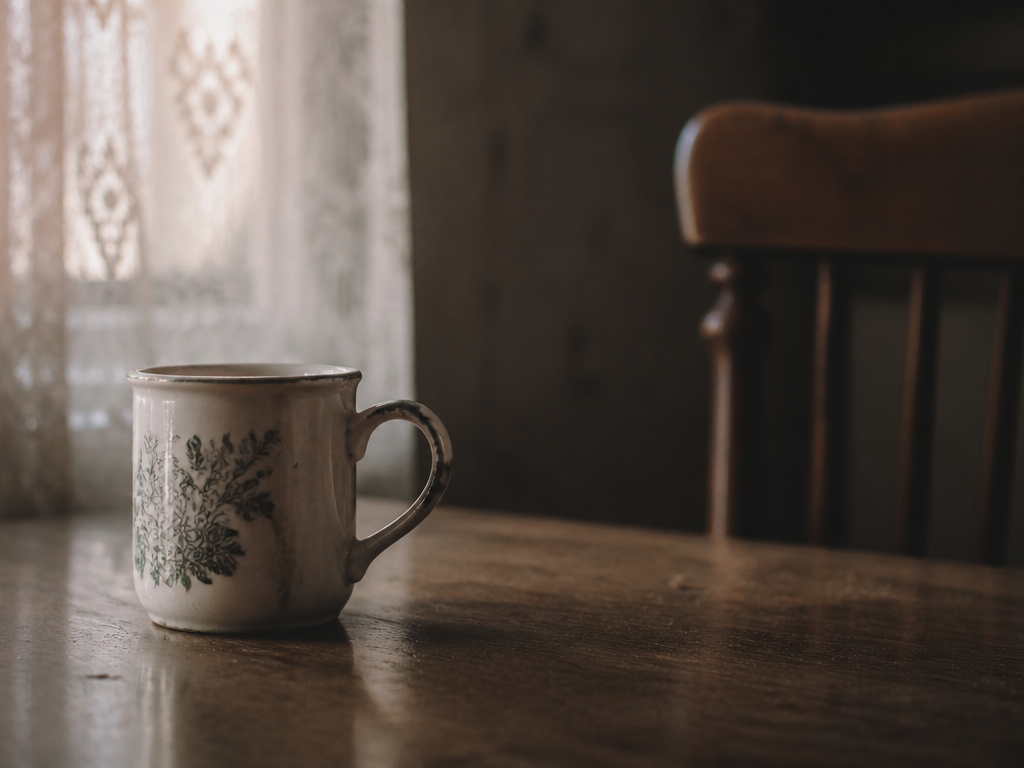
When I was nine, my mother kept a set of thin china cups on the second shelf, the ones that came out for company and almost never otherwise. I learned that if she was taking them down on an ordinary Tuesday, something had shifted — she was either bracing for someone or trying to make a difficult evening feel ceremonial. I'd come in from school and look at the shelf before I looked at her face. Two cups down meant a long phone call had upset her. The full set meant my aunt was coming and I should be charming and brief. I read the cupboard the way other kids read the sky.
Nobody taught me this on purpose. It wasn't a household of slammed doors. It was quieter than that, and quiet is harder to point to. My mother could go from warm to somewhere unreachable in the space of a sentence, and I never found the trigger, so I learned to watch everything and offer little. By the time I was a teenager I had a version of myself I brought downstairs — agreeable, low-volume, easy to be around — and a version I kept upstairs with the door shut. The downstairs one was very good. People liked him. He was a kind of weather forecast in human form, always adjusting to conditions.
What undoes me now is that my mother did exactly the same thing in her mother's house.
I saw it once, plainly, when I was maybe twelve. We'd driven three hours to my grandmother's, and the moment we crossed the threshold my mother changed. Her laugh got higher. She complimented the curtains. She became careful in a way I'd never seen at home, asking permission for things — to use the phone, to let me have a second helping — like a guest who wasn't sure of her welcome. My grandmother sat very upright at the head of the table and corrected my mother's grammar in front of everyone, and my mother just smiled and thanked her. On the drive home my mother was silent for an hour, and then she said, to the windshield more than to me, "She's just particular. She's always been particular." That was the whole explanation. That was the inheritance, handed down without a word about what it cost.
So I can't sit in judgment of the kitchen I grew up in. The woman who taught me to read the cupboard had spent her own childhood reading something just as carefully, in a house with stiffer chairs and a sharper tongue at the head of the table. Nobody in this line was a villain. We were all just children once, getting fluent in someone else's moods, and then carrying that fluency into rooms it no longer fit.
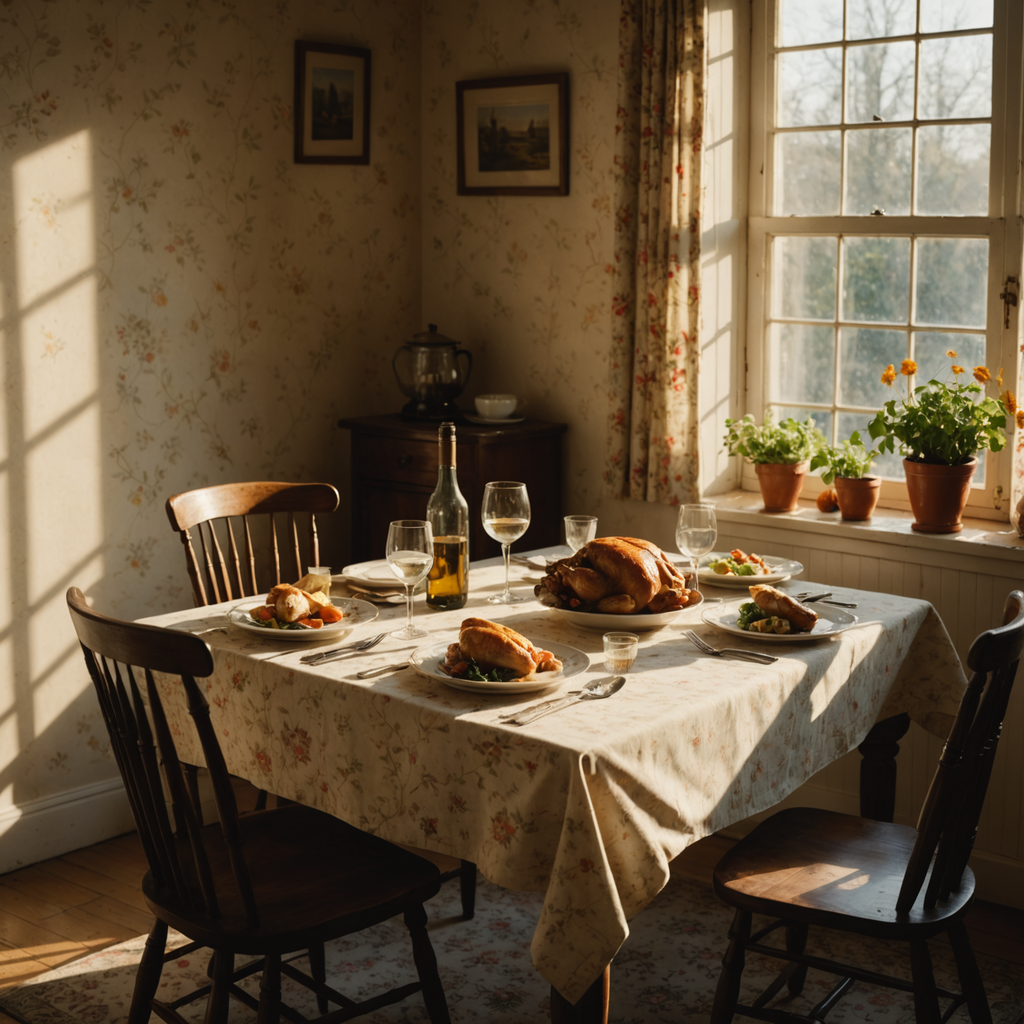
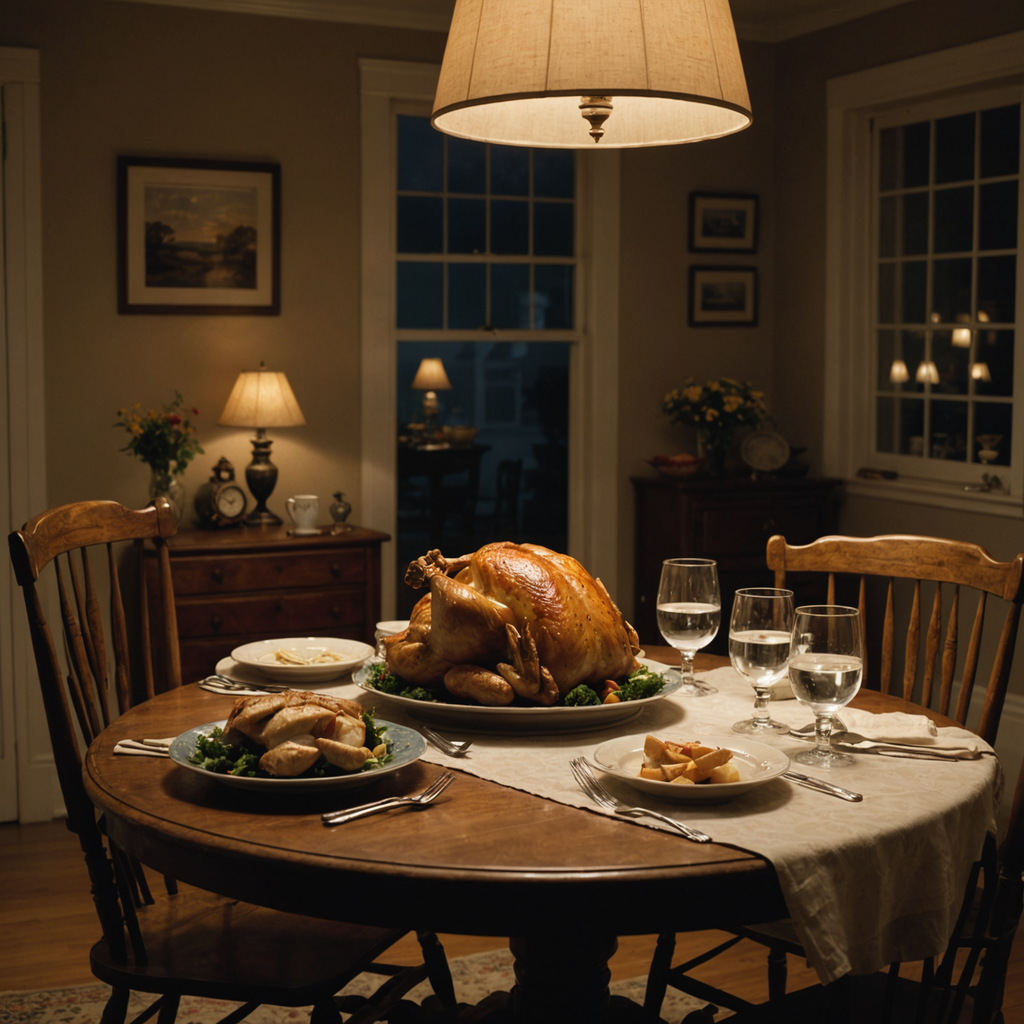
Last spring I went home for my mother's birthday. I'd told myself it would be different — I'm an adult now, I've done the years of talking it through, I understand the machinery. I sat at her table. She'd made the chicken she always makes. She asked how work was, and I heard myself give the version. Fine. Busy. The good news only, sanded smooth. I watched myself do it from a small distance, the way you watch yourself in a dream and can't change the script. She asked if I was seeing anyone and I said it was complicated and changed the subject, and she let me, because letting me is its own old habit.
My partner, Theo, was quiet on the drive back to the hotel. Then he said, "You get smaller in there. Not sad. Just — smaller. Like you fold something up before you go in." I started to argue and then didn't, because he was right, and because there's no good defense against being seen accurately by someone who loves you. I had brought my mother the houseguest. The same one Dana's son brings her. The same one, I suspect, my mother once carried up the path to her own mother's door.
The strange grief of it is that the silence isn't a wall built against her. It's a kindness I learned too early and can't fully unlearn — the belief that the unedited version of me would be too much for the space we have, and that protecting her from it is a form of love. I don't know how to put that down. I've gotten better at leaving a little more of myself on the table each visit. A real worry, once. A actual no, another time. Crumbs, maybe, but warmer than the politeness.
When I called my mother the week after the birthday, I almost said some of this. I didn't. But near the end of the call, after a long pause, she said something I keep turning over.
"You know, my mother and I never really talked either. I always thought we'd get to it."