Bogdan had a habit that made people uncomfortable, and it took me about two years to understand it wasn't a habit at all.
He worked three desks down from me, a systems guy with a permanent coffee ring on the corner of his notebook, and in meetings he would go long stretches without saying anything. Not sulking. Not checked out. He looked directly at whoever was speaking, and he did this thing where his eyebrows moved slightly, half a millimeter, like a needle registering something. Then someone would ask him what he thought, and there would be this gap. Four seconds. Five. Long enough that a couple of the younger project managers would start to fill it for him, and he'd let them, and then when they ran out he'd say his piece anyway.
The meeting I remember was about killing a product line. Everyone had already decided; the meeting was theater. Twenty minutes of people restating the decision in slightly different vocabulary, each of them nodding at the last speaker in a way that had nothing to do with agreement and everything to do with wanting a turn. Bogdan said nothing for the whole thing. Then, near the end, our director asked him directly, and he took his time, and he said, "I keep going back to the thing Maren said. About the support tickets. I don't think — I mean, I might be wrong, but that didn't sound like a product nobody wants. That sounded like a product with one broken part."
Maren had said it forty minutes earlier. She'd said it badly, apologetically, and everyone had rolled past her. And now here was this man who had apparently been carrying her sentence around the whole time like something warm in his pocket.
They didn't kill the product line. But that isn't really the part that stuck with me. What stuck with me was Maren's face. She looked, for a second, like someone who had been handed back something she'd assumed was lost.
I started watching what people did around him after that. There was a woman from finance, brittle in every other context, who softened by degrees whenever she talked to him. There was a young developer who once told me, in the elevator, that Bogdan was "the only person here who doesn't make me feel like I'm wasting his time," and then looked embarrassed at having said something so naked before eight in the morning.
I wanted whatever that was. I want to be honest about the ugliness of that wanting. I didn't want to give people what he gave them. I wanted to be regarded the way he was regarded.
So I studied it the way you'd study a card trick.
There was a night at a bar off Wilson, sometime around then, where I tried it out. A friend of a friend was telling me about her divorce, and I did everything right. I turned my whole body toward her. I stopped touching my phone. I said "mm" at the correct intervals. I asked follow-up questions in that low, careful register that signals depth. And the entire time, underneath, I was composing. I had two observations queued up and I was waiting for a seam in her story to insert the better one. I remember the specific ache in my jaw from holding my face in an expression of concern while my mind was somewhere else entirely, in the green room, rehearsing.
She told me later that I was a good listener. She meant it as a kindness. It sat in me for a week like a swallowed stone.
Because here's the thing about performing attention: you can fool almost everyone, most of the time, and you cannot fool yourself even once. I knew exactly how little of her story I'd retained. Ask me now what her husband did for work and I couldn't tell you. Ask me what my second observation was and I still remember it, verbatim, because I'd spent so long polishing it.
I think the habit started earlier than that bar. Most habits do.
My grandmother had a wooden bowl she kept cherries in during July, and one afternoon — I was maybe nineteen, home from school, restless in the way you are at nineteen when the whole world is happening elsewhere — she started telling me about her sister. Not the one I knew. Another one, older, who had died before I was born. She was working the cherries with her thumbs, splitting them, dropping the pits into a chipped saucer, and she said something like, "She had a way of walking into a room. You couldn't not look. And then she got quiet, that last year, and nobody — well." And she stopped. She didn't finish the sentence.

I said something. I don't remember what. Something that moved us along.
What I remember with awful clarity is that I was waiting for her to be done, because I had somewhere to be, and I could hear my friend's car idling in the driveway, and the whole time I was calculating the minimum number of responses required to exit the kitchen without seeming rude. She gave me a door. I mean, that's what it was. She opened something and stood there holding it and I walked past it to get my keys.
She died eleven years later and I never heard the rest of that sentence. Not the specifics. Not what happened in that last quiet year. There is no way to get it now, and I've made a kind of peace with that, but the peace is thin and I can still hear the cherry pits hitting the saucer.
I want to be careful here, because there's a version of this that curdles.
I once sat through a pitch from a man who used silence like a crowbar. He'd ask a question and then just wait, watching, letting the discomfort build until you filled the space with more than you meant to say. He never wrote anything down. He never referred back to anything. His quiet wasn't attention — it was a vacuum he'd engineered so you'd give him something to sell you. I walked out of that room having disclosed our entire budget ceiling and feeling vaguely handled, the way you feel after a haircut you didn't ask for.
Bogdan's silence gave things back. That one took things. From the outside they can look identical for the first thirty seconds, and then the difference becomes the only thing in the room.
Changing was not graceful. I want to say that plainly, because I've read too many essays where someone decides to be better and then simply is.
The first real attempt I remember was a phone call with my sister, a Tuesday, about our mother's cardiologist appointment. She was doing the thing she does where the logistics carry the feeling — appointment times, parking situation, whether the new medication interacts with the old one. And I had my mouth open to say the reasonable thing, the fix, and instead I just didn't. I let it be quiet.
It was excruciating. Three seconds felt like standing in a doorway naked. I heard her breathing. I heard a cabinet close on her end.
Then she said, "I don't know. It's stupid. She just looked small in the chair. She's not small."
And I still, even now, feel the pull to have said something wise there. I didn't. I said, "Yeah." Which is not wisdom. But she kept going for another fifteen minutes, and by the end she wasn't talking about parking.
I called her more after that. Not because I'd learned a technique. Because it turned out I liked her, and I'd been talking over the person I liked for about thirty years.
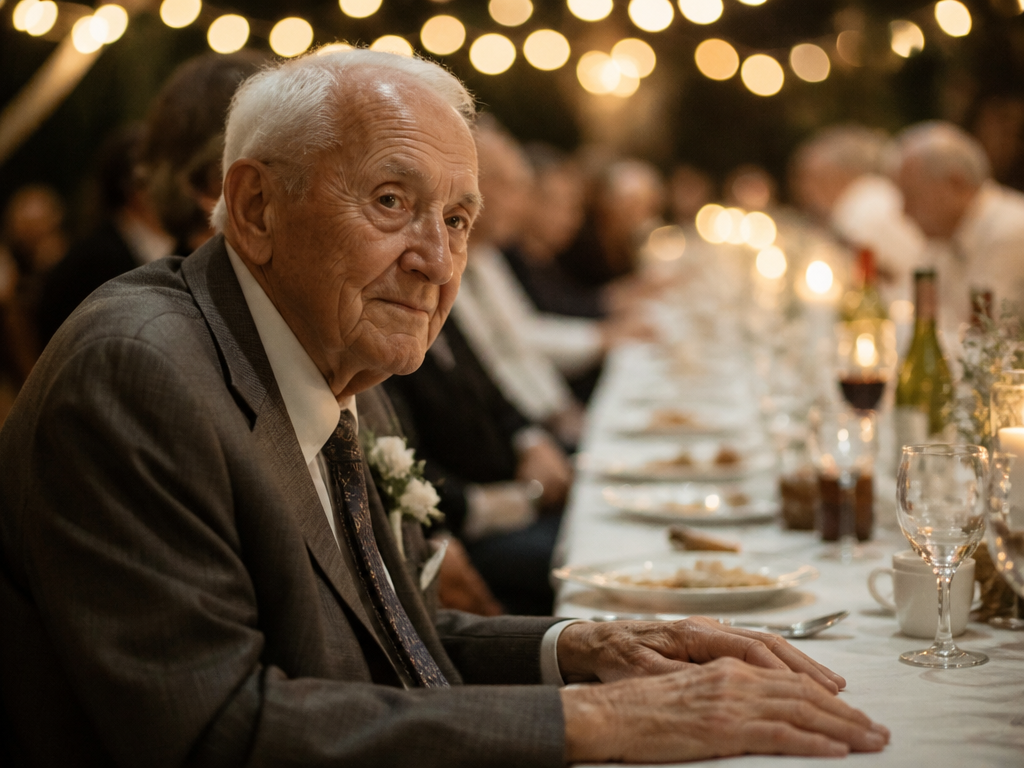
Bogdan retired four years ago. There was a lunch — the sad institutional kind, sandwich platters, a card everyone signed with the same three adjectives. People kept getting up to say things about him, and most of them said some version of *he was always so calm*, which missed it entirely. He wasn't calm. I'd seen him furious about a database migration. He was just unhurried about other people.
Near the end I got a minute with him by the window and I asked him, awkwardly, where he'd learned to do it. To listen like that.
He rubbed the back of his neck. He said, "I wasn't — you know. My father talked. A lot." He laughed at that, sort of. "So I got good at the other chair."
That was the whole answer. He didn't dress it up. It wasn't wisdom; it was just what had happened to him, and he'd made something out of it without ever deciding to.
Last night my son called about a job he didn't get, and I was standing at the sink with the water running and one hand in a pot that needed scrubbing, and he told me the whole thing, and I turned the water off and stood there with my wet hand on the counter, not saying anything, and he kept talking. I'm still holding the sponge.