There's a word I can never spell. I won't tell you which one, partly out of vanity and partly because by the time you read this I'll have looked it up again and forgotten it again, the way I always do. What I want to describe is the small red line that appears beneath it when I get it wrong. A jagged underline, like a tiny seismograph reading of my own incompetence. It shows up before I've even finished the word. The machine knows faster than I do.
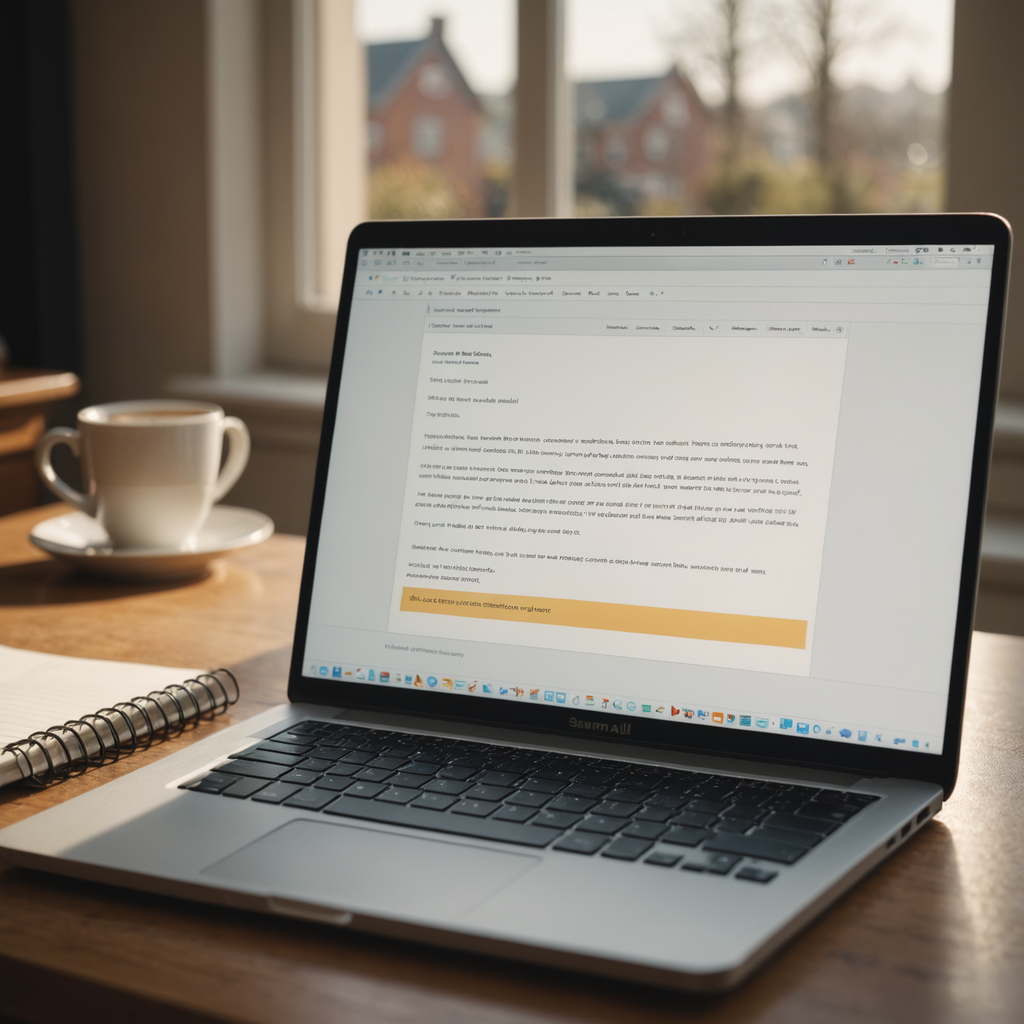
This morning I was writing something that mattered to me, a message to a friend who'd lost her mother, and I hit that word, and the squiggle appeared, and everything stopped. Not the grief, not the sentence, just me. I sat there with my hands off the keys. The right-click menu offered me three options, two of which were obviously wrong, and I chose the third and kept going. The whole thing took maybe four seconds. But in those four seconds I had left her completely. I was no longer thinking about her mother's hands or the way she used to call me by the wrong name on purpose. I was thinking about whether I'd be exposed as someone who couldn't spell.
I noticed it because it felt out of proportion. A condolence message, and the loudest thing in my head was a squiggle.
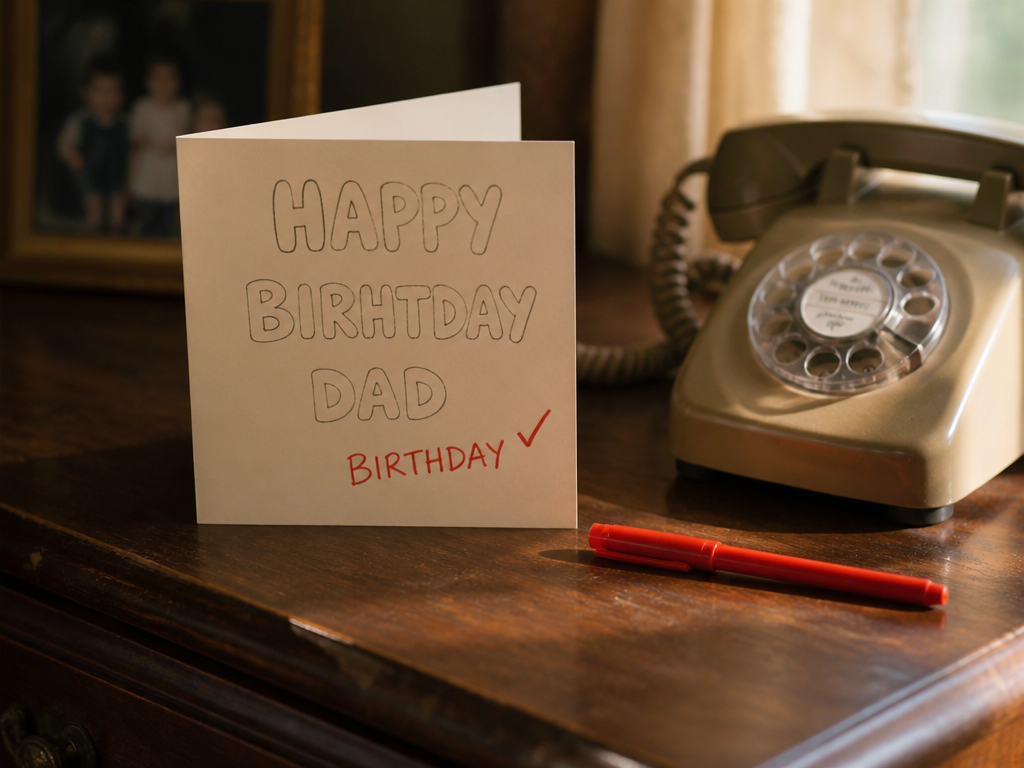
I remember writing differently. When I was nine I wrote a letter to my grandmother who lived four hours away, in a town with a name I can still picture on the envelope in my own uncertain handwriting. I wanted to tell her about a frog I'd caught. I didn't know how to spell "amphibian," so I wrote "anfibian," and I knew it was probably wrong, and I sent it anyway. There was no underline to stop me. There was just my mother licking the stamp and the blue mailbox at the end of the road that always smelled faintly of hot metal in summer. My grandmother wrote back and didn't mention the spelling. She told me about a frog she'd caught as a girl. The error traveled the whole way and meant nothing.
I think about that letter now with something close to envy. Not because the misspelling was charming, though my grandmother probably found it so. Because I was allowed to be wrong without knowing it in real time. The wrongness sat inside the sealed envelope, harmless, and by the time anyone saw it the moment had already done its work. I had told her about the frog. That was the point and it got there intact.
Now I am never allowed not to know. The not-knowing gets caught at the door.
There's a particular intimacy I have with the Google search bar that I don't have with most people. I tell it things I would never say aloud. Half-formed questions, embarrassing ones, the kind that start with "is it normal that" or "how do you spell" or "what's that word for when." Late at night I've typed sentences into it that read like prayers from someone who has lost faith in their own brain. The cursor blinks, patient, asking nothing of me. And then it gives me the word, the fact, the spelling, and I feel a small relief that is almost physical, a loosening in the jaw.
What unsettles me is how quickly the thing I looked up evaporates. I could search the same word a hundred times across a year and never once carry it home. There's a difference, I'm starting to suspect, between finding out and knowing. Finding out is a transaction. Knowing is something you've lived with long enough that it's become a piece of furniture in your head, a thing you bump into in the dark and recognize by feel. Google gives me the first and quietly erodes my appetite for the second. Why memorize the road when the voice on the phone will tell you to turn left?
I had a manager once, years ago, who sent emails that were riddled with errors. "Their" for "there," sentences that ran off cliffs, the occasional word so mangled I had to read it aloud to decode it. And here is the thing I'm ashamed of: I thought less of him for it. Not consciously. It wasn't a decision. It was more like a faint dimming, an automatic adjustment of how seriously I took what he said. He was brilliant at his job. He saw things in numbers that no one else could see. But a misplaced apostrophe in a Tuesday morning email made some small ungenerous part of me file him under a heading I'm not proud of having.
Which is exactly why I sit frozen over that red squiggle. I know the dimming exists because I do it to others. I am terrified of being on the receiving end of my own worst instinct. So I check, and re-check, and run the email through the silent tribunal one more time before sending, because somewhere out there is a person like me, scanning for the apostrophe, deciding what I'm worth.
The machine and I have made a deal, then. It will hide my errors and in exchange I will stop trusting myself. I will outsource the part of writing that used to be private courage — the part where you commit your imperfect sentence to the page and let it stand — and I will hand it to a process that lives outside me. The squiggle catches the typo. Google supplies the word. And somewhere in there the version of me who mailed "anfibian" to his grandmother without flinching gets a little quieter every year.
I keep wanting to make this a story about loss. About how we've traded fluency for accuracy, the warm muddle of being human for the cold precision of being correct. It would be a clean essay if I could land it there.
But I notice the dishonesty in that, too. The condolence message reached my friend. She wrote back. She said it helped, that I'd remembered the thing about her mother calling me the wrong name, that no one else had brought up that small foolish detail. She did not notice, or did not mention, whatever spelling I'd agonized over. The squiggle hadn't actually cost me anything except four seconds of self-regard. The frog letter and the condolence note arrived the same way — imperfect, sent anyway, carrying their real cargo underneath the surface I was so worried about.
Maybe the tools didn't take the courage from me. Maybe I gave it away and blamed the tools because that's easier than admitting I was always this afraid of being seen as wrong, that the boy with the envelope was braver at nine than I've managed to be since, and that no software invented that fear, it only gave it a place to put its hands.
I've read this back four times now. I fixed two errors. And honestly I'm not sure a single thing I've claimed in here is true — only that it felt true while I was typing it, which is maybe its own kind of red squiggle, appearing under the whole essay, asking me whether I meant any of it at all.