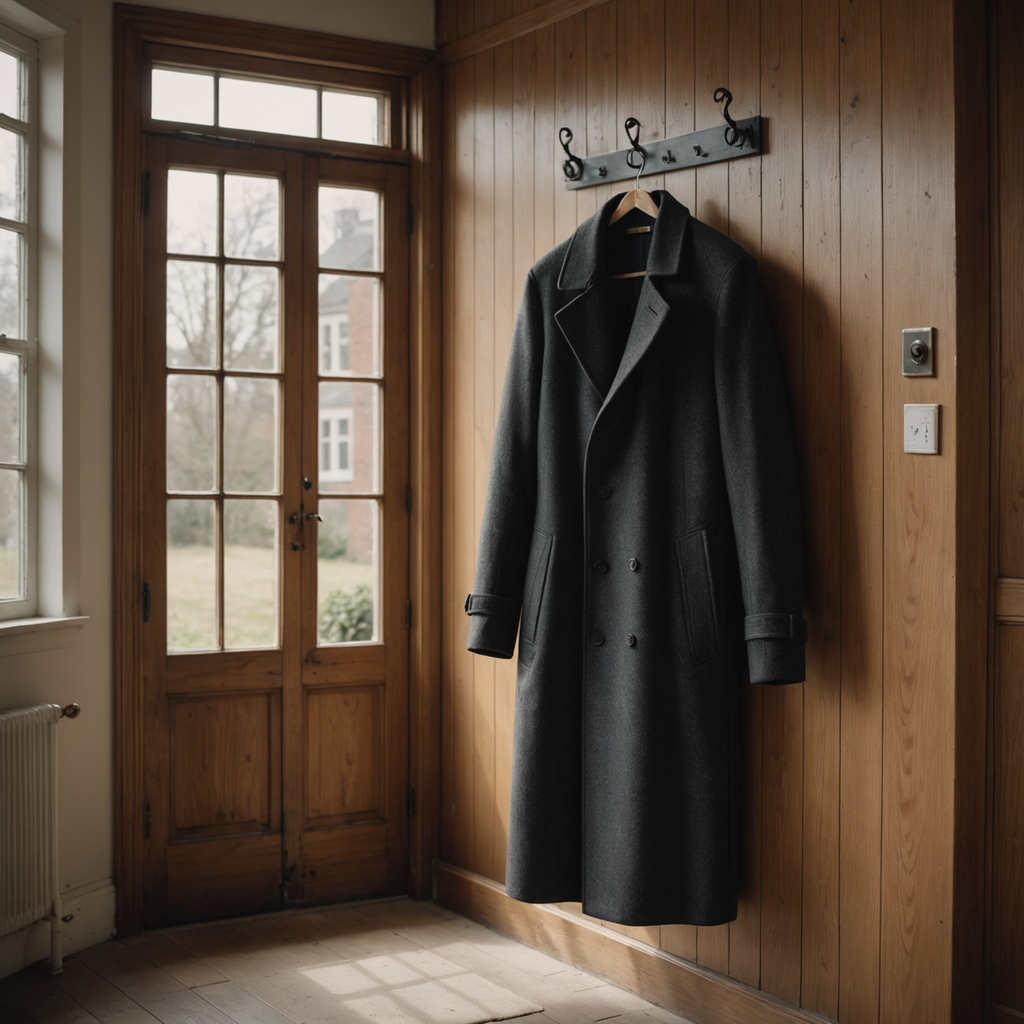
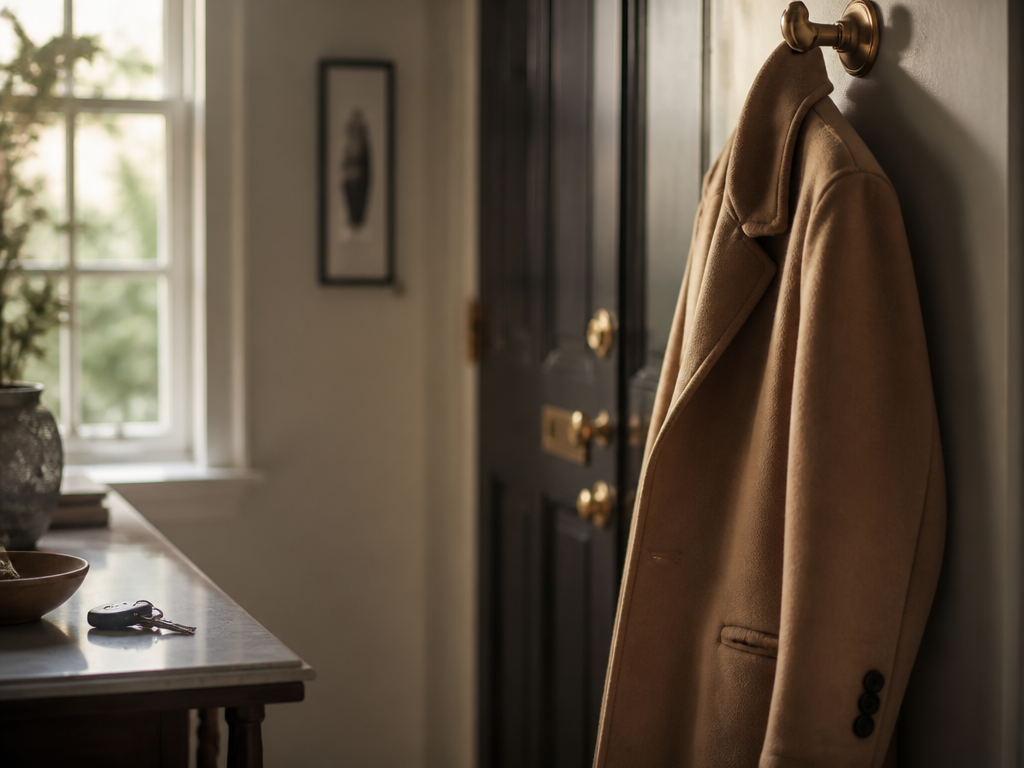
There is a green wool coat I keep on at parties. Not because I'm cold. I keep it on because it gives my hands something to do — the buttons, the collar, the pockets where my phone lives like a small excuse. At a dinner two winters ago I realized I had been wearing it for nearly an hour inside a friend's warm apartment, the radiator clanking, everyone in shirtsleeves, and I was nodding along to a story about somebody's renovation with a coat buttoned to my throat. Someone said, "You can take that off, you know, you live here practically." And I laughed and said something about always being cold, and I did not take it off.
What I remember most is the drive home. The streetlights smearing on the windshield, the heater finally warming me, and a feeling I didn't have a word for sitting in the passenger seat. I had been funny that night. I had asked the right follow-up questions. People had touched my arm when they laughed. By every measure I knew how to read, the evening was a success. And yet I felt like I had spent three hours translating myself into a language I'm fluent in but don't dream in.
I bought that coat the autumn my father was sick. I remember the saleswoman saying it was "very forgiving," which I took at the time to mean the wool hid wrinkles, but the word stayed with me longer than it should have. Forgiving. I wanted to be something forgiving that season — easy to be around, no sharp edges, nothing anyone had to manage. My father was in a hospital bed making jokes with the nurses, and when I visited I made jokes too, because that was the family currency, and we paid each other in it right up until we couldn't. I would sit by his bed in that coat and tell him light things, and he would tell me light things back, and we were both, I think now, freezing in a warm room.
It took me years to understand that I had learned connection as a kind of competence. You show up. You perform warmth so convincingly that even you half believe it. You leave people feeling good, and you go home empty, and you assume the emptiness is a flaw in you rather than evidence that something real never actually happened.
The hardest version of this isn't the dinner party. It's the marriage. My husband and I have a good one, by which I mean we are kind to each other and rarely cruel and we know how the other takes their coffee. But there was a Sunday last spring when we were both reading on the couch, his feet across my lap, the windows open, and I felt a loneliness so specific it had a temperature. He asked what I was thinking. I said, "Nothing, just tired." The truth was that I missed him while he was touching me. The truth was that I had been editing the day's small disappointments down to nothing for so long that I no longer knew which ones were worth saying out loud. The coat, by then, didn't even hang by the door. I had started wearing it on the couch in my own house, metaphorically, which is the worst place to keep your coat on, because the people there actually want to see you.

I think the reason hidden loneliness is so cruel is that it disguises itself as humility. You tell yourself you're being considerate. You're not burdening anyone. You're reading the room and giving people the easy version of you because that's generous, isn't it. But there is a thin, mean line between generosity and disappearance, and I had been living on the wrong side of it without noticing the border crossing.
There was one person who caught it. My friend Dahlia, years ago, sitting across from me in a diner with cracked vinyl seats, the kind where the menus are sticky and enormous. I had just delivered a polished little summary of how I was doing — fine, busy, good busy — and she put her fork down and looked at me too long and said, "That's the press release. What's the actual." Not even a full question. The actual. I started to cry into a basket of fries, mortified, and she didn't try to fix it. She just kept eating and let me leak. I felt more accompanied in that wrecked diner booth than I had felt in months of beautifully attended events.
What undid me about Dahlia wasn't that she was kind. Lots of people are kind. It was that she didn't believe my coat. She had decided, somewhere along the way, that the smooth version of me was not the real one, and she simply declined to talk to it.
I tried to take the coat off once, on purpose. At a small gathering I told a story that wasn't flattering — about how I'd handled my father's death badly, how I'd organized the funeral like an event planner because grieving felt too undignified, too uncovered. The table went quiet in a way I wasn't used to. Nobody laughed. One woman reached over and squeezed my wrist. It was unbearable, that squeeze. I wanted to take it back, wanted to make a joke to release the pressure, and I almost did. But I held still and let the silence be the response, and afterward, walking to my car, I felt scraped raw and strangely lighter, like I'd returned something I'd been carrying that was never mine.
I still have a voicemail from my father. I don't listen to it often. In it he's telling me a story about a man at his pharmacy who argued for ten minutes about a coupon, and he's laughing, and there's a part near the end where he stops laughing and says, quieter, "Anyway. Call me when you actually have time, not when you're driving." I used to call him while driving. The easy slot. The version of attention that asks nothing of you. He knew the difference between being called and being reached, and he named it, and I deleted the voicemail in my head a hundred times before I understood he'd been asking me to take the coat off years before I knew I was wearing one.
Last week my mother called and I made the mistake of saying I was fine in the wrong tone of voice. There was a pause on the line. Then she said, "You sound exactly like your father did when he was about to lie to me."