There is a particular silence that happens after you type the word "no" into a text message and then sit there, thumb hovering, not sending it.
I know that silence well. I was in it last Tuesday, at 11:40 at night, the phone lighting my face in the dark while my wife breathed slow beside me. A colleague had asked if I could "just take a quick look" at something before a morning meeting. Quick look. I knew what a quick look meant. It meant an hour, maybe two, of pretending the thing was simpler than it was. I typed: "I can't tonight, but I'll get to it first thing." Then I deleted "first thing" because it sounded too firm. Then I added "sorry!" with an exclamation mark, because a period felt like a slammed door. Then I sat there reading my own message like it was a confession I might be punished for.
The word no had been sitting in my mouth for forty years like a stone I kept meaning to spit out and never did.
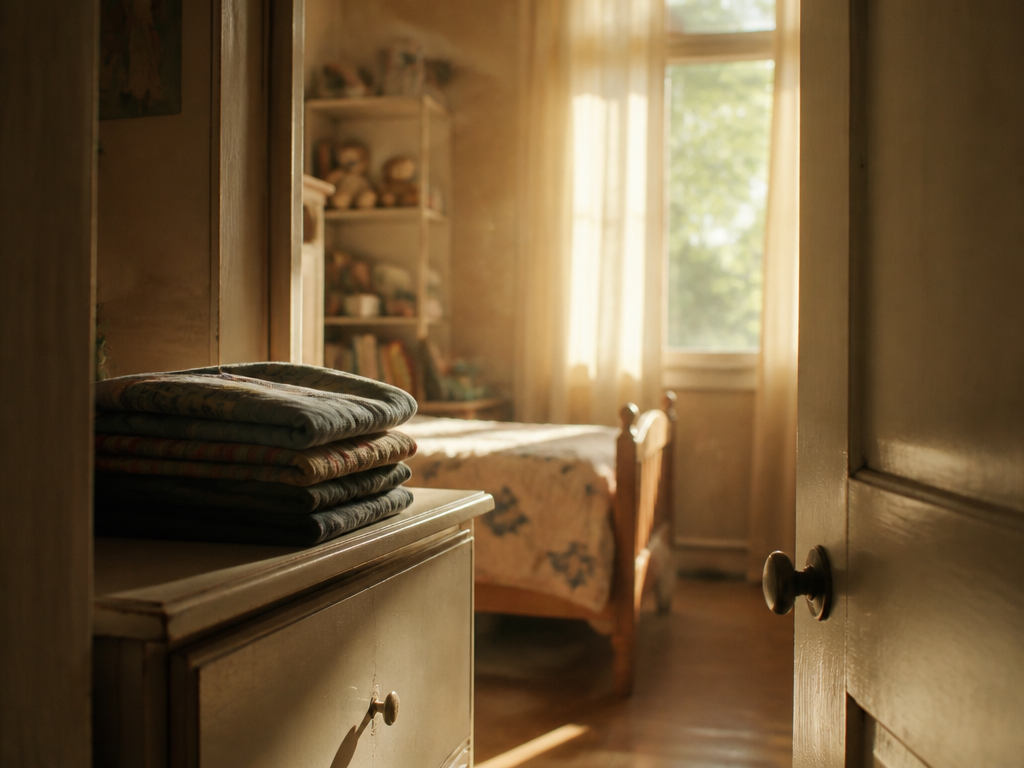
My mother used to host. That's the verb she'd use. "I'm hosting Sunday," she'd announce on a Wednesday, and the rest of the week bent toward it. I remember being nine and standing in the kitchen doorway watching her at the stove with three pots going and the phone wedged between her ear and shoulder, telling her sister that of course it was no trouble, of course she could bring the kids, of course they could stay over. When she hung up she set the receiver down with a click that was harder than it needed to be, and she stood very still for a second with her back to me. Just a second. Then she stirred the pot again and called it nothing.
I think about that click a lot. The gap between what her mouth said and what her hand did. I learned the whole grammar of accommodation from watching that small, contained slam.
There's a man I worked with years ago, a designer named Felix, who could say no the way other people say good morning. Casual. Friendly. Completely unbothered. A project manager would dump some impossible request on him and Felix would tilt back in his chair and go, "Yeah, that's not going to happen by Thursday." Not unkind. Not a fight. Just a fact about the weather. I used to watch him do it the way you'd watch someone speak a language you'd given up on learning. Once I asked him how he did it, how he didn't feel terrible afterward, and he looked genuinely confused. "Why would I feel terrible? I told them the truth."
I didn't have an answer for him. The truth, in my house growing up, was the thing you said after you'd already agreed to everything.
For a long time I confused being needed with being loved. They wore the same coat. If someone needed something from me and I gave it, that transaction felt like proof I mattered. The cost showed up later, in private, in the resentment I'd carry around like a second job. I'd say yes to a favor and then spend the whole drive over rehearsing all the ways the person was taking advantage of me, never once considering that I was the one who'd handed them the rope.
A friend asked me to help her move last spring. I had a deadline that week, a real one, the kind with money attached. I said yes anyway. I spent the Saturday carrying boxes up three flights while the deadline sat in my chest like a swallowed coal, and somewhere around the fourth load I caught myself being short with her about where the lamp should go, snapping over a lamp, and I saw it then with awful clarity: I was punishing her for a choice I had made. She hadn't done anything wrong. She'd asked. I was the one who couldn't say the small honest thing, which was: I want to help you, but not this week.

Scope creep is just this same disease wearing a tie.
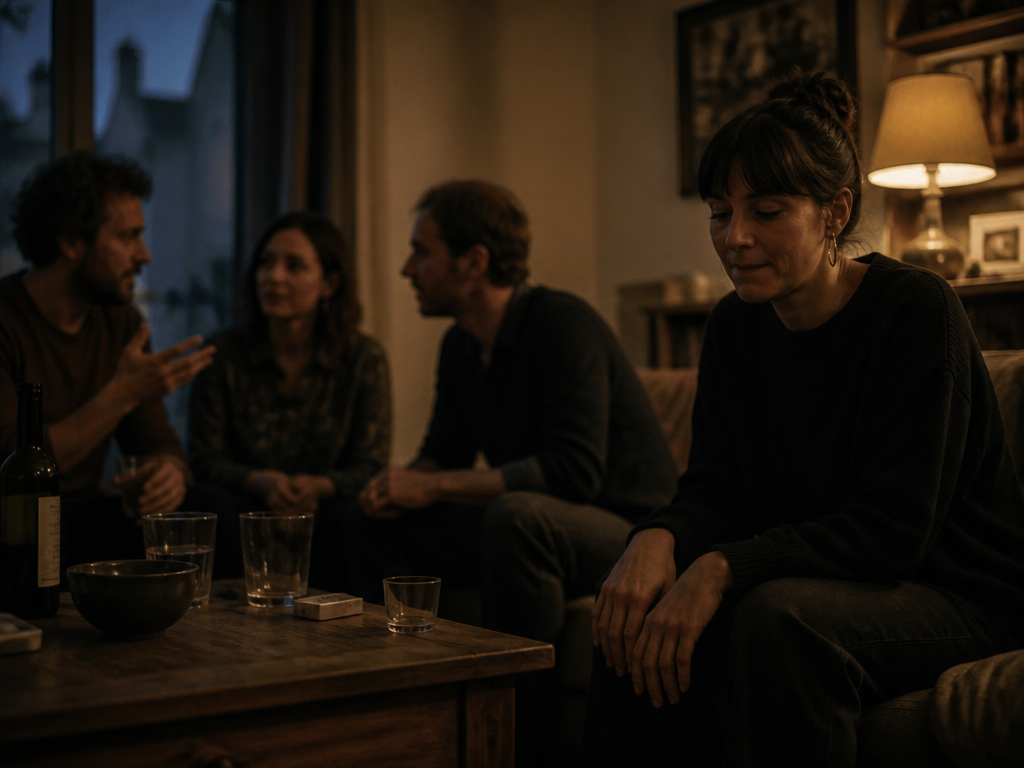
The meeting I'm thinking of had eleven people in it and a slide that said "Phase 1" in a font that suggested confidence nobody actually felt. By the end of the hour, Phase 1 had quietly absorbed three things that belonged to Phase 2 and one thing that belonged to a different department entirely, and every time a new task floated up someone would turn and look at me, and I would nod. Just a small nod. The nod that means yes without having to say a word you might be held to. I left that meeting with twice the work and none of it on record as mine, which is the worst possible arithmetic, and I knew exactly when it had happened. It happened in the nods. Each one cost almost nothing. That was the trap. The nos that ruin you are never the dramatic ones. They're the small surrenders nobody even notices, including you.
My father, on the other hand, said no constantly, and badly. He'd refuse things with a kind of preemptive anger, as if the asking itself were an insult. "No. Absolutely not. Why would I do that?" I grew up thinking those were my only two options: my mother's bottomless yes or my father's barbed no. Door A, where you disappear into other people's needs. Door B, where you keep everyone at a distance with a raised hand. It took me an embarrassingly long time to understand there was a third thing, a quiet door I'd never noticed, where you could decline something and still like the person standing in front of you.
I found it by accident.
A neighbor knocked one Sunday wanting me to join the homeowners' association board. I was tired. I had been tired in a way that felt structural, like the tiredness was holding up the house. And before my brain could assemble the usual apology-with-a-yes-buried-in-it, my mouth just said, "That's not something I can take on right now." That's not something I can take on. No reason offered. No three-paragraph justification. No exclamation mark.
And the strangest thing happened. He said, "Totally understand," and we talked about his dog for ten minutes and he left, and the sky did not fall. I stood in the doorway afterward almost dizzy, because some catastrophe I'd been bracing against my entire life had simply failed to arrive. The disappointment I'd feared, the coldness, the sense of having failed a test of my own goodness. None of it came. He just wanted to know about the board, and now he knew, and the dog was named Biscuit.
I want to be careful here, because I don't want to make it sound like a switch flipped. It didn't. The week after the neighbor I said yes to something I should have refused, an old reflex twitching back to life, and I felt the familiar resentment build and I let it, because apparently I needed to keep learning the same lesson from slightly different angles. There's no graduation from this. You don't get a certificate that says you are now a person with edges. You just get better at noticing the moment the stone shows up in your mouth, and sometimes, not always, you manage to set it down.
The thing nobody tells you is that a boundary feels, from the inside, almost exactly like cruelty. That's the cruelest part of it. When you've spent your life merging with what other people want, the first time you hold a line it doesn't feel like health. It feels like you've grown a spike and stabbed someone you love. The body doesn't know the difference yet. The body has only ever known yes.

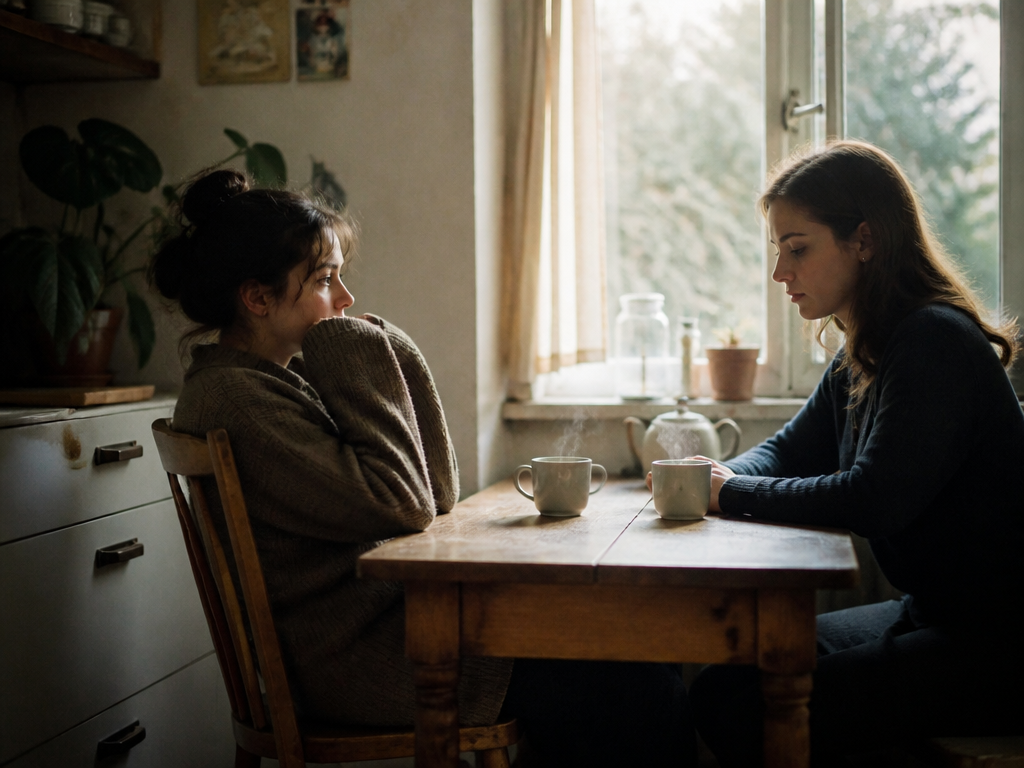
I told my wife about the colleague, the late-night text, the deleted "first thing." She listened in that way she has where she's clearly forming an opinion she's deciding whether to share.
"You know what's funny," she said finally. "You'd never expect this from anyone else. If I told you I felt obligated to answer work texts at midnight, you'd think I was nuts."
"That's different."
"How is it different."
I started to explain how it was different and got about four words in before I heard myself, the elaborate machinery I'd built to justify a standard I applied only to me. She didn't say anything else. She didn't need to. She just raised her eyebrows and went back to her book, and I lay there in the dark feeling caught, which is a feeling I've come to trust, because it usually means someone has gotten close to something true.
My mother died three years ago, and at the reception afterward I watched a long line of people tell me how she'd helped them. The casseroles. The rides to the airport. The time she sat up all night with someone's frightened kid. And I felt the grief, of course, but underneath it, uninvited, was something sharper. I kept thinking about that click of the phone receiver. I kept wondering how many of these kindnesses had been freely given and how many had been the only kind of love she knew how to perform, and whether she could have even told the difference, and whether anyone had ever once let her say no and stayed in the room with her anyway.
That's the part that undoes me. Not that she gave so much. That I'm not sure she ever felt allowed to keep any of it.
There's a phrase I use now that I stole from no one in particular. When someone asks for something I can't or won't give, I try to say: "I'm not able to do that, but here's what I can do." The trick is that the second half is genuine. I'm not bargaining my way back to yes. I'm just telling someone where the actual edge of me is, and offering my hand at that edge instead of pretending the edge doesn't exist. It works more often than I'd have believed. People, it turns out, mostly want to know where they stand with you. The endless yes I thought was so generous was actually a kind of fog. Nobody could ever find me in it.
Last month I sent the text. The real one. A different colleague, a different midnight, a different "quick look." I wrote: "I can't get to this tonight. I'll look at it in the morning." No sorry. No exclamation mark. A period at the end, that slammed door I'd been so afraid of, sitting there looking perfectly ordinary. I put the phone face-down on the nightstand and I did not pick it back up to check if she'd reacted, and that, the not checking, was harder than the sentence itself.
I lay there a long time. Not triumphant. Just awake, listening to the house tick and settle, feeling like a person who had finally said the small true thing and survived it.
And here is where I'm supposed to tell you it gets easier, that the stone dissolves, that I've become someone like Felix who tells the truth and feels nothing but the clean satisfaction of having told it. But I've read back over everything I've just written, all these tidy scenes arranged to suggest a man who learned something, and I'm honestly not sure I believe it. I think I might just be a person who got slightly better at performing his recovery, the way my mother got better at performing her generosity. I don't know which of us was more honest. I genuinely don't know if a single word of this is true, or if I'm just doing it again, more quietly, where no one can see.