The bicycle chain had come off again, and I was eight, and I had asked my father a question I no longer remember the wording of — something about whether he was sad, or whether he ever got scared. What I remember is that he flipped the bike upside down on the driveway so it balanced on its seat and handlebars, and he turned the pedal with one hand while threading the chain back onto the gear with the other, and he said, without looking up, "There. Good as new." The grease made black commas on his knuckles. I understood, in the wordless way children understand these things, that the bicycle had been fixed and the question had not, and that one of these was allowed to happen on this driveway.
He was the most generous man I knew. That is the part nobody warns you about — that the avoidance can wear the face of devotion, that you can spend your whole childhood being well taken care of and still go to bed feeling like a stranger in a house full of people who would die for you.
I want to tell you about a few things. Not feelings, exactly. Objects. Sentences. The artifacts I've collected, mostly without meaning to, that turned out to be a record of every time I chose to provide instead of arrive.
The first is a wallet. Brown leather, my own, the one I carried for most of my thirties. I noticed at some point that I reached for it the way other people reach for words. A friend would tell me something hard — a diagnosis, a divorce, the long flat grief of a job that had quietly stopped meaning anything — and I would feel the conversation tilt toward the place where I was supposed to feel something with them, and instead my hand would find the wallet. Let me get this. Let me cover the cab. Let me send you something. I was famous among my friends for picking up the check, and I told myself this was warmth, and it was a little, but mostly it was an exit disguised as a kindness. The check arrives and the conversation ends. You can't keep crying at a table where the man across from you has just made everything fine.
The second is a thermostat. I lived for three years with a woman named Dana, and I knew the exact temperature she liked the apartment, and I would get up before her in the winter and nudge it two degrees warmer so the floor wouldn't shock her feet. I knew which brand of tea, which side of the bed, which highway exit she'd want when she was tired. I tracked her the way you'd track weather. And one night she sat on the edge of that warm bed and said, "You know everything about what I need and nothing about what I'm like." I didn't understand it then. I thought I was being accused of not caring, and I was so sure of my caring — look at the thermostat, look at the tea — that I couldn't hear what she was actually telling me, which was that I had memorized her preferences as a way of never having to ask her anything real. Anticipating someone's needs is a beautiful thing. It is also, done compulsively, a way to manage a person so they never have a reason to need the part of you that doesn't come from a store.
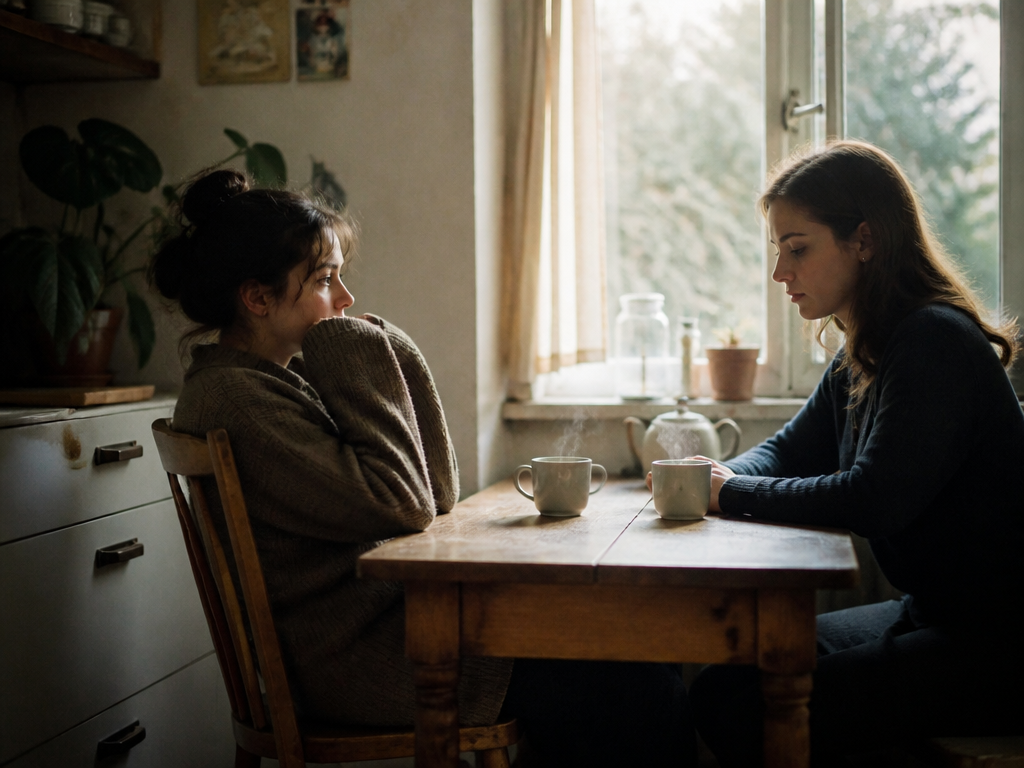
The third is a sentence. My mother said it the year my father died, in the kitchen, with her hands flat on the counter. I had flown in, I had handled the funeral home, I had organized the food and called the relatives and gotten the headstone right. She watched me move through all of it with a kind of bewildered gratitude, and then on the last morning she said, "You've done so much. I just wish I knew how you were taking it." And I heard myself say, "I'm fine, I'm just glad I could help," which was true and was also a door closing very softly. I had built an entire week of usefulness so that no one, including me, would have to look at the fact that my father was gone and I had never once asked him whether he got scared. The grease commas. The bicycle. Good as new.

The fourth is a check, four thousand dollars, written to my brother eleven days after that same funeral. He'd called me, drunk, at two in the morning, and he was saying things about Dad that were ugly and unresolved and probably true, and I could feel the conversation he actually wanted to have, the one where two grown men admit they were both half-raised by a man who threw bicycles upside down. I could not do it. I told him I'd help him with the money he owed on his truck. I heard the relief flood his voice and I hated it, because I recognized it. The relief of being handled. The smaller, sadder thing you accept when the bigger thing isn't on offer.
The fifth is a dishwasher. This one I'm less proud of, if pride is even the word. My marriage was failing — quietly, the way these things fail, not with a crisis but with a slow draining of the room of all its air — and one Saturday my wife tried to tell me she felt alone in our life together. She was standing in the kitchen and she said the word lonely and her voice did something I'd never heard it do. And I, listening, found myself noticing that the dishwasher had been running rough for months. By Monday I'd ordered a new one. I had it installed within the week. I remember standing in front of it while the installer explained the cycles, nodding, feeling competent and useful and absolutely, geologically far away from my wife, who was in the next room, still lonely, now with cleaner dishes.
That's the thing the wallet and the thermostat and the dishwasher have in common. They are all real. They are all, on their own terms, good. The cab fare helped. The warm floor was kind. The dishwasher washed the dishes. You cannot accuse a provider of doing nothing, and that's exactly what makes the whole arrangement so durable, so hard to name, so easy to mistake for love even from the inside. The doing is real. It just happens to also be the place I go when I am terrified of being seen, and the genius of it, the awful efficiency of it, is that the more I provide the more grateful everyone is and the less anyone notices I have left the building.
A therapist I saw briefly — I quit after four sessions, which tells you something — once asked me what I thought would happen if I just sat across from someone in pain and did nothing useful at all. I actually couldn't picture it. My mind went white. The closest I could get was an image of myself sitting there with my hands open and empty, and the feeling that came with it was not peace. It was a kind of nakedness so acute that I changed the subject, and then a few minutes later I offered to recommend her a better office chair, because hers looked like it was hurting her back. She laughed. "There you go," she said. I didn't go back.
Dana is married now, to someone I've never met, and last year she had a baby. I sent a gift. Of course I did. A very good gift, the right gift, expensive and thoughtful and exactly correct, and as I typed in the card number I felt the old smoothness move through me like a drug, the relief of having an answer for a feeling.
My nephew is fifteen now, my brother's boy, and yesterday he called to tell me he didn't make a team he'd wanted to make, and his voice broke a little, and I felt the wallet rise in me like it always does, the urge to fix the unfixable, to send him something, to flip his whole disappointment upside down on the driveway and thread the chain back on. I am on the phone with him right now. He is still talking. I have not said anything yet, and I am pressing my thumbnail hard into the soft pad of my finger to keep from offering him anything at all.