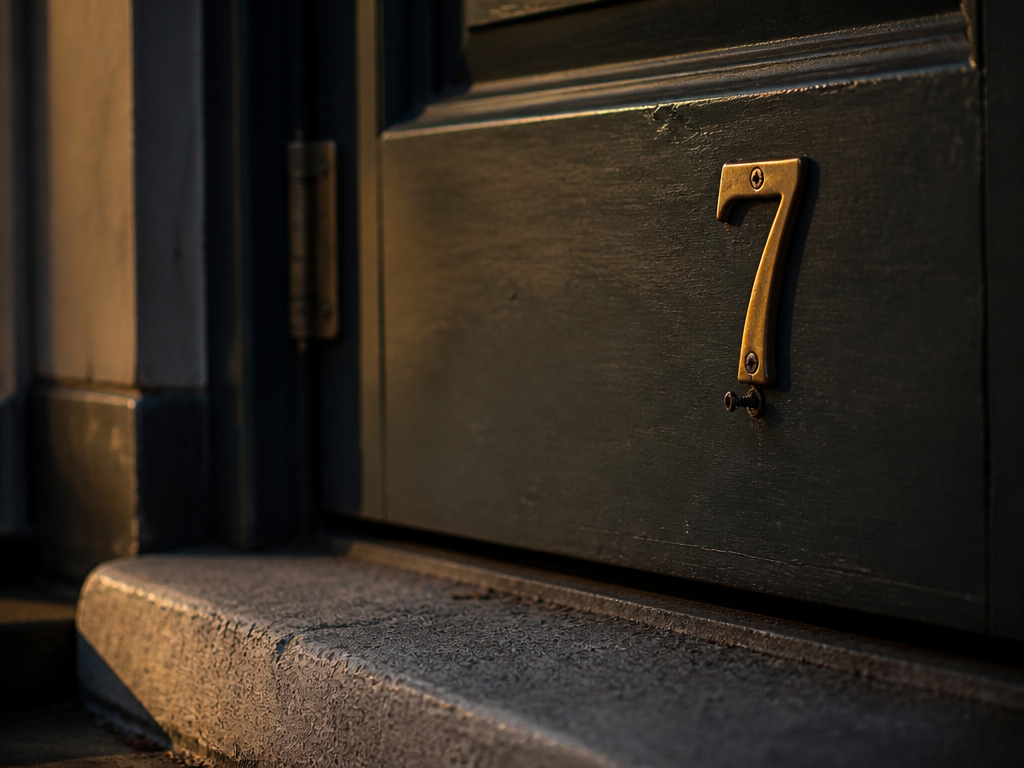
There's a man on my street named Errol who takes the recycling out on Tuesday nights at roughly the same hour I do, and last week he asked me how I was doing without Bruno.
Bruno died fourteen months ago. He was a black lab with a bad hip and an opinion about the mail carrier. Errol had met him maybe six times, on this same stretch of sidewalk, and I would not have bet money that he knew the dog had a name at all, let alone that name, let alone that he was gone.
I stood there holding a bin with three wine bottles in it and couldn't say anything for a second. Errol filled the gap the way people do. "Anyway," he said, and shrugged, and pushed his own bin into place with his foot.
I have thought about that shrug more than I've thought about most of the conversations I had that month.
There was a memorial service in a rented room above a restaurant, chairs in rows, a slideshow that kept advancing too fast. A man I had worked beside for eleven years had died on a Sunday morning at fifty-eight. His sister spoke. She said he'd taught himself to sail in his forties, that he kept a jar of sea glass on his desk at home, that he'd once driven nine hours to see a woman who then didn't answer the door.
I sat in the fourth row with a plastic cup of white wine going warm in my hand and understood that I did not know a single one of those things. Eleven years. I knew what he took in his coffee. I knew he hated the parking situation. I knew he had a kid, or two kids, and even then I was hedging in my own head — two, I think, two — while his sister was up front saying his son's name into a microphone.
What I felt wasn't guilt exactly. It was something more like discovering an empty room in a house you've lived in for years. All that time, all those mornings standing at the same counter waiting for the same machine, and I had somehow managed to spend eleven years in his company without ever once asking him a question I didn't already have a reason to ask.
In 1994 I was renting the top half of a house with brown carpet and a kitchen that got hot, and Dov came over at eleven at night carrying a folding lawn chair because he said mine were uncomfortable. He'd driven forty minutes. He didn't want anything. He sat in his own chair in my kitchen with his knees up and we talked until three about whether his father had ever actually liked him, and then about a girl I'd stopped calling, and then about nothing at all — there was a stretch where we were just watching a moth work the ceiling light.
He took the chair home with him. That's the part I remember most clearly, him going down the back stairs at three in the morning with a lawn chair under his arm.
Dov and I are still connected, in the sense the word has come to mean. He writes "happy bday brother 🎂" on my page every August, usually around noon, and I write something back with an exclamation point in it. I know what his kitchen renovation looked like. I know he went to Lisbon. I know his younger son plays hockey, or played hockey, at some point there was hockey.
I do not know if his father ever liked him. I never found out. I had a front-row seat to that question for one night in a hot kitchen and then thirty years of photographs of his meals.
Somewhere in my forties I became very good at parties, which is a thing I'd like to be able to say without wincing. I could move through a crowded room like water finding a drain. Ten minutes with the couple by the bookcase, a warm hand on a shoulder, a joke I'd already tested twice that evening. I had a set of questions that produced good conversation without requiring me to be inside it. What are you working on. Oh, and how's that going. And I would nod with my whole face while the back of my mind ran an inventory — who I hadn't greeted yet, who was leaving soon, whether I'd been over here too long.
The woman by the bookcase was telling me about her mother's illness, I think. I was calculating my exit. I remember my hand on the stem of a glass and the specific sensation of hearing her voice change pitch and thinking, in words, almost: *this is going long.*
I don't think she knew. That's not a comfort. That's the worst part of it, actually — how well it works, how many years you can run that particular engine before anyone notices the smoke.
At a barbecue three summers ago my daughter's boyfriend cornered me by the cooler and asked what I'd wanted to do before I did what I did.
Not what I did for a living. What I'd wanted. Nobody had asked me that in maybe two decades, and I found that I couldn't answer at speed. I stood there with my hand in ice water past the wrist, groping for a bottle I'd already found, while something old and half-buried came up slowly.
"I don't know if I ever — " I started. "There was a period where I thought I'd, you know. With the boats." It wasn't a sentence. He waited anyway. He had that thing where he didn't jump in, and it made me keep going, and what came out over the next few minutes was a version of my twenties I hadn't spoken aloud since my twenties.
He's twenty-nine. He asked because he wanted to know. There was no other reason available — I wasn't going to hire him, I wasn't going to introduce him to anyone, he already had my daughter. He just wanted to know.
Driving home, my wife asked what I'd been talking to him about for so long and I said I honestly wasn't sure.
I called Errol two weeks after the recycling thing, on a pretext — something about a tree branch. We got the branch out of the way in ninety seconds and then he told me his wife had a scan coming up, and I said the useless things you say, and then neither of us said anything.
It went on a while. A minute and a half, maybe, of a phone line open between two men who have nothing further to report. I could hear a television somewhere behind him and the sound of a tap running and then shutting off. My thumb kept moving toward the red button on the screen and I kept not pressing it, and he didn't either, and finally he said, "Well. It's Tuesday tomorrow," which meant something, though I couldn't tell you what.
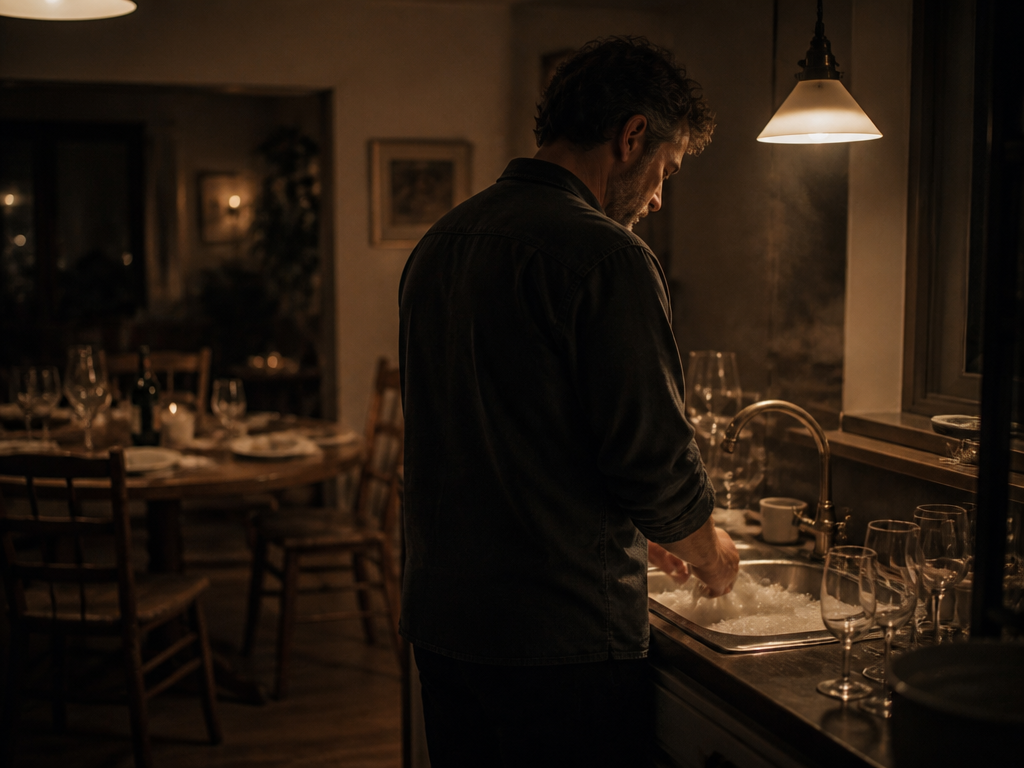
The wine bottles on Tuesday. I rinse them now before they go in, which I never used to do, standing at the sink running the tap into the neck of a bottle until the water comes out clear.