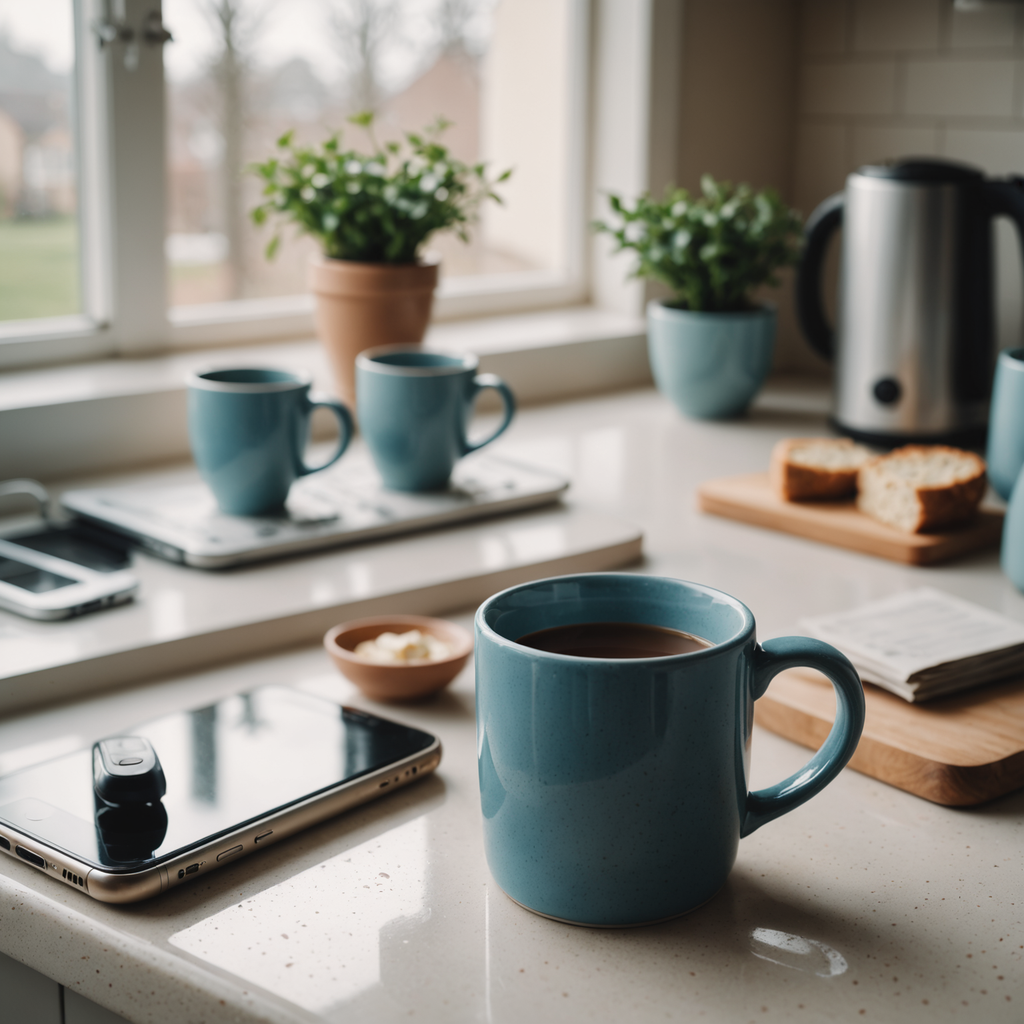
The mug was cobalt blue with a chip in the handle shaped like a comma, and I turned it over in my hands for about forty minutes while Dev talked about his brother. It was past one in the morning. We had come into the kitchen to find a bottle opener and never went back out to the patio, where four other people were arguing about a movie neither of us had seen. At some point Dev stopped in the middle of a sentence and said, "Anyway. I don't know why I'm — do you want tea? I have that weird tea."
I said yes to the weird tea, mostly because yes meant another ten minutes.
That's the entire story. Nothing was resolved. His brother is still his brother, and the situation with the money is, as far as I know, exactly where it was. But I've thought about that chipped handle maybe two hundred times since, and I could not tell you one word that was said on the patio.
I have a note on my phone called *things people said*. No dates, no context, just fragments — some of them mine, most of them not. I started it years ago and forgot about it and then started adding to it again, and what I've noticed is that almost every entry is attached to an object or a place. Not to a topic. Never to a topic. I don't remember conversations by what they were about. I remember them by what my hands were doing.
The second thing on the list is a gas station in Barstow.
Marisol and I were driving back from a site visit and stopped for fuel around eight, and it was still hot in that flat way the desert is hot after sundown, the asphalt giving back everything it took all day. She was leaning against the passenger door with her arms crossed. We had spent the whole drive talking about a project deadline, which is what we always talked about. And then, apropos of nothing, while the numbers rolled on the pump: "The house is very clean now. Since Ray started working nights. It's — you know. Very clean."
I remember thinking: say something. And I remember not knowing what, and the pump clicking off, and the sound of a truck downshifting on the interstate behind us. So I said, "That sounds lonely." It came out flatter than I wanted. She looked at me for a second like she was deciding something, and then she said, "Yeah," and got in the car, and we drove ninety more minutes talking about nothing.
For a long time I filed that under my failures. I've since come around to thinking it was one of the few times I got it right, or right enough. She wasn't asking me to fix a marriage in a gas station. She was checking whether the sentence could exist out loud without the world tilting. It could. That was the whole assignment.
People almost never say the real thing directly. They say the adjacent thing and wait to see what you do with it.
The third item on my list isn't a sentence at all. It's a tin.
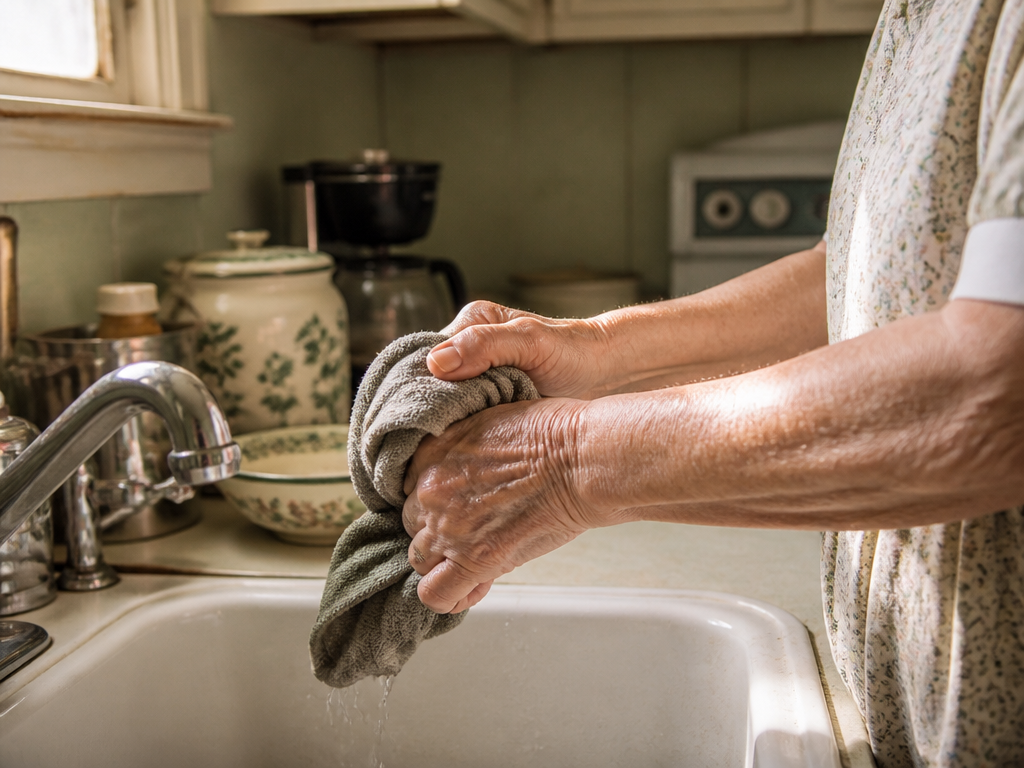
The day after my grandfather's funeral, my grandmother took a Danish butter cookie tin down from the top of the refrigerator, the blue one everybody's grandmother had, and set it in front of me at the kitchen table. Buttons. Hundreds of them, from coats that no longer existed. She wanted them sorted by color. It was a job that did not need doing and we both knew it. I was maybe fourteen.
We worked for two hours. She'd hold one up occasionally — a brass one with an anchor on it, a horn toggle, a little pearl thing with a crack running through it. Once she said, "This one's ugly. I kept it anyway." That's the only line I retained. She didn't cry and I didn't ask her anything, and my mother came in at some point and said we should have lunch and my grandmother said in a minute, in a minute, and we didn't have lunch until three.

I understood, dimly, even then, that something was being said. Not by either of us. By the buttons, by the sorting, by the fact that she wanted company at the table and not conversation across it. My whole adult life I've been suspicious of the idea that closeness requires talking. Some of the most exposed I've ever been with another person involved almost no words — a long drive, a kitchen counter, two people looking at the same third thing.
The fourth item is a voicemail I have never deleted, though I've transferred it across three phones like a family heirloom.
Renna, calling on a Tuesday, sounding like she was walking. "Hey, it's me. I wanted to ask you if you still — you know what, this is stupid on a voicemail, just call me. Okay. Bye. Bye."
I called her back and we talked for an hour about her job and a wedding we were both going to and the question never resurfaced. I've had years to wonder what the end of that sentence was, and I've built at least six versions of it, some flattering to me and some not. What I actually think now is that she didn't know either, and that the not-knowing was the point, and that if I'd said *what were you going to ask me* instead of *so how's the thing with Gabriel*, we might have found out together.
I didn't say it. I remember consciously deciding not to. It felt like reaching for something that wasn't offered.
The fifth item is a coat check line, and it belongs to me, and I don't love it.
A wedding, November, everyone waiting for their coats in a hallway that smelled like radiator dust and someone's spilled bourbon. Tom, who I'd known since we were twenty-three, held up his ticket stub and said, "It's been kind of a rough year actually, I don't know if you knew that."
And I said — I can still hear my own voice doing it — "Right? That DJ was rough on all of us."
He laughed. That's the thing. He laughed, generously, and we got our coats, and it cost him something to laugh and I knew it in the instant it happened. There is a particular flavor of shame in watching someone be gracious about your cowardice. I've apologized to him since, sort of, in the oblique way men my age apologize, which is to say I texted him a month later and asked how he was doing and he said fine and I said no but how are you doing and he told me.
So it wasn't unrecoverable. Almost nothing is. But I think about how automatic the joke was — how it left my mouth before I'd consented to it, like a hand pulling back from a stove. Whatever I was protecting in that hallway, it wasn't him.
The last thing on the list is a chair.
Vinyl, mustard-colored, seam split along the front edge so the foam showed. Sixth-floor waiting area, four in the afternoon. A woman about seventy sat down two seats over with a paper cup of coffee she never drank, and after a while she said, "Who are you here for?"
Not *how are you holding up*. Not anything softer. Just that, plainly, like asking the time. And I told her, and then she told me, and we talked for maybe twenty minutes about people she loved who were no longer alive, and she was funny about it, genuinely funny, and then a nurse said a name and she stood up and said "well," and that was it. I never learned her name. I picked at the split seam in the chair for another hour.
I called Dev last week. Not about anything.
He answered on the fourth ring and said he was in the kitchen, and I asked how his brother was, and there was a pause long enough that I could hear a kettle starting up on his end — that low flat note it makes before it climbs.