I have been staring at the same sentence for eleven minutes.
It is a text to someone I like. Not love, not yet, but the kind of like that makes the cursor feel like a witness. I have typed "I had a really nice time last night" and then deleted the period, because a period at the end of a single line can sound like a door closing. I have added an exclamation mark and then hated myself for it. I have tried "last night was lovely" and recoiled, because who says lovely, who am I performing. The phone screen dims from neglect and I tap it awake again, and there it is, my own small sentence, refusing to sound like me because I no longer know what me sounds like when it's written down for someone whose opinion I want.
This is not about the text. I know that even as I sit here. This is about something much older that has decided to surface in a parking lot at nine at night, and I can't send four words until I figure out what it is.
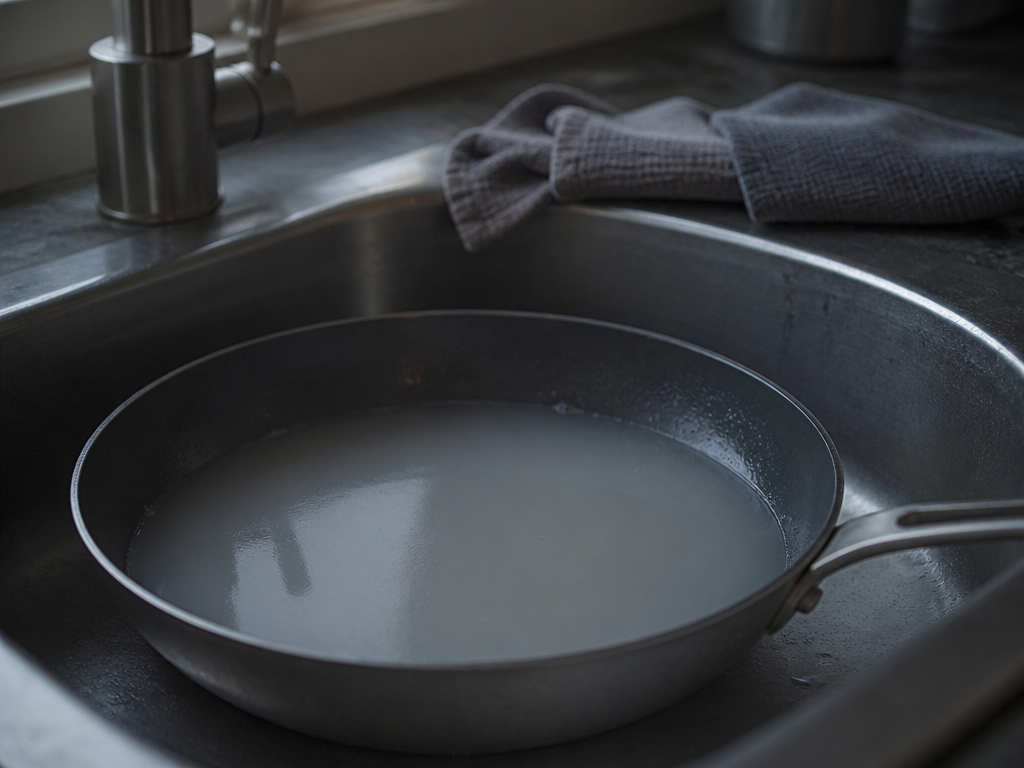
My grandmother said "warsh" instead of wash. She said it while wringing a dishrag over the sink in a house that smelled like coffee grounds and the particular mustiness of a basement that flooded every spring. Warsh your hands, she'd say, and I said it too, for years, warsh, until a substitute teacher in fourth grade repeated it back to me slowly, like she was tasting something gone off. "Wash," she said. "There's no R in it, sweetheart." The sweetheart was the worst part. I remember the linoleum, the specific gray-green of it, and the way I looked down at it and understood, with a clarity that had no words yet, that I had been carrying a mistake in my mouth and no one had told me. That my grandmother had given it to me the way she gave me everything, without knowing it was the wrong thing to give.
I went home and I didn't say warsh again. I also didn't tell my grandmother why. I just started saying wash, carefully, the way you walk on a foot that's fallen asleep, and she never mentioned it, though she must have heard the difference. I think about that now more than almost anything. That I corrected myself away from her and neither of us said a word about the leaving.
Here is a thing nobody explains to you about the words you learn first: they are not neutral. They are not a clean set of tools handed to you so that you can go out and build whatever you want. They come soaked in where they came from. Warsh is a place. It's a river valley and a set of grandparents and a kind of work done with the hands. When the teacher took the R out, she wasn't correcting a sound. She was telling me that the place I came from was a place you were supposed to leave, and that the leaving started with your mouth.
I didn't have the language for that at nine. I have it now, and it's a little late to do anything with.
My mother read to me every night, which is the kind of detail that shows up in the pamphlets they give you at the pediatrician, read to your child, it matters, it builds the brain. And it did, I suppose. But what I remember isn't the vocabulary. What I remember is that she read The Wind in the Willows in a voice she didn't use for anything else, a slowed-down, rounded voice, and that certain sentences she loved she would read twice without seeming to notice she'd done it. "The Mole had been working very hard all the morning." She liked the word Mole. She liked how it sat. And I lay there in the dark absorbing not just words but a relationship to words, the idea that a sentence could be something you returned to because it was good, the way you'd press your tongue to a sore tooth just to feel it.

That was the gift. Not the vocabulary. The permission to find language beautiful. I didn't know it was a gift because I assumed everyone got it, the way you assume everyone's house smells like something and you can't smell your own.
It took me until my twenties to understand that people arrive at adulthood holding wildly different amounts of this stuff, and that most of the difference was decided before any of us could have chosen. A friend of mine, brilliant, funny, sharper than me by a distance, once confessed that she felt sick before writing an email to anyone she considered educated. She'd grown up in a house where the television was the main voice in the room and her parents worked hours that meant nobody read anybody anything. She learned to talk from cartoons and from a mother too tired to do more than issue instructions. And she carried that into every professional room she ever entered, this conviction that she'd walked in without the right coat and everyone could see her bare arms.
She said, "I can always tell when someone grew up with books. It's not the big words. It's the little ones. The way they connect stuff." She was gesturing with a wine glass and not quite looking at me. "They have all these little... hinges. And I'm just gluing sentences together and hoping."
Hinges. I've never forgotten that. She meant the connective tissue, the howevers and the meanwhiles and the em dashes, the small joints that let a thought bend without breaking. The stuff you don't learn from a vocabulary list. The stuff that seeps in when someone reads to you in a rounded voice at night, or doesn't.
And the terrible thing, the thing that kept me quiet while she talked, was that she was right, and that I was one of the people she was describing, and that I had done nothing to earn it. I had the hinges. They were installed in me before I had opinions about anything. My grandmother gave me warsh and my mother gave me the hinges and I spent my adolescence quietly discarding one and taking full credit for the other.
There's a comment thread I still think about. Years ago, on something I'd written for a small publication, a man corrected my use of a semicolon. He was right, technically. I'd used it where a colon belonged. But it wasn't the correction that stayed with me, it was the pleasure in it, the way you could feel him leaning back after he hit post. He'd found the seam in me. He'd found the place where my language betrayed that I was, in some sense, self-taught in the parts that matter most, that for all the hinges I'd been given I was still someone who had to look things up, who had gaps, who had learned some of this the hard way and late.
I wanted to write back: do you know how much of this is just luck? Do you know that you're not smart, you're just early? That whatever room you grew up in did most of your talking for you and you've spent your whole life mistaking an inheritance for an achievement?
I didn't write that. I fixed the semicolon and I felt the old linoleum under my feet, gray-green, and the substitute teacher's sweetheart, and I understood that the fourth-grade hallway and the comment thread were the same hallway, and that I had somehow ended up standing in it from both directions. Corrected and correcting. Ashamed of warsh and secretly proud of my hinges. It's not a comfortable thing to find in yourself, that you contain the teacher who shamed you.

I called my grandmother once, near the end, from a city she'd never visited and couldn't picture. Her voice had gone soft and searching by then. She asked if I was eating. She asked if it was cold there. And then she said something about the wash, that she'd hung the wash out and it wouldn't dry in this damp, and she said wash, not warsh, and I don't know if she'd changed it over the years or if I'd misremembered her all along, if I'd built a whole theory of myself on a mispronunciation that maybe only lived in one summer, one dishrag, one flooded basement. I never got to ask. You don't get to ask. The people who gave you your first words are usually gone by the time you understand what they handed you, and you're left holding a vocabulary like a coat you found in a dead relative's closet, wondering which parts were theirs and which parts you sewed in yourself.
What I keep circling back to is how early it all happens. Before memory, most of it. By the time I have a first memory, I already had a whole architecture of sound and rhythm installed, a sense of which words felt like home and which felt like performance, and I've spent forty years thinking I was choosing my language when really I was mostly just decorating a house someone else built while I was too young to watch.
And yet.
There's a version of this essay that ends in grievance, that treats the whole thing as a rigged game, some people handed the hinges and some people left gluing. And it is rigged, partly, and I won't pretend the unfairness isn't real, because I've watched my friend feel sick over an email that any editor would've called perfectly fine. But there's another thing underneath the unfairness that I don't have a clean word for.
My mother didn't read to me to give me an advantage. She didn't know about pamphlets or brain development or hinges. She read to me because she liked the word Mole and she wanted someone to hear how it sat. The whole inheritance, the thing I've turned into anxiety and pride and this eleven-minute paralysis in a parking lot, it started as love. Just a tired woman in a dark room finding a sentence beautiful and wanting to give it to somebody. Everything since then is just what the world did to that.
And my grandmother, warsh and all, was doing the same thing at her sink. Handing me the only words she had, which were good words, which were the words of someone who worked with her hands and loved a grandchild and never once suspected that a substitute teacher in a gray-green hallway would use them to teach me shame. She gave me what she had. That it wasn't the currency the world happened to be paying in was not her failure. It was just the arithmetic of where and when a person is born, which none of us do anything to deserve, the winners least of all.
I think the reason I can't send this text is that I'm trying to sound like the version of me that has all the hinges and none of the warsh, the polished one, the one who deserves the semicolon. And that version isn't real. That version is a performance I've been giving since fourth grade, and the person I actually like, the one I had a nice time with last night, doesn't want the performance. They want the person who contains a flooded basement and a rounded reading voice and a whole tangle of borrowed words, some of which were the wrong ones, all of which were given in love.
The screen has gone dark again. I wake it. The sentence is still there, over-considered, sanded down to nothing.
I delete lovely. I delete the exclamation mark I'd added back in a moment of panic. I type it the way I'd say it out loud if she were standing here, plainly, with the small ugly honest word my grandmother might have used, and I leave the period on the end because a closed door is sometimes just a sentence that knows what it means. My thumb hovers. I think of the linoleum. I press send, and I set the phone face-down on the passenger seat, and I put the car in reverse, and I back out slowly into a street I've driven a thousand times, checking the mirror the way I was taught, by someone, a long time ago, in words I'll never fully account for.