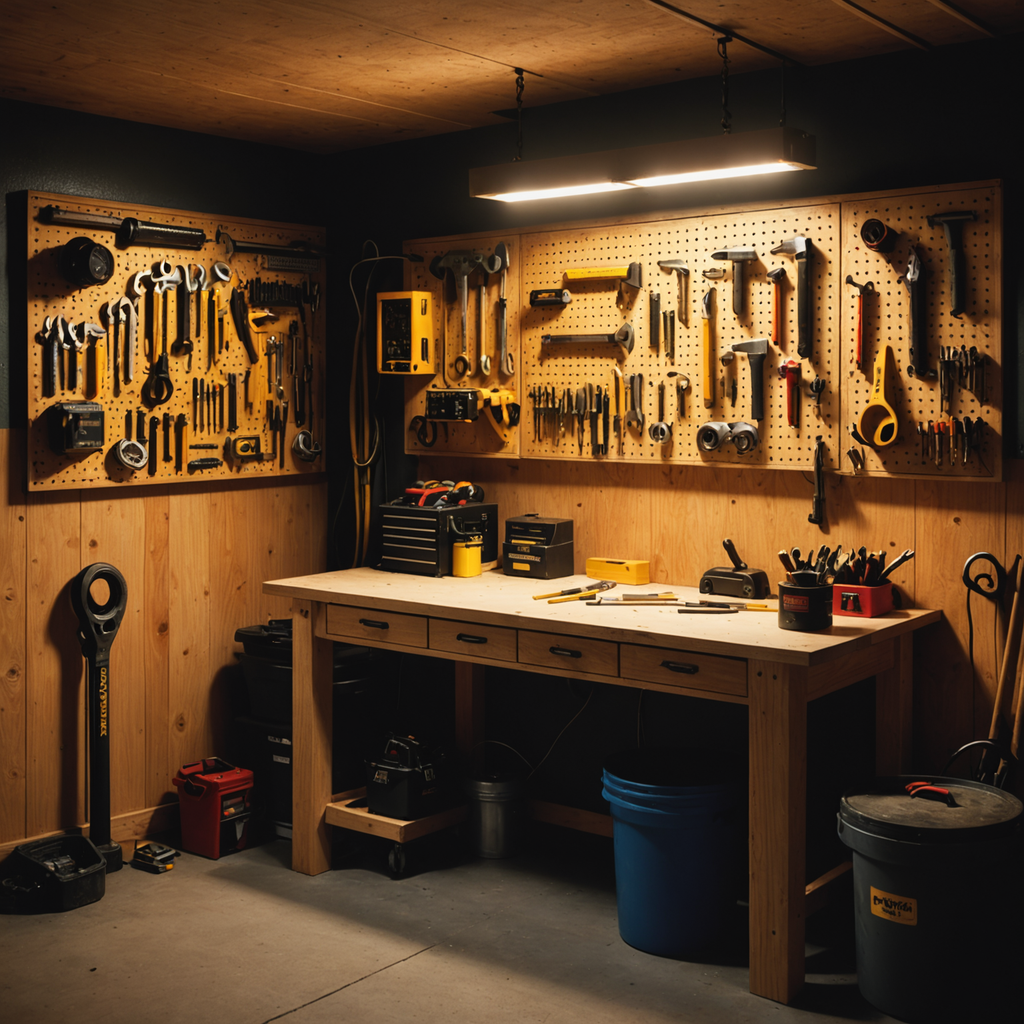
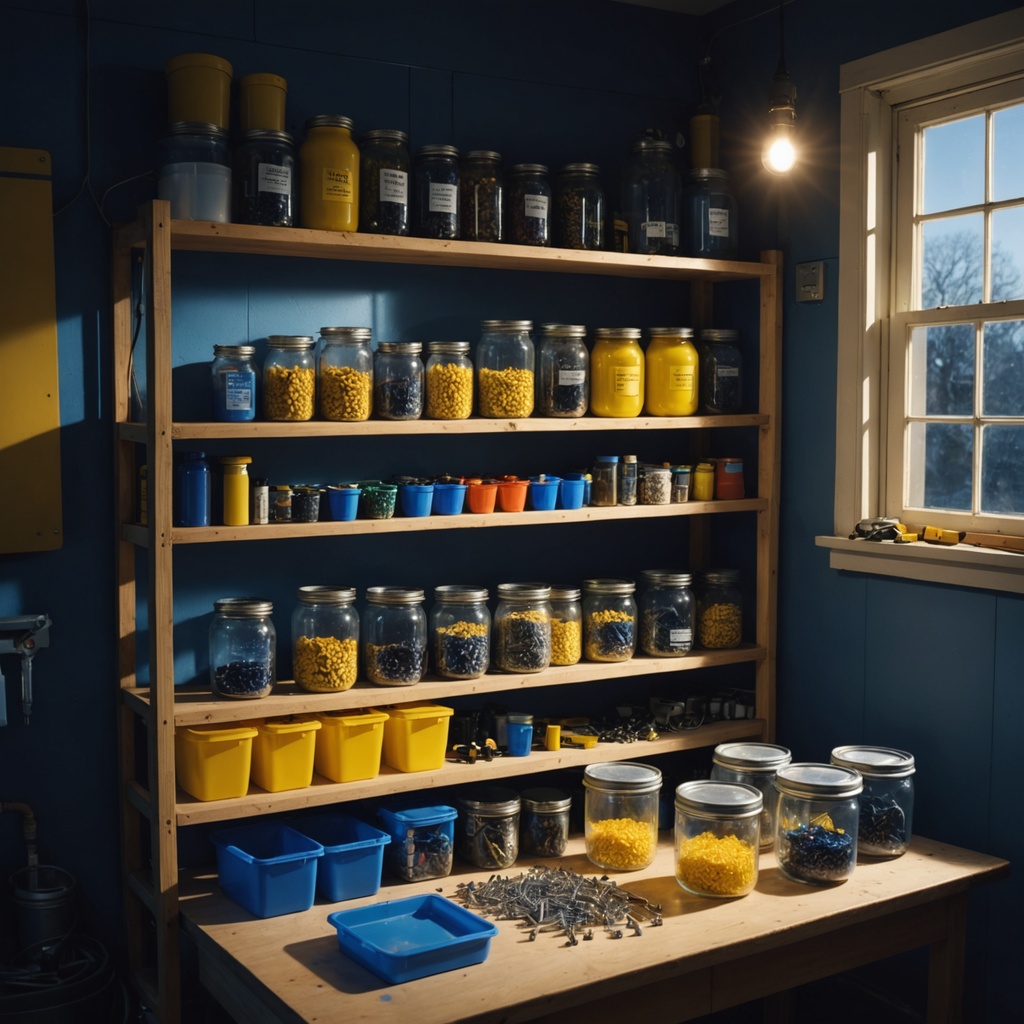
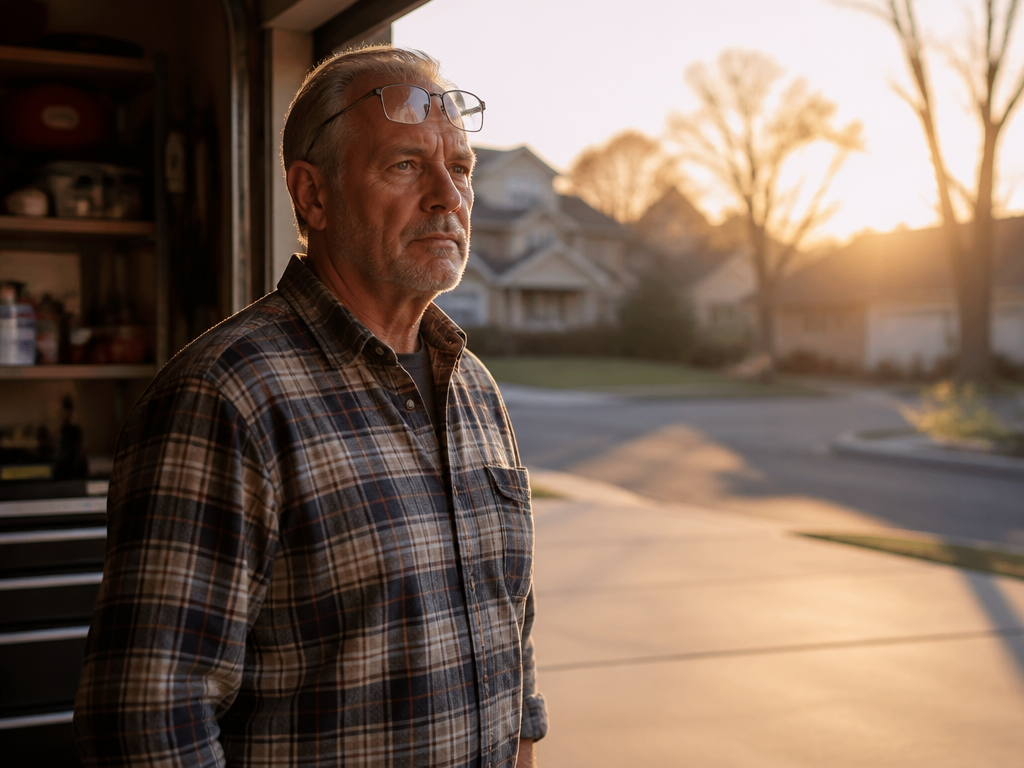
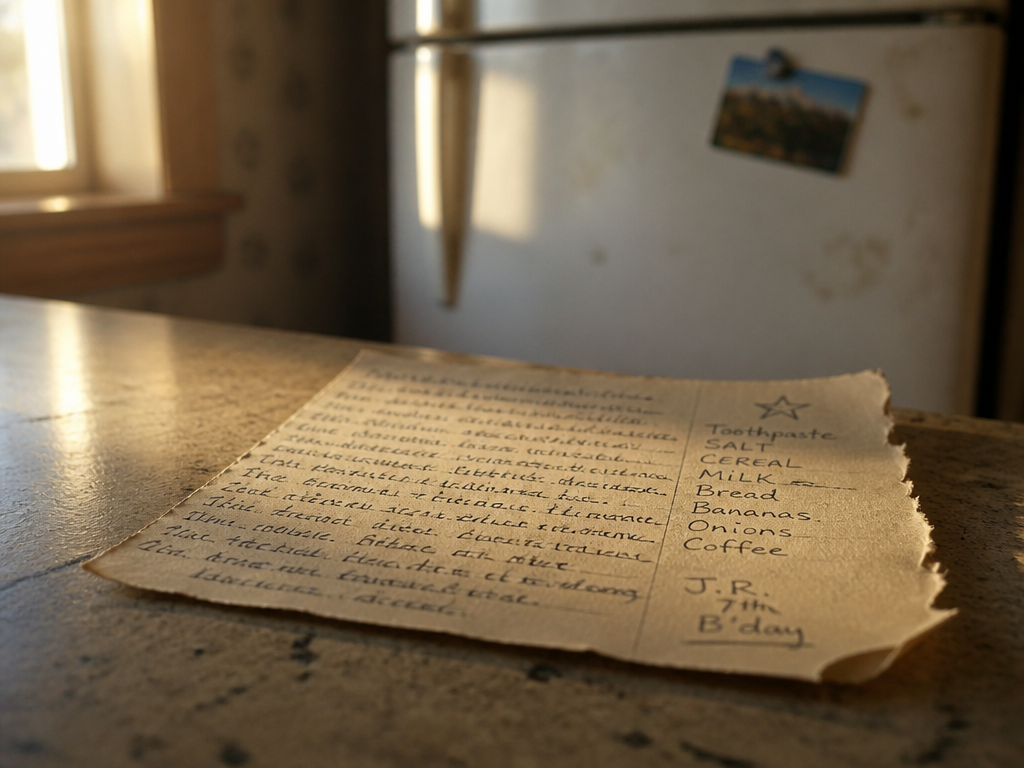
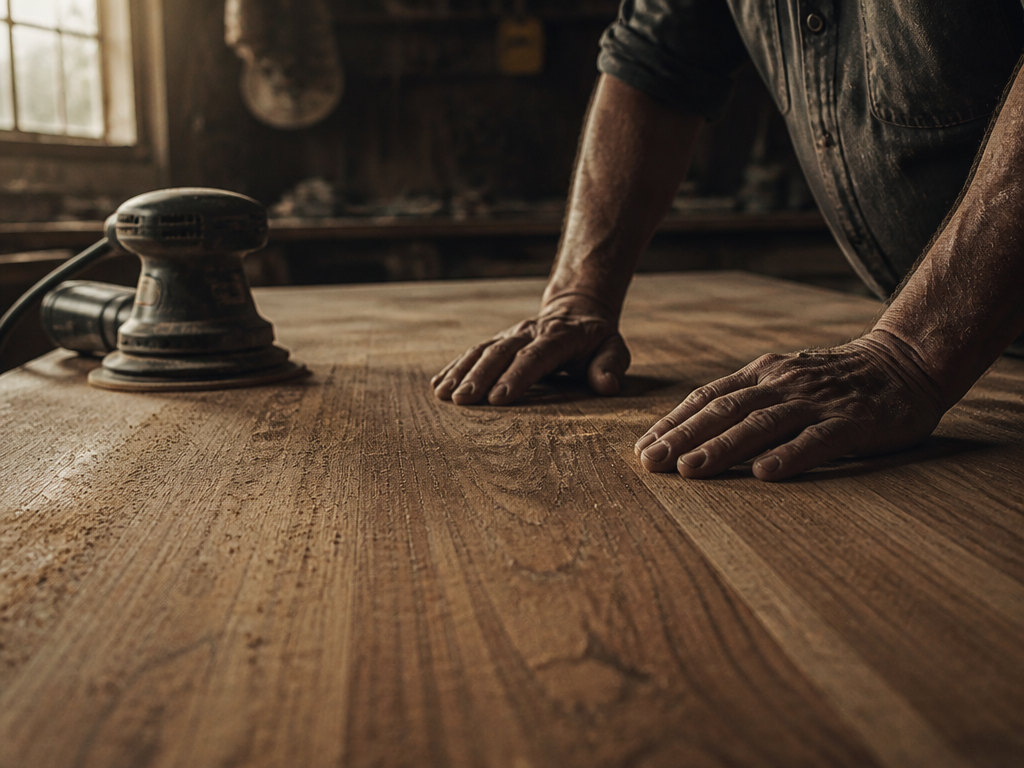
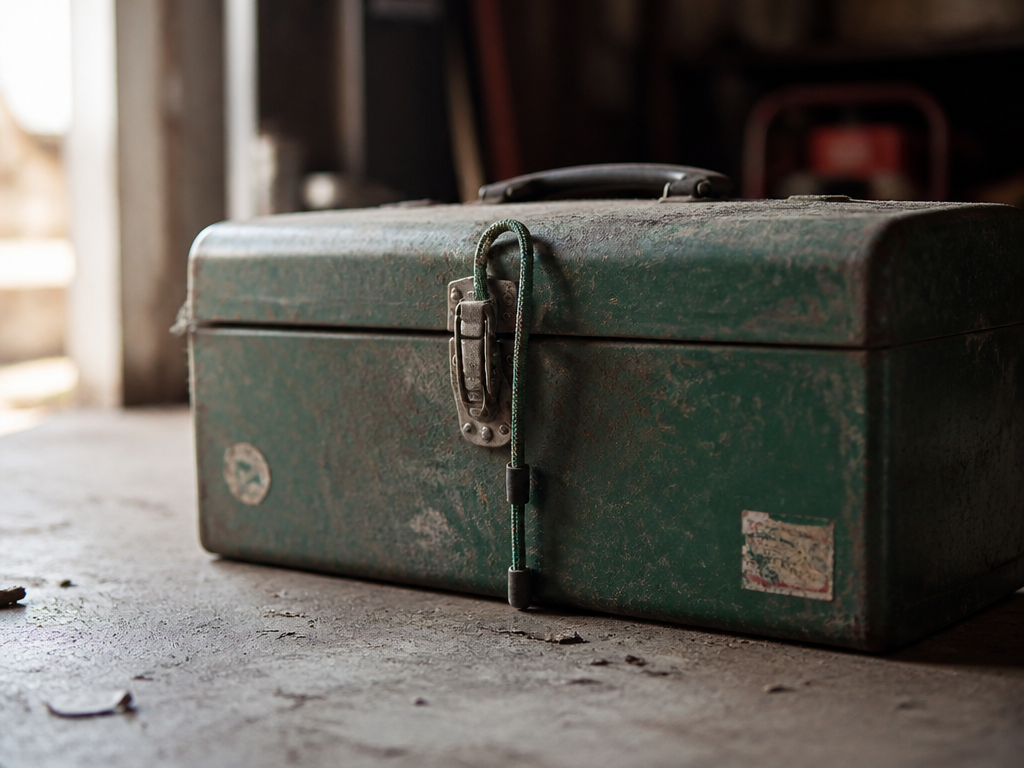
My father kept a coffee can full of screws on the workbench, sorted by nothing I could ever determine. After he retired, he started sorting them. I'd come by on Sundays and find him out there, the radio tuned to a station that mostly played static and weather, pouring screws from one tin into another and back again.
"You alright out here?" I asked him once.
"Got a system going," he said, not looking up. "Phillips in one, flathead in the other. Should've done this years ago."
He had forty years of evenings to do it. He'd never done it once. I understood, even then, that the screws were not the point.
I want to write something true about men like my father, men now well into their seventies who could fix a transmission or close a sale or carry a family through a recession but who, asked how they felt, would tell you about the weather or their knee. I keep circling it. And every time I get close, I hear him in my ear, gently disagreeing with me, and I have to let him.
"You think I didn't feel things," he said to me once. We were in the garage again. He'd handed me a lemonade I didn't want because handing me something was easier than sitting with me empty-handed.
"I think you felt them somewhere I couldn't see."
"That's the same as not feeling them, to you."
"No," I said. "It isn't."
But he had a point, and it stayed with me. The men of his generation weren't stone. The feeling was in there. It just had nowhere to go, no door cut into the wall, no words that fit. His own father — my grandfather, a man I met perhaps six times — had a face like a closed ledger. The one memory I have of him with any warmth is a photograph: him holding my father as a baby, looking off to the side, as though even there, in the act of holding his son, he was checking whether someone was watching to see him do it.
"Did your dad ever tell you he loved you?" I asked.
My father considered this for a long time. He picked a screw out of the can and turned it in the light.
"He came to my games," he said finally. "He'd stand at the fence. Wouldn't yell or anything. Just stood there. And after, in the car, he'd say, 'You got under that ball too much in the fourth.' That was — " He stopped. "That was him watching. That was the thing he had."
I didn't say anything. I understood my father was telling me that he, too, had things, and that I had been receiving them my whole life without recognizing the currency. The Sunday phone calls that lasted four minutes. The way he'd checked the oil in my car every time I visited, without asking, leaving the receipt for the new wiper blades tucked under the visor like a love letter he couldn't sign.
There is a cost to all of it, though, and he and I disagreed about who paid it.
"I had a good life," he told me, the year my mother died. He said it like a man defending a verdict. "Worked hard. Provided. Nobody went without."
"I know, Dad."
"So I don't know what you want me to be sad about."
"I don't want you to be sad about anything."

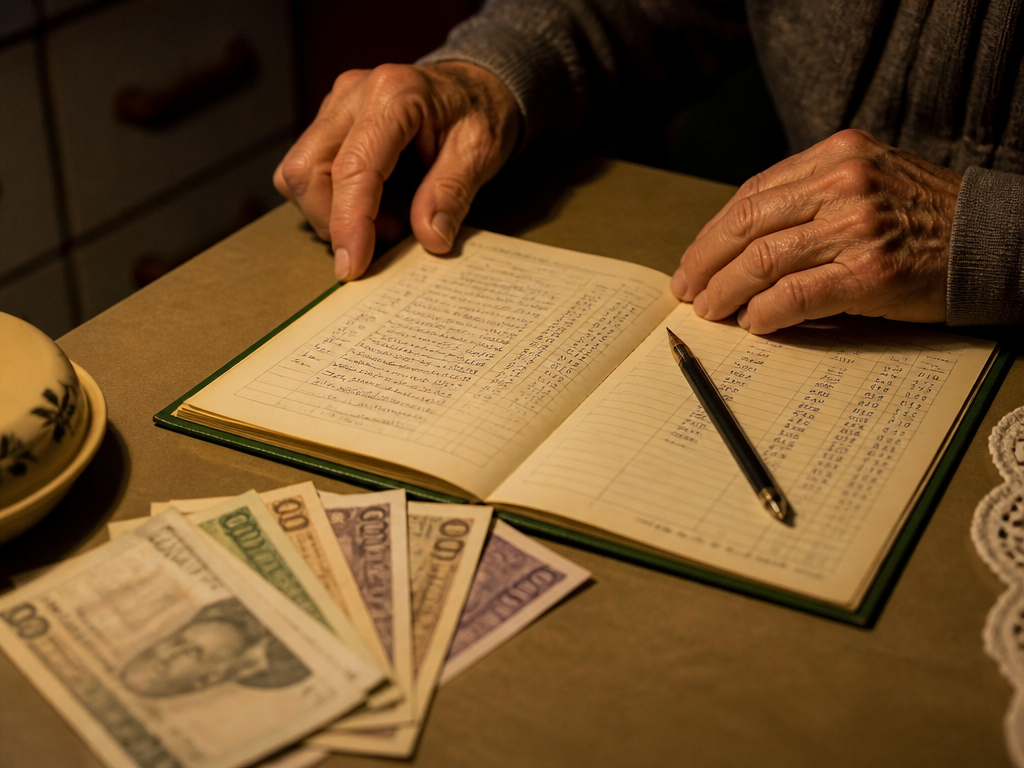
But that wasn't true, and he knew it, and the lie sat between us like a third person at the table. I wanted him to be sad in front of me. Just once. I wanted to see the grief move across his face the way it moved across mine, so I'd know we were in the same room, mourning the same woman. Instead he washed the casserole dishes the neighbors brought, dried them, stacked them, and lined the empty containers up on the counter to be returned, labeled with masking tape so each went back to its rightful owner. He grieved in inventory. He grieved by making sure no one was owed anything.
What undid me was a Tuesday afternoon a few months later. I'd stopped by unannounced. He didn't hear me come in. He was sitting at the kitchen table with one of her cardigans across his lap, not holding it dramatically, just resting his hand on it the way you'd rest your hand on a sleeping animal. The radio was off. The screws were untouched. When he saw me he stood up too fast and folded the cardigan into a tight square.
"Thought I'd give some of her things to the church," he said. "Sorting."
Always sorting.
"You don't have to do that today."
"Got to do it sometime." And then, with his back to me, very quietly, as though it were a confession he could only make to the cabinets: "House is too loud now. Funny. You'd think it'd be the opposite."
That was the closest he ever came. The house is too loud now. I have turned that sentence over a thousand times. He'd spent a lifetime where the noise of work and obligation drowned out whatever was underneath, and now the noise was gone and the underneath had a voice and he didn't recognize it. It frightened him, I think — meeting the part of himself he'd outsourced to my mother for fifty years. She had been the one who said the feelings out loud, for both of them. She'd been his translator. And then she was gone, and he was a man holding a cardigan, trying to read a language he'd never been taught.
Near the end, in the hospital, he got soft in a way that scared me more than the diagnosis. He held my hand, which he had never done past the age I needed it for crossing streets.
"You were a good girl," he said. Then, frustrated with himself, "That's not — you were good company. You are. Good company."
"You too, Dad."
"I should've talked more."
"You talked plenty."
"Not about the right things." He looked at the ceiling. "Your mother used to say I'd figure it out eventually. Bit late now." And he laughed, and it turned into a cough, and the moment closed like it always did, on his terms, before either of us could fall into it.
I've built a whole understanding of him out of these scraps. A man kept mute by his own father and his own century, finally beginning to feel as the world fell quiet around him. It's a tender story. It lets me forgive him and grieve him at once.
But here is the thing I can't shake, now that I've written it all down. Maybe I'm the one who needed him locked, so I'd have something to unlock. Maybe he wasn't waiting all those years to be understood. Maybe the screws were just screws, and the only person in that garage looking for a hidden door was me.