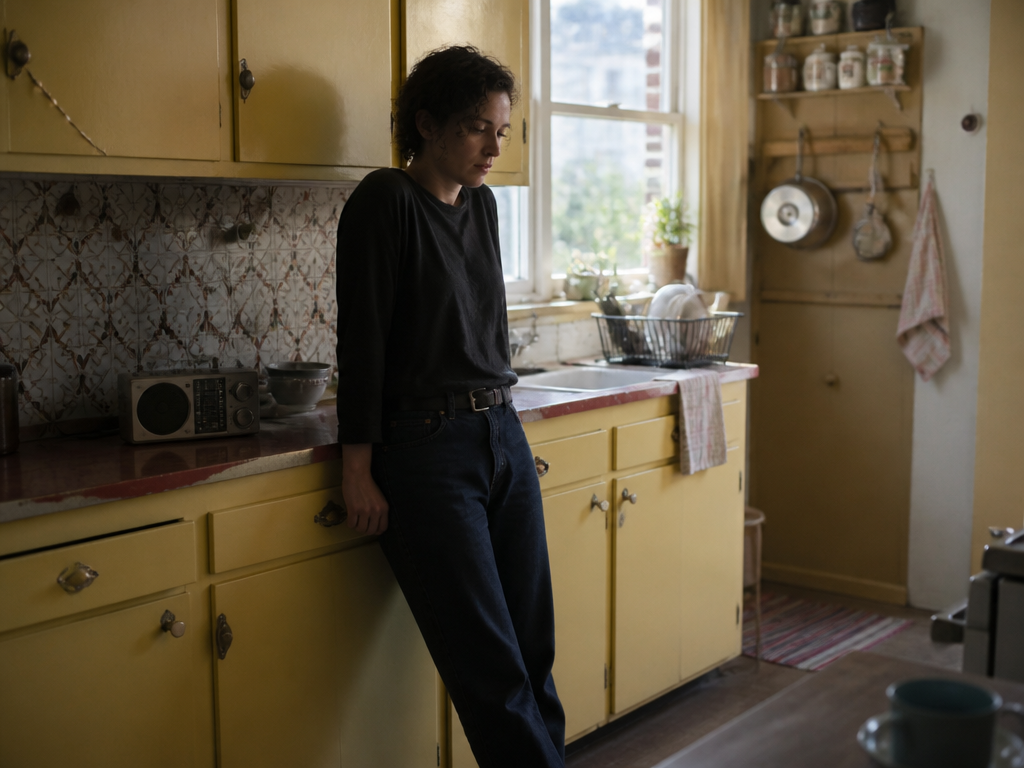
She kept a calendar on the side of the refrigerator, held there by a magnet shaped like a strawberry. I noticed it one Sunday when I was getting milk for my coffee, the kind of thing you look at without seeing for years. The squares were empty. Not a dentist appointment, not a birthday, not a note to herself about the bins. A whole month laid out clean and white, and the only mark on it was a single circle around the day I was standing there, because I had said I might come by.
I put the milk back. I didn't say anything about it. That, I think, is the part I keep returning to — not that the calendar was empty, but that I saw it and decided to leave it alone.
When I call her, the call has a shape, and the shape is fixed. I ask how she is. She says she's fine, keeping busy. There is always a small piece of news ready to hand, the way some people keep a spare key under a flowerpot — the neighbour's grandchild, a programme she watched, the price of something at the shop. The news is real but it is also a kind of furniture she arranges in front of the door so I won't try the handle. I knew this and still I let it work on me. I would put the phone down feeling that I'd checked, that the box was ticked, that all was well in the small house with the strawberry magnet.
My father was a man who would not say he was in pain. The last winter he was driving, his hip had gone, and he would lower himself into the car in stages, one hand braced on the roof, his breath coming out in a hiss between his teeth. I offered to drive him to the appointment. He told me he wasn't an invalid. He said it lightly, almost cheerfully, with that particular brightness men of his generation kept for the moments they were suffering most. I let him win. I told myself it was respect. It was easier than that. It was relief. If he was managing, I didn't have to feel the thing that came up in me when I imagined him not managing.
We buried him in the spring and I found, going through the glovebox, a bag of boiled sweets and a parking permit for the hospital that he had never once mentioned to me. He had been going for months.
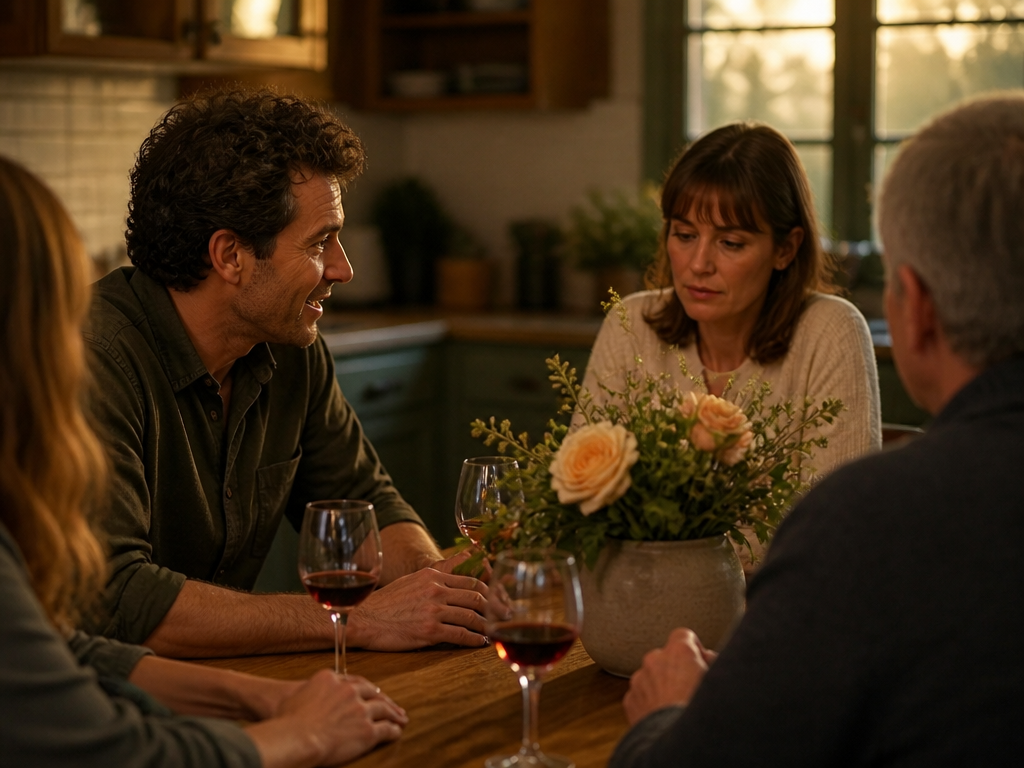
There was an evening, this is years back now, when my wife said something to me at the sink. We'd had Sunday lunch at my mother's and driven home, and I was talking about how good she'd seemed, how on form, and my wife was scrubbing a pan and not really looking at me. She said, quietly, that she thought my mother spent a lot of time on her own and didn't want me to know it. I remember being irritated. I told her my mother had friends, the church thing, the woman she walked with. My wife shrugged and said something I dismissed at the time — that being around people and being lonely weren't opposites, that you could have a calendar full of names and still go to bed feeling that nobody was actually keeping track of you. I changed the subject. I have thought about that conversation more times than she will ever know.
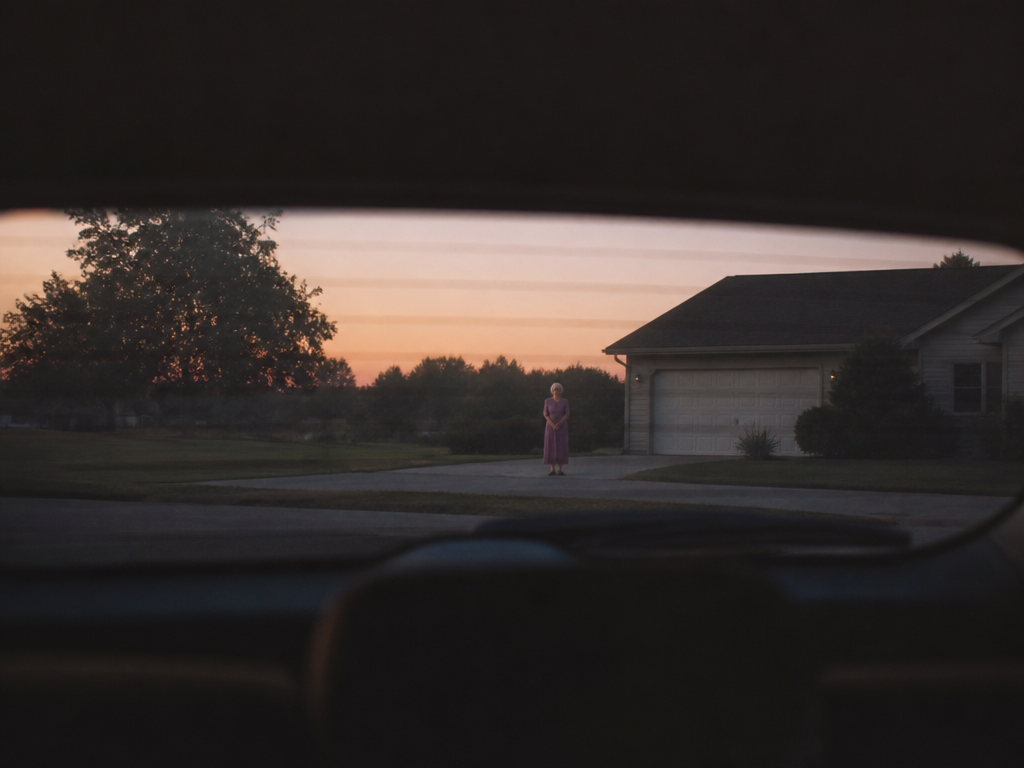
What I understand now, and what frightens me, is that my mother is not failing to tell me she's lonely. She is succeeding at not telling me. It is an achievement. It costs her something to keep that brightness up, to have the news ready, to find the energy on a Tuesday afternoon to be a person who is fine when I ring. She is protecting me from the weight of her. She has been doing it so long and so well that I mistook the protection for the truth.
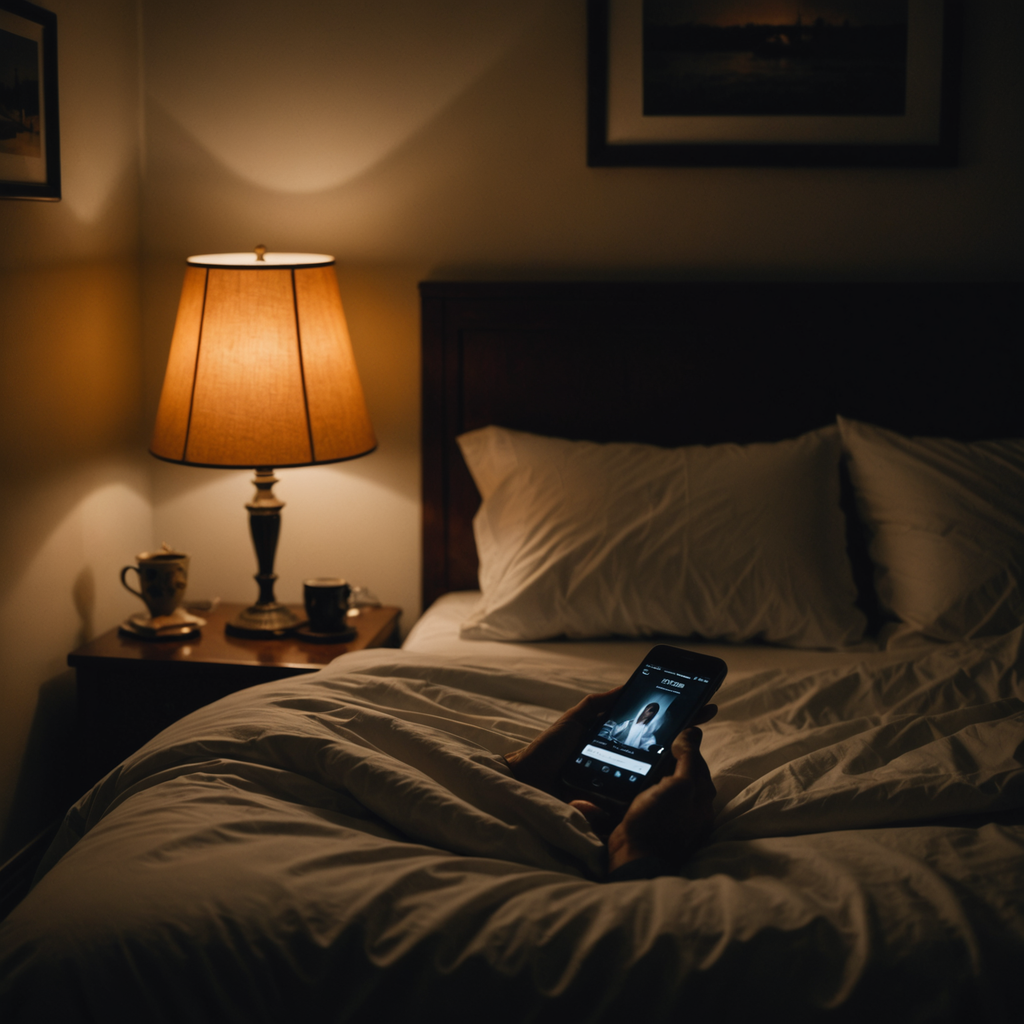
My daughter rang me on a Thursday last month. I was sitting in the half-dark because I hadn't bothered to put the lamp on, and the heating had clicked off, and I'd been there long enough that the room had gone cold around me without my noticing. She asked how I was. And I heard it come out of me, smooth as anything, before I had even decided to say it. Good, love. Keeping busy. I told her about a man I'd seen walking an enormous dog. I gave her the spare key under the flowerpot. And when I put the phone down I sat in the cold and understood exactly what I had done, because I had watched my father do it from the car and my mother do it through the strawberry magnet, and here it was, the same gesture, passed into my own hands like a tool I'd been trained to use without ever being taught.
The terrible thing is how kind it feels from the inside. It does not feel like hiding. It feels like love. You don't want to be a burden to the people you spent your life carrying. You don't want your child's voice to change, to hear that note of worry come into it, the one that means you have become a problem to be managed rather than a person to be visited. So you keep it light. You become very good at light.
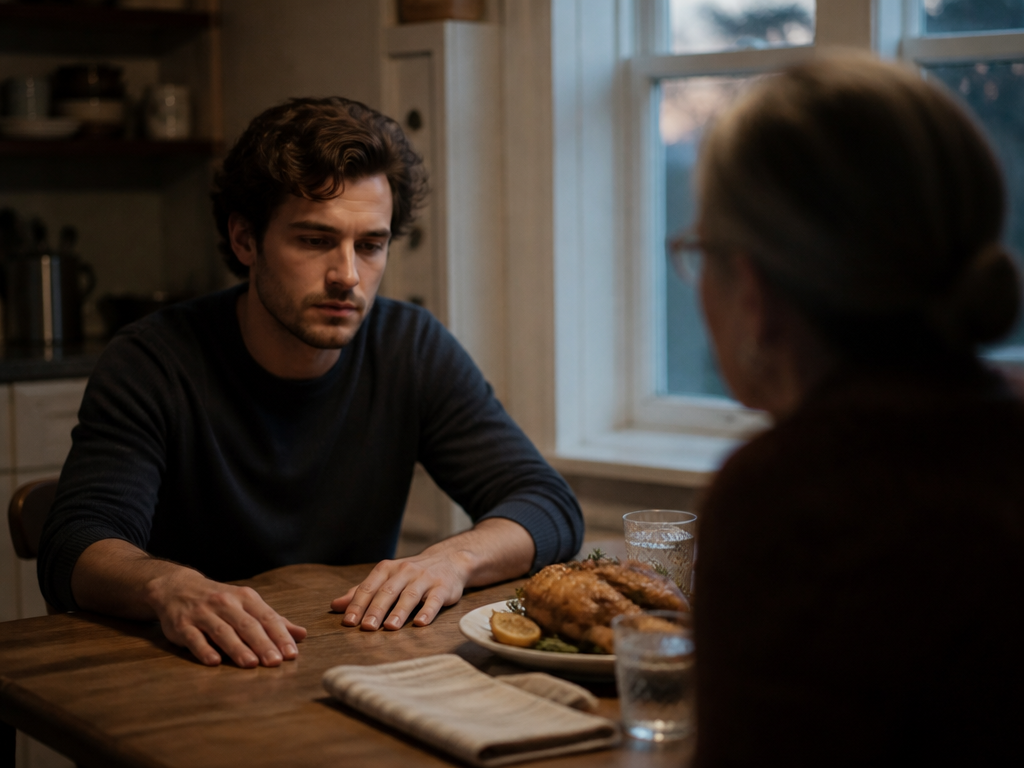
I called my mother the following Sunday. I had decided on the drive over, the way you decide things you're not sure you'll do, that I would ask her something real. We had tea. She gave me the news, the neighbour, the programme. There was a gap, the kind you usually fill, and I didn't fill it. I asked her what the evenings were like. Not how are you. What are the evenings like, after I've gone, when the light goes.
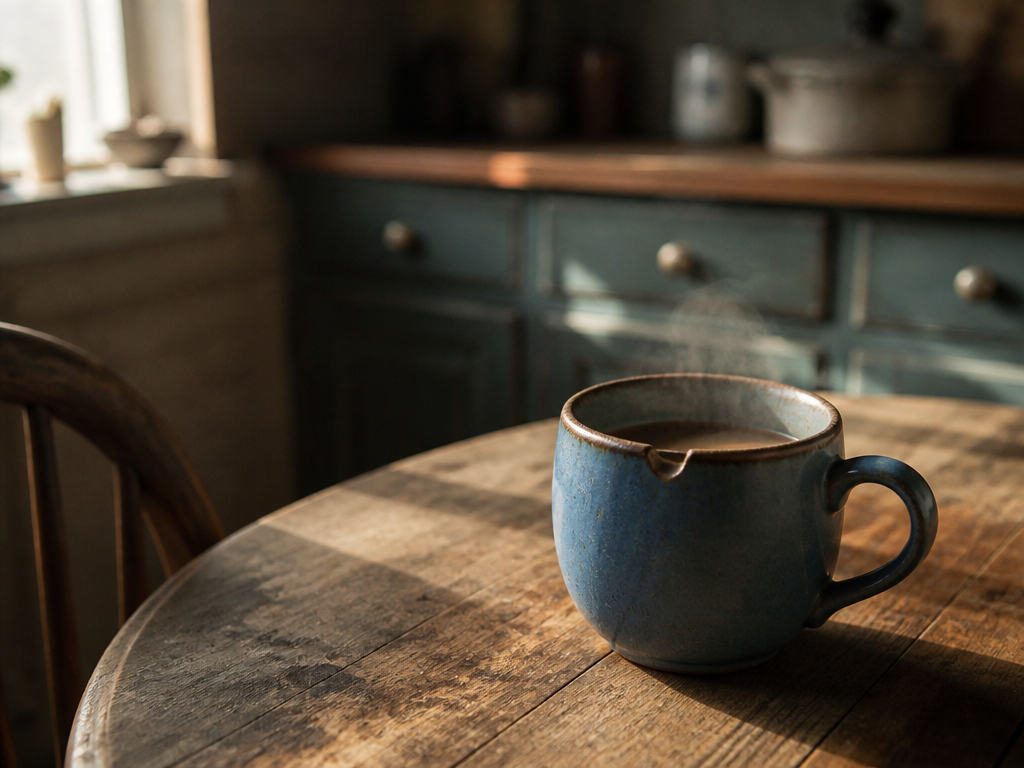
She looked at me for a long moment. Something moved behind her face that I had not been allowed to see in a long time, maybe ever. She picked up her cup and put it down again without drinking from it.
"Well," she said. "You learn to leave the radio on so the house has a voice in it."