My father retired on a Friday and by the following Wednesday my sister had started a group chat without him in it. The subject line, if text threads had subject lines, would have been: Is Dad okay?
The evidence was this. He had stopped talking. Not entirely, but the man who used to narrate the evening news back at the television, who had opinions about the neighbor's hedge and the price of diesel and the way the council handled the roundabout, had gone somewhere quieter. He bought a spade. He spent his mornings turning over a strip of soil at the bottom of the garden that had been nothing but weeds for thirty years. He came in with dirt under his nails and didn't say much about it.
"He just stares at the dirt," my sister wrote. "For like an hour. I watched him from the kitchen."
I drove over that weekend to assess the situation, which is a terrible thing to do to a person — to arrive at their home as an assessor. I found him kneeling by the new bed, pressing seed potatoes into trenches with two fingers, the way you'd tuck something in. The radio was off. A blackbird was going at it in the apple tree and he had his head tilted slightly toward the sound. He looked up at me, said "You eaten?", and went back to the potatoes.
I sat on the cold step and watched him for a while, ready to detect sadness. What I detected instead was a man entirely absorbed in something that did not require him to perform anything for anyone. And it unsettled me, because I had no category for it. We had spent my whole life reading my father through his commentary. Take away the commentary and we assumed the man underneath must be broken.
That night my sister called and I told her he seemed fine, better than fine, and she said, "But he's not himself." I understood what she meant. He was not the self we'd built him out of. We had a version of him assembled from forty years of habit, and the habit had been the job, the rushing, the talking-to-fill-the-room. The job retired. The self we'd catalogued went with it. What was left was a man who liked the smell of turned earth and didn't feel the need to tell us about it.
It took me longer than it should have to recognize where I'd seen this misreading before. I had been on the other side of it my entire life.
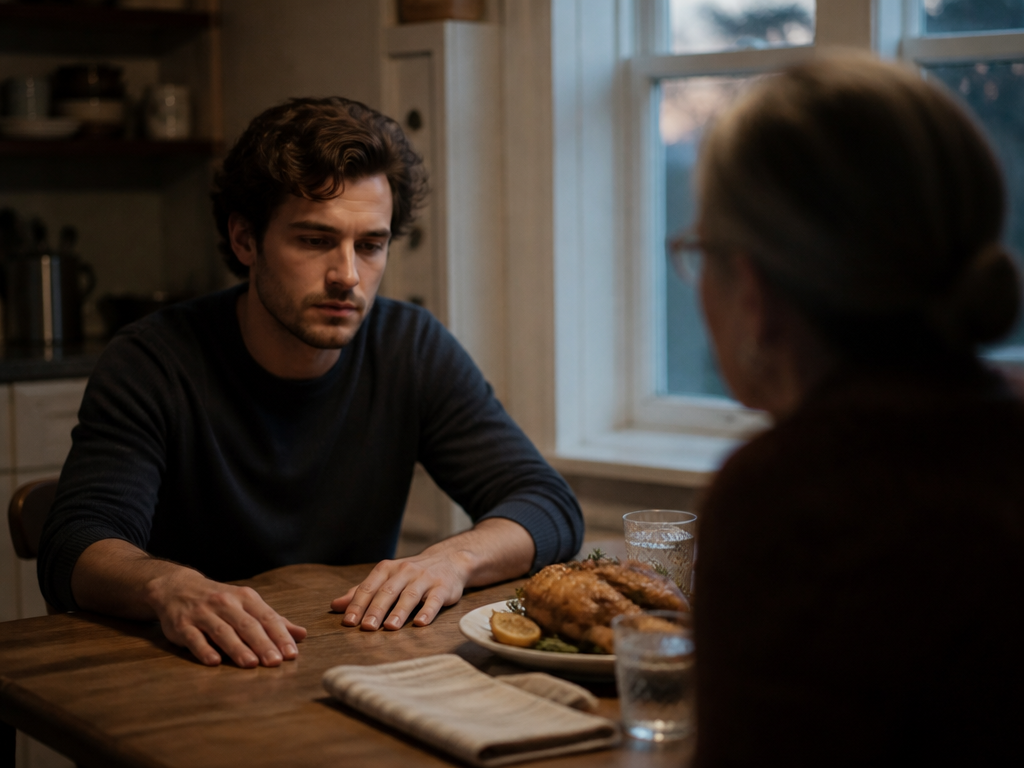
There is a particular silence I produce at family gatherings, and my family has spent decades interpreting it incorrectly. At my cousin's wedding, ten years ago now, I spent most of the reception at the edge of things, nursing a drink, answering questions in the fewest words that would still pass as polite. My mother found me by the cake table and said, low, so others wouldn't hear, "You could at least try to look like you want to be here."

I did want to be there. That was the part she couldn't see. The quiet wasn't refusal. It was the precise amount of myself I had calculated was safe to put down in that room, among those people, where saying the wrong true thing had consequences I'd learned the shape of young. I wasn't withholding to punish anyone. I was managing a thermostat I'd installed so long ago I no longer felt myself adjusting it.
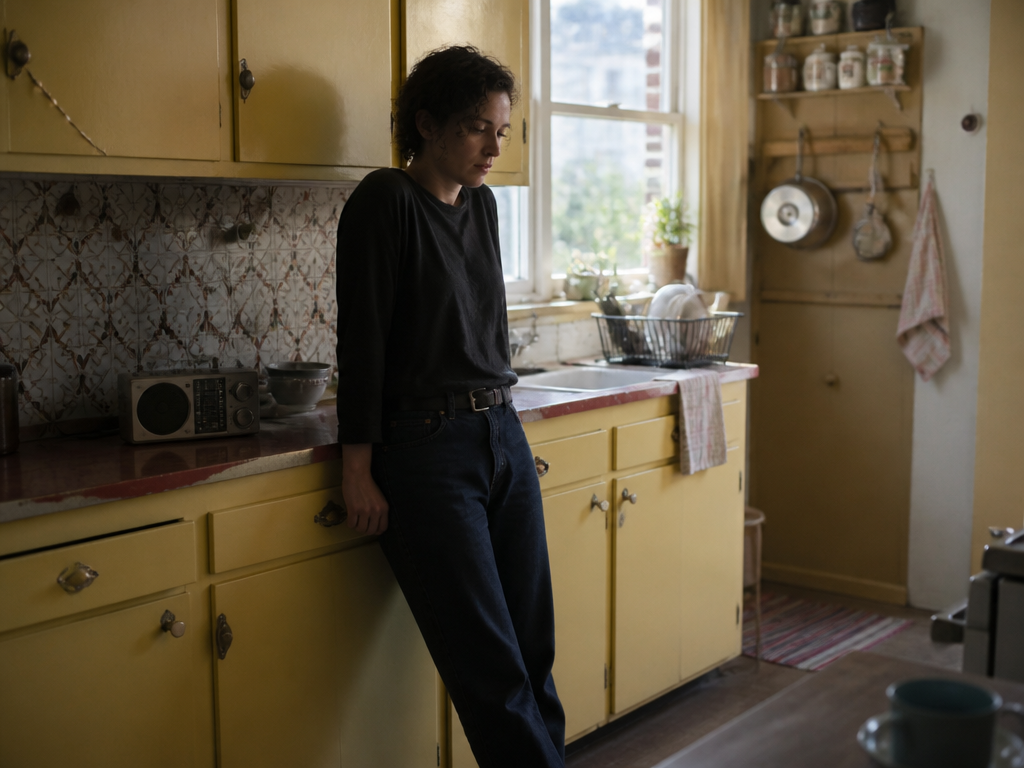
I think of a specific afternoon when I was fourteen. My mother asked how school was and I told her — actually told her, about a teacher who'd humiliated me in front of the class — and she said, "Well, what did you do to provoke it?" Not cruelly. She genuinely wanted the information. But I learned something at that kitchen table, with the kettle ticking as it cooled and a half-peeled potato in her hand: that the full account cost more than the comfort it might buy. So I started giving the edited version. Then I stopped giving versions at all. And to everyone watching, the boy who used to talk had simply gone quiet, and they assumed something must be wrong with him.
Nothing was wrong with me. I had become extremely good at a particular kind of arithmetic.
Here is the thing nobody warns you about. The languages we use to read the people we love are built in specific rooms, under specific conditions, and they don't travel well. My family learned to read my father through his noise and me through my silence, and both readings were wrong in the same way — both mistook the surface for the whole. When the surface changed, when my father stopped narrating and just knelt in the dirt, the old instrument failed, and rather than admit the instrument had failed we decided the man was failing.
I never told my sister that I understood our father better now than I had when he talked all the time. I didn't have the words for it that wouldn't sound like an accusation of her, or of me, or of our mother with the potato in her hand. We were all only ever working with the maps we'd been handed.
A month later I went back. The potato bed had come up green and unruly, leaves the size of hands. My father was kneeling beside it again, and the radio was still off, and the blackbird was still in the apple tree. He looked up when my shadow crossed him.
"You eaten?" he said. Then, before I could answer, he held up a single new potato, pale and small and brushed half-clean against his trouser leg, and said nothing else, just held it there in the light for me to see.