At my uncle's funeral, a man I'd met exactly once shook my hand and said, "How did your mother's tomatoes do this year? She was worried about the blight."
I had told him about the blight eleven months earlier, at a Christmas thing, standing near a bowl of nuts nobody was eating. I'd forgotten the conversation entirely. He hadn't. And the strange thing is that his question did more for me, in that gray basement with the folding chairs and the percolator coffee, than all the people who clasped my arm and said they were sorry. Those people meant it. But he had been paying attention to me back when there was nothing to be sorry about, back when I was just a man complaining about his mother's vegetables.
I've thought about that moment more than I expected to. I'm at the age now where I've started taking an inventory of things — not regrets exactly, but small evidence of how people made me feel, and what it took to make me feel it. And what I keep noticing is that the people who lodged in me, the ones I'd cross a parking lot to greet, were almost never the impressive ones. They were the ones who acted, for a few minutes, like I was the only thing happening.
So this is a list. Not a how-to list. More a collection of objects and sentences and places that taught me something I was slow to learn.
**A deli counter ticket, number 47.**
There's a deli near my old office where they call your number and you step up and the man behind the counter — Sal, though I didn't learn his name for two years — would look at you while you ordered. Not past you. Not at the slicer. At you. He'd ask if the pastrami was for a sandwich now or for later, because it mattered, he said, how thin he cut it.
I remember standing there one Tuesday with ticket 47 crumpling in my fist, having one of those weeks where everything at work felt like a small fire, and Sal said, "You look like a man who needs the good rye, not the regular." That was all. He wasn't my friend. He didn't know my name either. But he had clocked something in my face and adjusted, the way you'd steady a glass that's near the edge of a table.
I think about how rare that is — to be seen by someone with no reason to bother. Most transactions are built so neither person has to actually look up. We've gotten so good at the mechanics of being polite that we can complete an entire exchange with another human while our attention is somewhere down the hall. Sal didn't do that. He couldn't, maybe. Some people are constitutionally incapable of pretending you aren't there.
**A sentence my coworker Diane said in 1994.**
"You always do that thing where you answer the question you wish I'd asked."
We were in a stairwell. I don't remember why we were in a stairwell — probably hiding from a meeting. I'd been telling her about a problem with a vendor, and she'd cut in, gently, almost laughing, and named a habit I didn't know I had. She was right. Someone would ask me something, and instead of answering, I'd steer it toward the thing I'd already decided to say. I listened the way a man waits for his turn at a four-way stop. Counting. Impatient. Watching for the gap.
Diane could have let it go. People mostly do. We notice each other's small selfishnesses and decide they're not worth the friction. But she said it, and it stuck, because she said it without contempt — she said it the way you'd tell a friend he had spinach in his teeth. For years afterward I'd catch myself in the stairwell of my own head, halfway through a conversation, realizing I'd stopped listening somewhere back at the second sentence and was just nodding while loading my own response into the chamber.
That's the thing nobody warns you about. You can be a decent, warm, well-meaning person and still spend forty years barely hearing anyone. I did. I was kind and distracted, which I now suspect is its own quiet form of unkindness.
**A folding chair at the edge of a backyard.**

There's a kind of person who works a party and a kind who anchors one. For most of my life I was a worker — circulating, refilling, making sure everyone had what they needed, which sounds generous but was really a way of never having to land anywhere long enough to be known.
Then there was my friend Gus, who would pull a folding chair into the least convenient corner of a backyard and stay there the whole evening. And people came to him. They came and crouched down and talked, one after another, and you'd see them get up forty minutes later looking lighter. I watched this happen at a graduation party — my niece's, hot June afternoon, paper plates going soft with potato salad — and I finally asked him what he was doing over there.
"Doing? Nothing," he said. "I asked your nephew about his bees. Then I just kept being curious."
I just kept being curious. I've turned that over a hundred times. Gus didn't have a technique. He wasn't practicing reflective listening or whatever they call it. He genuinely wanted to know about the bees, and when the bees ran out he wanted to know what came after the bees, and the kid could feel that there was no floor to Gus's interest, no point at which he'd say that's enough, I've been polite. People will tell you almost anything if they trust you won't get bored of them.
I never had that trust to give. I always got bored. Or rather, I always had somewhere else my mind wanted to be, and I let it go there, and the person across from me felt the temperature drop even if they couldn't name it.
**A phone, face-down, that I kept glancing at anyway.**
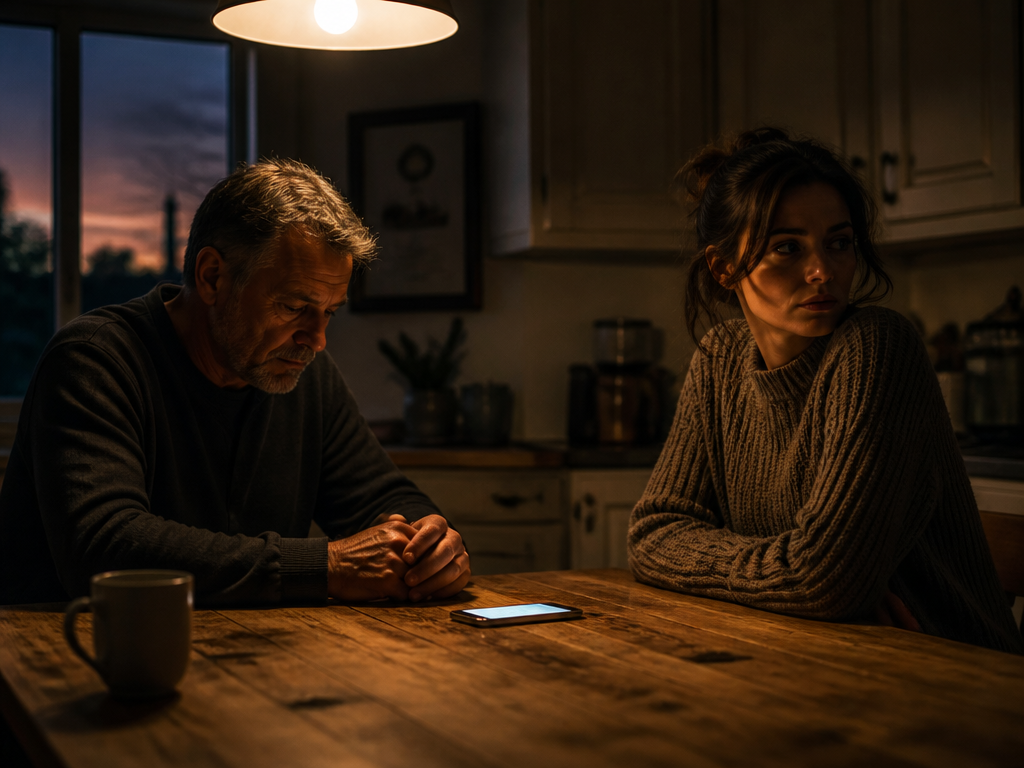
Here's one I'm not proud of. A few years ago my son came to dinner — grown, married, doesn't visit often — and he started telling me about some trouble at his job, a boss who'd undercut him in a meeting. And my phone was on the table, face-down, which I thought of as a kind of courtesy. Look how restrained I am, I thought. It's not even face-up.
But I kept touching it. Not even turning it over. Just touching the edge of it, the way you'd touch a sore tooth with your tongue. And at some point my son slowed down. He didn't stop, exactly. He just sort of wound the story down to nothing, the way you let a car coast to a stop instead of braking, and said, "Anyway, it's fine, it'll work out," and asked me how the gutters were holding up.
I had taught him, over years of small moments like that one, that there was a limit to my attention and that he'd hit it. The gutters were a kindness he was extending to me. He was letting me off the hook I'd put myself on. And I took it, God help me. We talked about gutters.
I've never told him I noticed that. Some things you just have to carry.
**The word "and."**
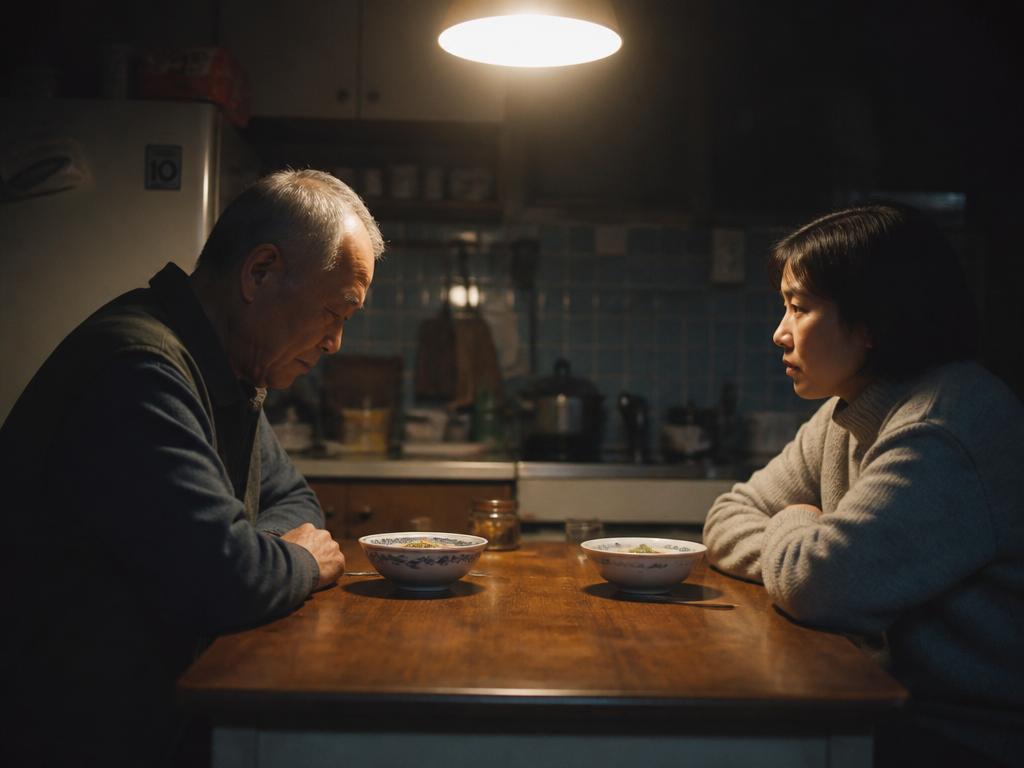
My mother — the one with the tomatoes — got very good at conversation in her last decade, after my father died and she lived alone and had, suddenly, all the time in the world and almost no one to spend it on. The widows she knew would visit, and I noticed she'd developed this habit of saying "and?" after someone finished a thought.
"And then what did the doctor say?"
"And how did that make you feel, when she didn't call?"
"And?"
It sounds like nothing. It is nothing — one syllable. But that single word is a door held open. It says: I'm not done with you, there's more room here, keep going. Most of us close the door the instant the other person pauses. We jump in with our own version, our better story, our advice nobody asked for. My mother had learned, late and through loneliness, that you could give someone the enormous gift of simply not changing the subject.

I was there one afternoon when her friend Eleanor was telling some long story about her son in Arizona, and it was honestly a boring story, the kind that has no point, just a man and his ordinary life out in the desert. And my mother kept saying "and?" and Eleanor kept going, lit up, and I sat there in the kitchen with the radiator ticking and understood that my mother wasn't bored at all. The story wasn't the thing. Eleanor was the thing. The story was just what Eleanor happened to be made of that day.
**A drawing held up too close to my face.**
My granddaughter, when she was four, would bring me her drawings and hold them about three inches from my nose, so close I couldn't actually see them, and announce what they were. "It's a horse but also the ocean." And the temptation — the lifelong, bone-deep temptation — was to glance, say "beautiful, sweetheart," and return to whatever I'd been doing.
But I'd been practicing by then. Practicing is the wrong word; I'd been failing at it for so long that I'd started, occasionally, to fail less. So I'd take the drawing, hold it back where I could see it, and ask her about it. Why is the ocean orange. What is the horse thinking. And she would tell me, at tremendous length, with total seriousness, and I learned more about the inside of that child's head from those interrogations than from anything else.
One day she stopped mid-explanation and looked at me and said, "You ask a lot of questions." Not a complaint. An observation, the way she'd note that a dog was brown. And then she went right back to the horse and the ocean.
I nearly cried, which would have confused everybody. Because somewhere a long way back, a man told me I answered the questions I wished I'd been asked, and here was a four-year-old telling me I'd finally turned the thing around. It only took most of my life.
**The pause before someone decides to trust you.**
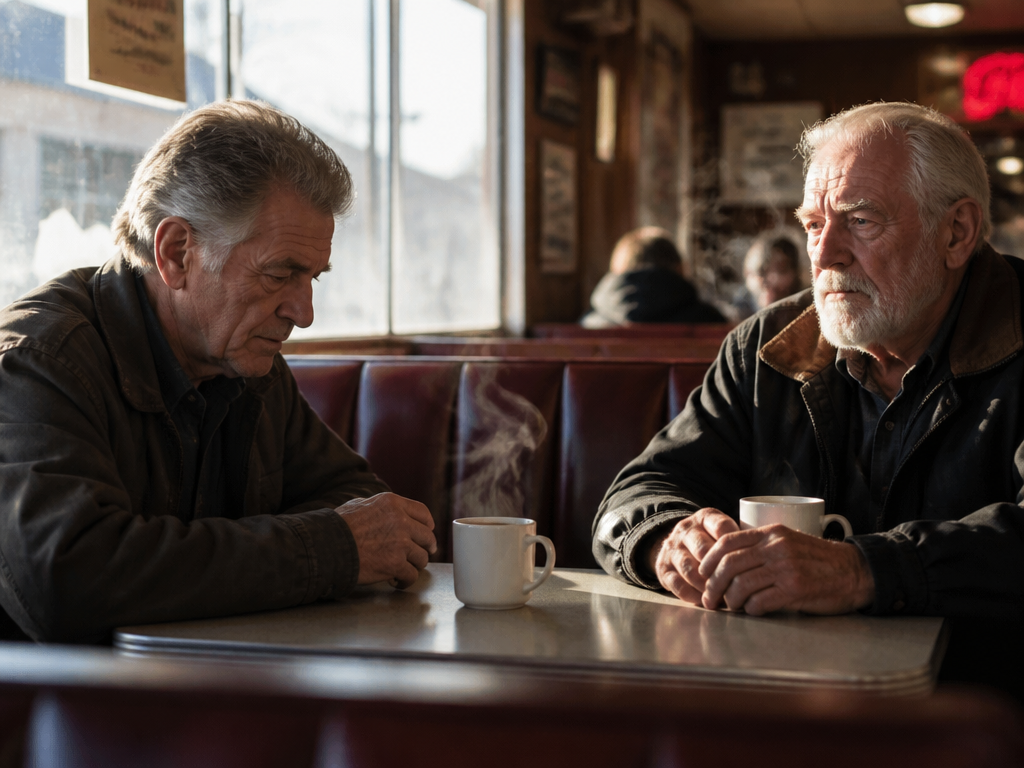
There's a particular silence that happens when a person is deciding whether to tell you the real thing. You feel it more than hear it. They've said the surface version — work's fine, the kids are good, we're getting by — and then there's this hesitation, this half-second where they glance at your face to see if it's safe to say more.
Most of my life I filled that pause. I'd rush in to keep things comfortable, to move us along, never realizing I was slamming the door my mother learned to hold open. The pause is an invitation, and I kept declining it because the silence made me nervous and because, if I'm honest, going deeper meant I'd have to stay, and staying was the thing I was never any good at.
Now I try to leave the pause alone. I let it sit there, awkward, until the person decides. Half the time they don't. They retreat to the surface and we talk about the weather and that's fine, that's their right. But every so often someone looks at your face, finds whatever they were looking for, and steps through.
What they're checking for, I think, is whether you're actually there. Whether your attention is real or just the polite costume of attention. People can tell. They could always tell. I just assumed for decades that my costume was convincing, and it wasn't, and the proof is in all the conversations that quietly wound down to gutters.
I don't have a grand finish for this. I used to think wisdom arrived as a summary, a thing you could say at the end that tied it all up. But the older I get the less I trust the summaries. They're just another way of changing the subject, of being done with someone, of closing the door.
So instead, this:
Last week I was at the deli. Sal's gone — retired, or moved, nobody seems to know — and there's a young guy behind the counter now, fast and efficient, eyes on the slicer. I took my ticket, number 31, and waited. When he called my number he didn't look up.
I stepped to the counter. "Busy day," I said, and he sort of grunted, reaching for the wax paper. And I could have left it there. The pastrami was the same either way. But I leaned on the glass and said, "How long you been working here?" — and he glanced up at me, surprised, the slicer still going, and there was that half-second, that hesitation, where he was deciding.