"You did the thing with your jaw."
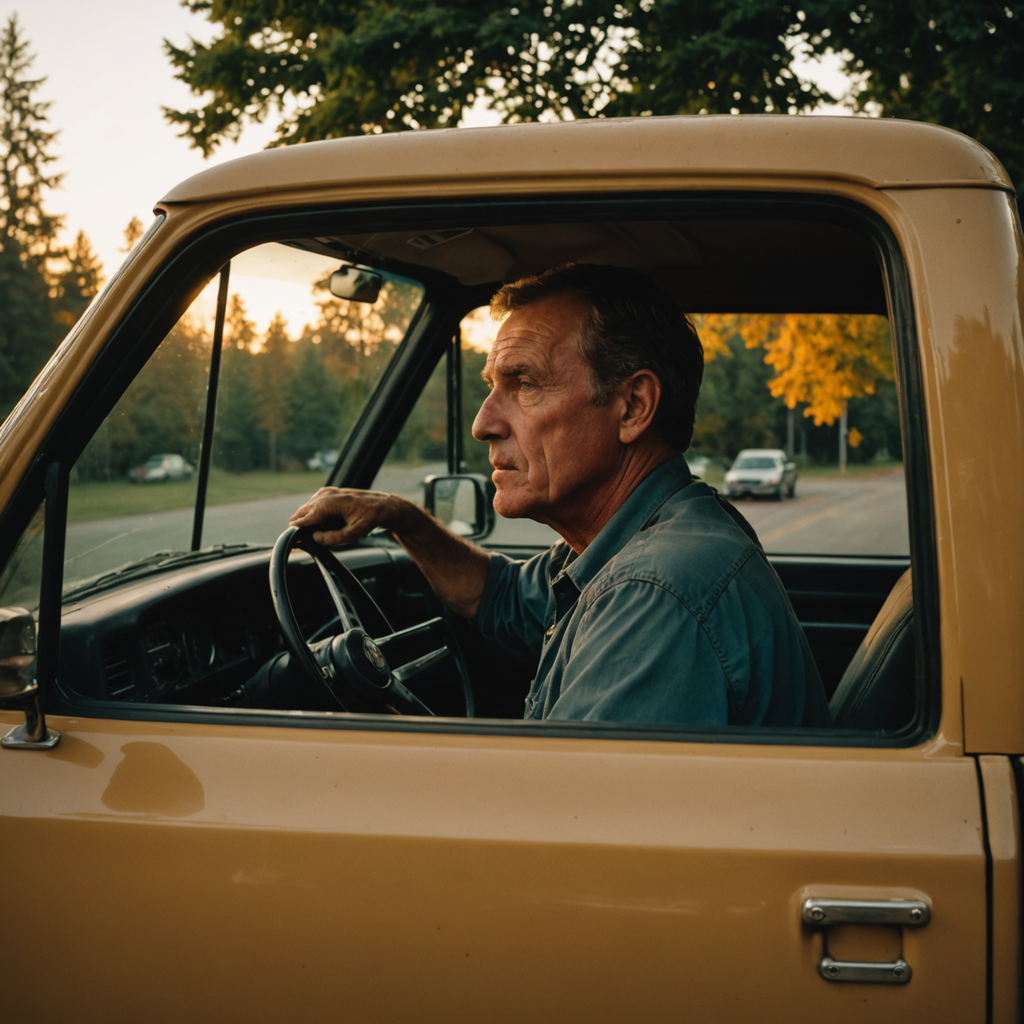
We were forty minutes out of Estherville, rain coming at the windshield sideways, the wipers moving at a speed that seemed almost apologetic. Emil had the driver's seat shoved all the way back because our mother drives with her sternum practically against the wheel, and neither of us had thought about the mirrors until we were already merging.
"What thing."
He took one hand off the wheel and made a small crushing motion near his own cheek. "That. You did it when the woman said 'settling-in period.'"
I said I hadn't. I had. I'd done it in the corridor of the Bellamy with a box of our mother's shoes against my hip, and again in the elevator, and probably once more in the parking lot while Emil patted every pocket looking for the ticket. What I wanted to say was that a jaw is not a crime. What I said was nothing, for about a mile and a half, which he would have understood perfectly well as a remark of its own.
I have been the obvious one in this family since before I could spell the word. There's a report card somewhere in a plastic bin in my basement, fourth grade, Mrs. Prosser's cramped blue handwriting: *wears her weather on the outside.* My mother read it out loud at the kitchen table in a tone that could have gone either direction, and I remember deciding, at nine, that it had gone the wrong one. For years I thought the goal was to become someone whose weather stayed indoors. I studied the people who seemed to have managed it. I assumed they'd been issued something at birth that I hadn't.
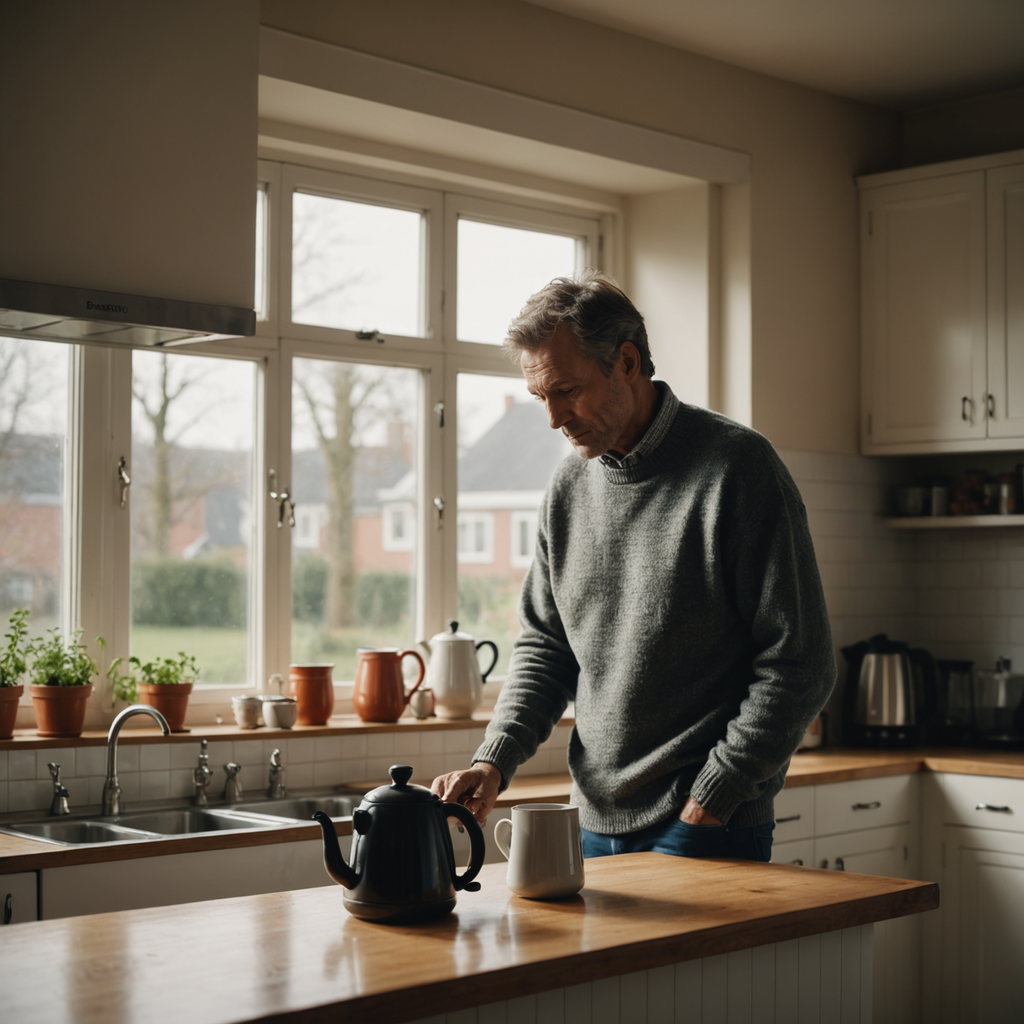
The email that finally embarrassed me out of that assumption came from a man named Dell, who I worked with for two years and liked. Subject line: *quick thought on the timeline.* Somewhere in the third paragraph he wrote *unless I'm missing something*, and I want to be honest about what happened next, because it's the whole reason I was thinking about any of this in a car at eleven at night. Four minutes. That's how long it took me to write back. I know because I checked later, the way you press a bruise. My coffee had a skin on it. The kitchen was doing that late-afternoon thing where the light comes in low and makes everything look more significant than it is. I hit send and felt, for about ninety seconds, magnificent.
At eleven that night I read what I'd sent and had to put the laptop on the floor and walk to the end of the hallway and back.
The feeling wasn't wrong. That's what I couldn't get past. Dell had been condescending, mildly, in the way of a person who is right and enjoying it. My irritation was accurate. It was good information. It was just that I'd handed it the car keys.
"How do you do it," I asked Emil, somewhere around the exit for the outlet mall, all those dark stores with their lit signs still burning for nobody.
"Do what."
"Nothing happens on your face. Ever. That whole thing with the paperwork and you just —" I did an impression of him, which was mostly stillness, which is hard to do as an impression.
He drove for a while. Emil takes a long time to answer things, and I used to think that was wisdom, and now I think it might just be traffic.
"Stuff happens," he said. "I put it in a drawer for a bit."
"That's not healthy."
"The drawer's fine."
Another mile.
"The drawer's mostly fine," he said.
I didn't tell him what I was thinking about, which was our mother and the greenhouse. It was August, the summer the hail came through in the middle of the afternoon with no warning at all — one minute the sky was a normal color and the next it sounded like someone was throwing gravel at the house by the bucket. Our father had built a lean-to greenhouse off the garage out of salvaged storm windows, and about a third of them cracked. Some of them didn't crack so much as go to pieces.
My mother went out afterward in her gardening gloves and picked up glass. She hummed. I remember the humming very clearly because it was the same three or four notes over and over, not a song, just something to do with her mouth. She said the tomatoes had had a good run anyway. She said your father will be pleased he didn't pay for those windows. She made dinner.
At some point after midnight I got up for water and the door to the garage was open a few inches with light coming through it. She was standing in front of the chest freezer with the lid up, in her nightgown, in that cold blue light, holding a bag of frozen peas. Not doing anything with the peas. Just holding them, the way you hold something you've forgotten is in your hand.

I said, Mom.
She said, "I'm looking for the corn."
There was no corn. There had not been corn in that freezer for years. She closed the lid and turned off the light and we both went back to bed and neither of us mentioned it, then or ever, and if you had asked me at fourteen I would have told you my mother was the calmest woman in the county.
"Do you remember the parking thing," Emil said, out of nowhere, maybe twenty minutes later. He'd been chewing the inside of his cheek.
"At the hospital."
"Yeah."
Three years ago, her hip. He'd driven in from four hours away and slept in a chair for two nights and on the third afternoon he went down to the lobby to get the parking ticket validated, and the machine wouldn't take it. He fed it in one way and it made a small grinding noise and pushed it back out. He turned it over and it did the same thing. He smoothed the corner of it against the counter — that little crease you make with your thumbnail — and tried again, and again, and I was standing about ten feet back holding two coffees and watching my brother's shoulders change shape.
Then he hit the machine with the flat of his hand, hard enough that the sound bounced off the atrium glass, and he said something not even that terrible to a volunteer named Pauline, who was maybe seventy-five, in a red vest, with a lanyard that had photographs of cats on it. What he said was: *does anything in this building work.* It was the way he said it.
He apologized about four seconds later. Then he went into the stairwell and I gave him what I thought was enough time and it wasn't, and I opened the door on him sitting on the third step from the bottom with his forearms on his knees, and he looked up at me with a face I hadn't seen since he was about eleven.
In the car he said, "I wasn't mad about the ticket."
"I know."
"I mean I was mad about the ticket." He laughed a little through his nose. "It was a badly designed machine."
And that's the part I keep turning over. Not that my brother lost it — everybody loses it — but that for the entire two days leading up to the stairwell, he had been what I would have called composed. He'd handled the surgeon. He'd handled our mother's roommate's television. He had, by his own account, put approximately nine things in a drawer. And I had been standing there admiring him, taking notes, thinking: *that's the thing I don't have.*
We stopped at a place called the Corner Pantry because the low fuel light had been on longer than either of us wanted to admit. The lot was one big sheet of wet asphalt with the pumps floating in it. Inside, the fluorescents had that hum you feel in your teeth, and there were four hot dogs on the rollers going around and around, glazed like they'd been there since a previous administration.
Emil came out with two coffees and a bag of those chalky pink-and-white peppermints, the kind our mother keeps in a dish by her chair, the kind nobody actually likes.
"For the room," he said. "Her room. Whatever they call it."
We drank the coffee standing under the canopy because neither of us wanted to get back in yet. The rain was coming off the edge of it in a curtain about two feet in front of our shoes.
"She used to say that thing," he said. "About being boring."
"What thing."
"Be boring for ten seconds. Or a minute. It was one of those." He turned his cup around in his hands. "She'd say it to you, mostly. When you were about to go up."
I have no memory of this. None. I've gone looking for it since, the way you go looking for a word, and it isn't there. I don't think he's lying and I don't think I'm lying either. It's possible she said it once, to him, and he heard it as a family policy. It's possible she said it to me forty times and I was too far up to hear it.

But I tried it. I want to be clear that I tried it in the least profound way imaginable, on a Tuesday, on a man in a pickup truck who had parked across the end of my driveway to unload drywall for the house next door. I stood at the storm door with my hand on the latch and I felt the whole thing assemble itself in me — the little hot column that runs up the middle of your chest — and instead of going out I counted. Not even to ten. To six, maybe. Long enough for the front of my brain to catch up with the rest of me and point out that this man had no idea whose driveway it was and that I did not, at this exact moment, need to leave.
When I did go out I said, hey, sorry, I'm going to need to get out in about an hour, and he said no problem, and moved it, and that was the entire event. I stood in my kitchen afterward feeling like I'd performed a magic trick in an empty theater. Nobody would ever know. There was no version of that afternoon in which anyone said, *wow, you handled that well.* The whole reward was that nothing happened.
And then, eleven days later, my daughter Junie lost her third retainer.
The orange case was on the counter. Empty. Open, actually, which somehow made it worse — that little hinged shell with the molded interior and nothing in it. Three hundred and forty dollars, and the second one had been in April, and I want to tell you that I counted, that I did the boring thing, that I remembered the drywall guy.
I didn't count. I don't think I got a tenth of a second. The words were already out of me and moving across the kitchen, and I could hear myself, which is the worst part — there's a version of me that stands slightly behind my own shoulder during these and takes attendance. I said something about whether anything in this house means anything to her. I said the word *again* maybe five times.
Junie is fifteen. She didn't cry, which I would have preferred. She got very organized and very polite and put the case in the drawer and asked if she could go do homework.
At twenty to eleven I stood outside her door and said I was sorry, and she said, "It's fine," in the tone that means: *received, logged, filed.* Same tone I used on my mother for about nine years.
So I don't know what to do with the fact that the same person can do both of those things inside two weeks. I used to think of it as a lever — you find the lever, you pull the lever, you're a calm person now. It isn't a lever. It's more like the difference between a night when you've slept and a night when you haven't, except the thing that's rested or not rested isn't your body, it's some small clerk in you whose entire job is to look at the feeling coming in and stamp it *information* instead of *instruction.* When the clerk is at the desk, six seconds is plenty. When the clerk is gone — and no one tells you when the clerk is gone — there is no gap at all. There's just the thing you already said.
Somewhere past the reservoir a semi came over into our lane without signaling and Emil braked and let it in, and I saw his mouth move.
"Are you counting?"
He didn't answer for long enough that I knew he was deciding whether to.
"Sometimes."
"To what?"
"Depends," he said, and adjusted the mirror he'd already adjusted twice.
I let it go for a bit. The heater was making the windshield fog at the bottom edge and he ran the defroster and the noise gave us both somewhere to put our attention.
"Can I ask you something," I said. "Does it get easier, or do you just get better at not showing it."
He thought about that for probably four miles. My brother's silences have always had a texture to them, and I've spent forty-six years learning to read them and I'm still wrong about half the time.
"Her room's got a window that faces the parking lot," he said.
"I know."
"She was at it. When we pulled out." He rubbed his eye with the back of his wrist. "She wasn't waving or anything. She was just at it."
I said something then, I don't remember what, some noise a person makes. And I understood that he had answered me, and that the answer was no, or the answer was *don't ask me that at one in the morning*, or the answer was that he had been carrying that window for six hours and could not put it in a drawer.
We got to my house a little after four. He pulled in and cut the engine, and the wipers stopped halfway across the glass and didn't finish, one arm stalled at an angle across the rain. The bag of peppermints was still in the cupholder, unopened, the twist of cellophane at the top exactly as the clerk had left it.