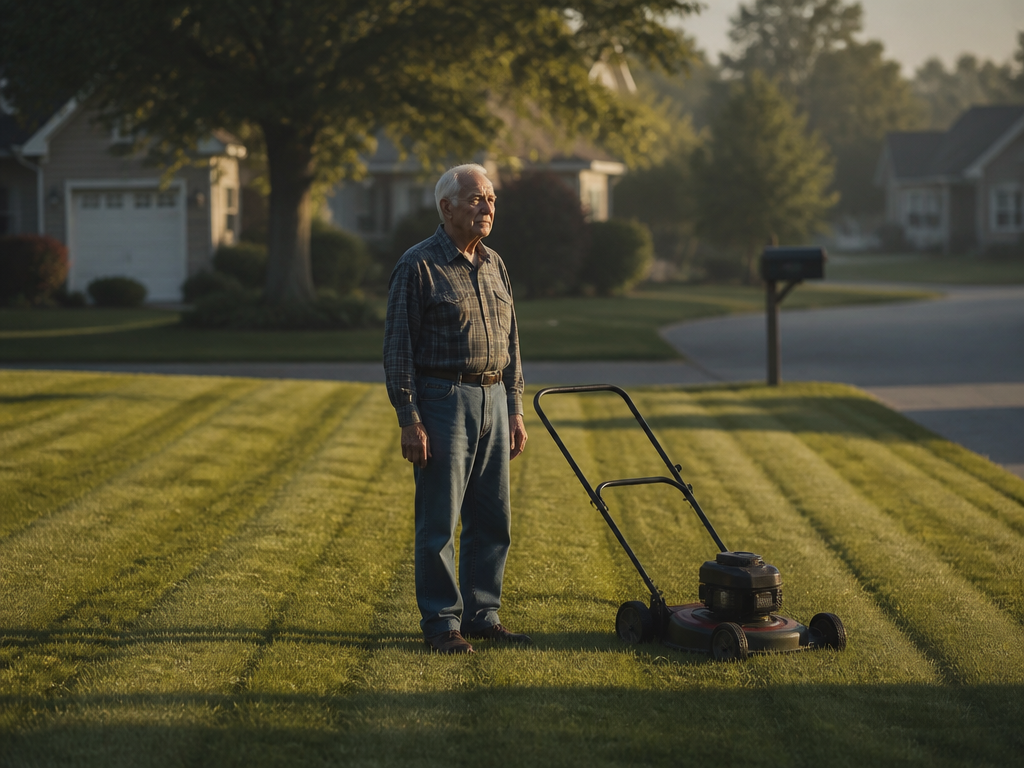
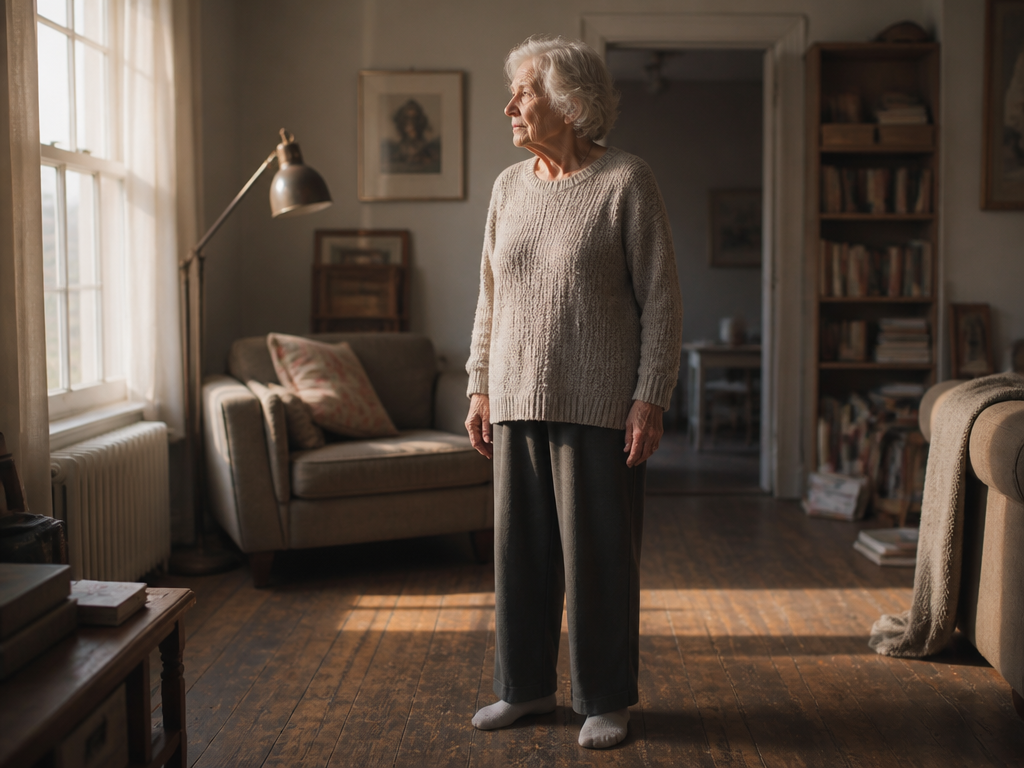
The shoebox was the first thing I found when I went through my father's closet, and the last thing I expected to grieve over. It was a Florsheim box, the cardboard gone soft at the corners, held shut with a rubber band that snapped the moment I touched it. Inside were receipts. Decades of them. Bank statements folded into precise thirds, the deed to a house he'd sold in 1981, three pay stubs from a job he'd quit before I was born. Everything that could prove he had once been a man who provided.
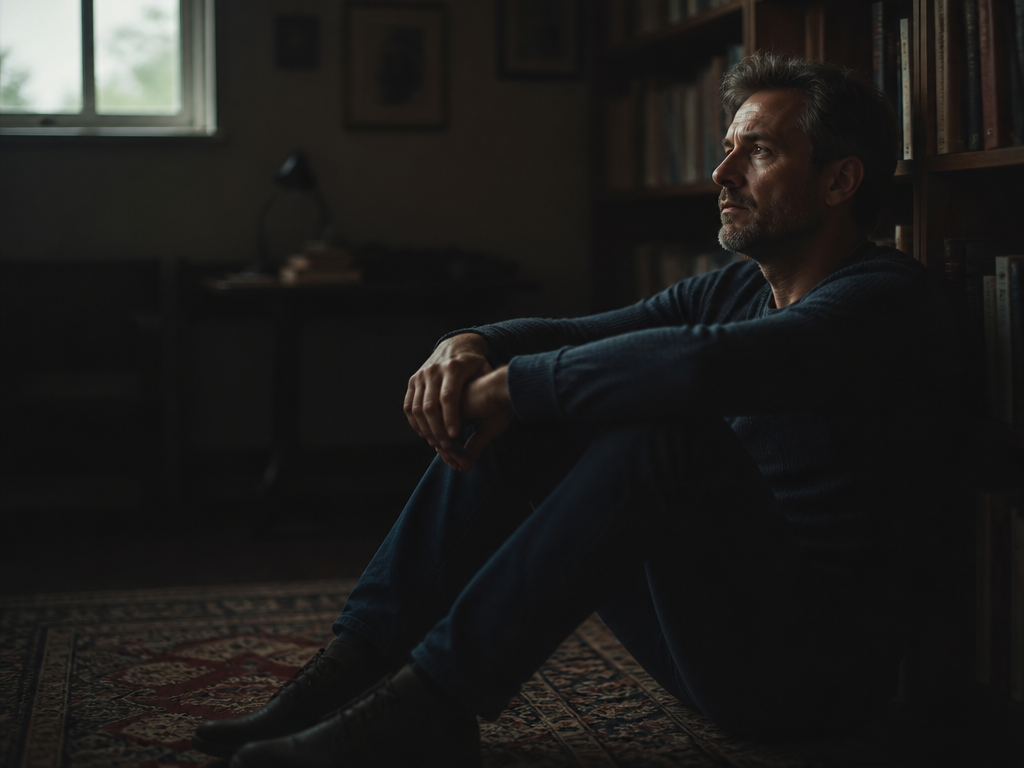
I sat on the floor of that closet for a long time, the box in my lap, smelling the particular mildew of paper that has outlived its purpose.
He never let anyone touch it.
I remembered that much without trying. When I was maybe nine, I'd pulled it down from the shelf, curious, and he came into the room so fast I dropped it. Papers everywhere. He didn't yell. That was the strange part — he knelt and gathered each one back into order, and the gathering was worse than any yelling would have been. His hands were shaking a little. "These are important," he said, not looking at me. "You don't understand yet."
I didn't. But I understood the shaking. I understood that something in him was kept alive by that box, and that without it he might not have known who he was.
My father grew up with nothing he could point to. His own father had lost a farm, and the losing of it became the family's permanent weather. So my father spent his life assembling evidence. The box was his argument against a verdict that had been handed down before he was born — the suspicion that he was, at bottom, a man who would not amount to anything.
What nobody tells you is that you can inherit an argument. You can inherit it without ever hearing the original case.
I didn't keep receipts. I told myself I was different. I was modern. But somewhere around forty I noticed that I had built my own version — a spreadsheet, color-coded, that I updated on Sunday nights with the door to the den closed. Net worth. Projected retirement. The kids' college funds tracked to the dollar. I would sit in the blue light of the monitor while the rest of the house slept and feel, for about twenty minutes, like a man who was enough.
Then it would fade. And I'd be back the next Sunday.
My wife, Carol, said something to me once that I have never been able to put down. We were close to the end of things then — closer than the kids ever knew. She stood in the doorway of the den one night and said, "You provide for everybody in this house and I have no idea who you are." She wasn't angry. That's what undid me. She just sounded tired, like someone reading the last line of a letter she'd written and rewritten for years. "I keep waiting for you to come out of there."
I told her I was working. I told her somebody had to.

What I didn't say — because I didn't have the words yet — was that the den was the only place I felt safe. Out there, in the living room, I was just a person, and a person could be found wanting. Inside, with my columns lined up, I was a result. Results can't be abandoned.
I almost lost her to a spreadsheet. I want that written down plainly, the way my father wrote down everything plainly, because it's the truest receipt I own.
My daughter, Lena, was the one who showed me the box had a second copy.
She was twenty-six, just promoted, and she called to tell me about it. I said I was proud, and I was, but I made the mistake of asking what the raise brought her to. There was a silence on the line. Then she laughed in a way I recognized, a brittle little laugh, my own laugh, and she said, "Of course that's the part you'd want to know." She wasn't cruel about it. But she said, "I always feel like I'm reporting numbers to you. Like that's the only thing that lands."
I got off the phone and stood in the kitchen with my hand still on the counter. The dishwasher was running. Some ordinary domestic hum. And I thought: I handed it to her. The whole anxious arithmetic. I'd done it without a single shoebox, without ever raising my voice, the way my father had done it to me. We pass these things down the way we pass down a nose or a way of standing.
Retirement was supposed to be the reward. Instead it was the silence after the music stops.
For the first few months I didn't know what to do with my hands. The markers were gone — no title, no quarterly anything, no salary to confirm I existed. I'd wake at six out of pure habit and have nowhere to perform. One morning I caught myself reorganizing the garage, alphabetizing paint cans, building little towers of proof for an inspector who was never coming. I stopped halfway through with a can of primer in my hand and laughed, and then I wasn't laughing.
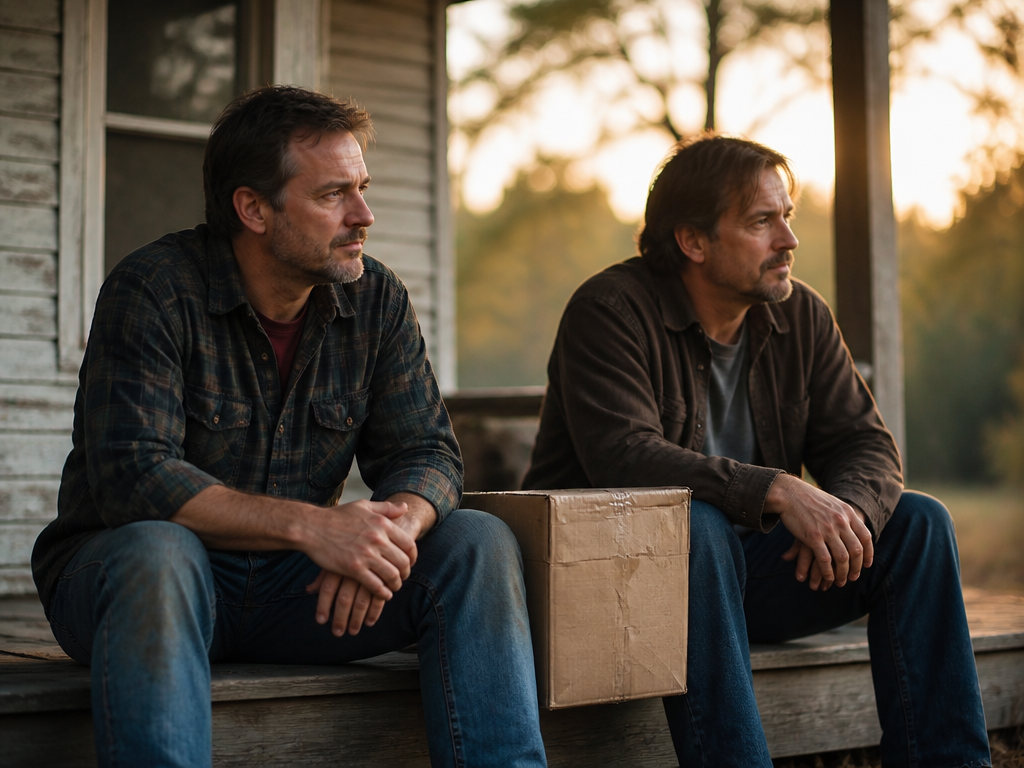
That was the year I started driving for the food pantry on Thursdays. Nobody knew my old title. Nobody asked my net worth. I carried boxes of canned goods up the steps of houses where the porch light was burned out, and the work disappeared the moment I did it, left no record, accrued to no spreadsheet. The first few weeks it made me itch. I kept wanting someone to notice. Then, slowly, the itch became something else. A kind of quiet I hadn't earned in the usual way.
I still have my father's shoebox. I never threw it out, and I never opened it again either. It sits on the shelf in my own closet now, the rubber band long gone, the lid resting a little crooked because the cardboard has warped with age.
This morning I went to get a sweater and brushed against it, and the lid slid off and landed soft on the carpet — that dry, papery thud of old cardboard — and I just left it there, lid on the floor, dust rising in the gray light, the receipts inside finally, gently exposed to the air.